

After the examLife and Health InsuranceProperty and Casualty Insurance
Life and Health vs Property and Casualty: Which License First?
Short answer
Get the license that matches the job you're applying for. Life and health covers life insurance, annuities, disability and health coverage, and P&C covers home, auto and business insurance. P&C usually takes more study, with up to 90 hours of pre-licensing in New York versus 40 for life and health, and Texas reported a lower pass rate for P&C (53%) than life and health (60%) in February 2021.
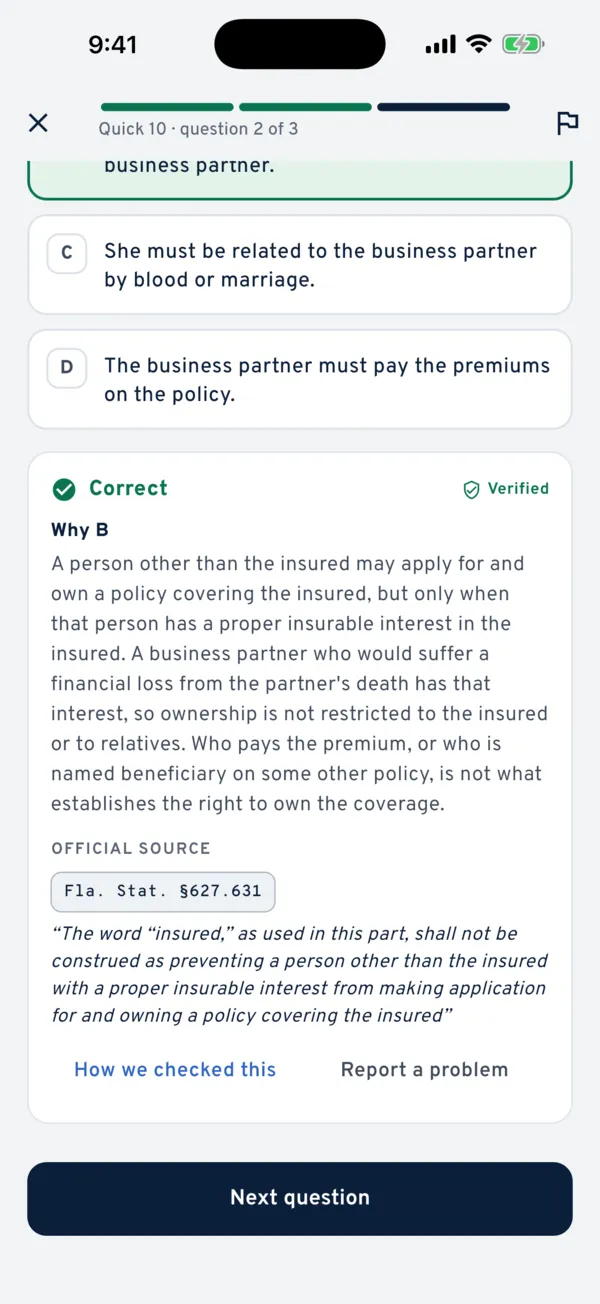
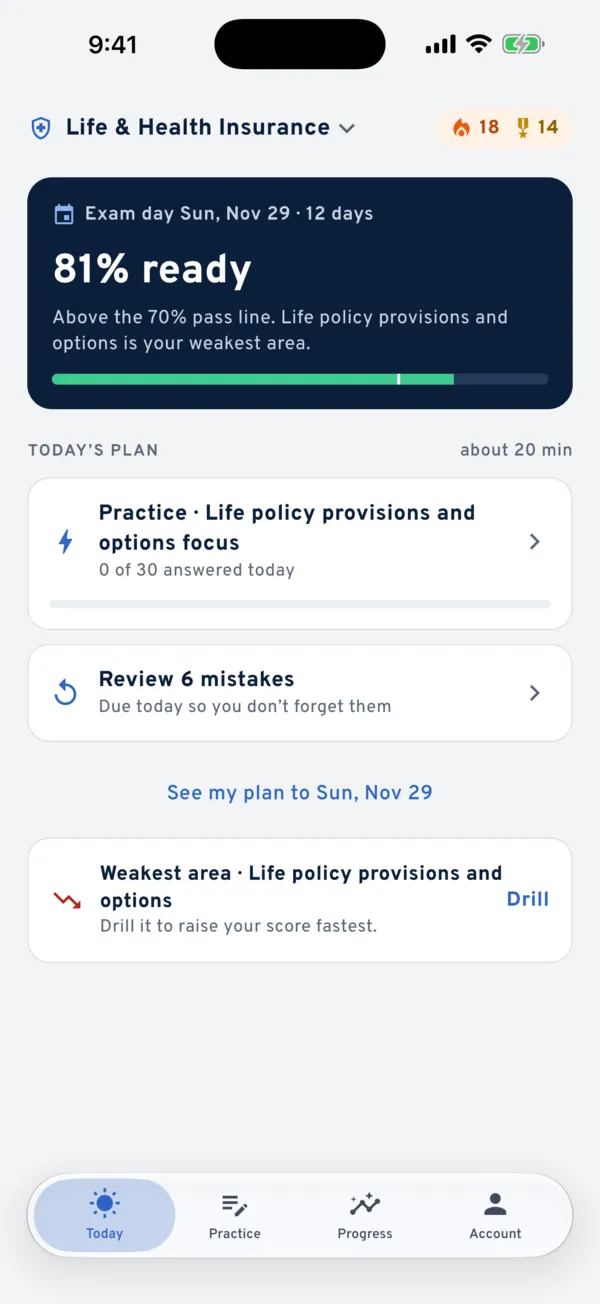
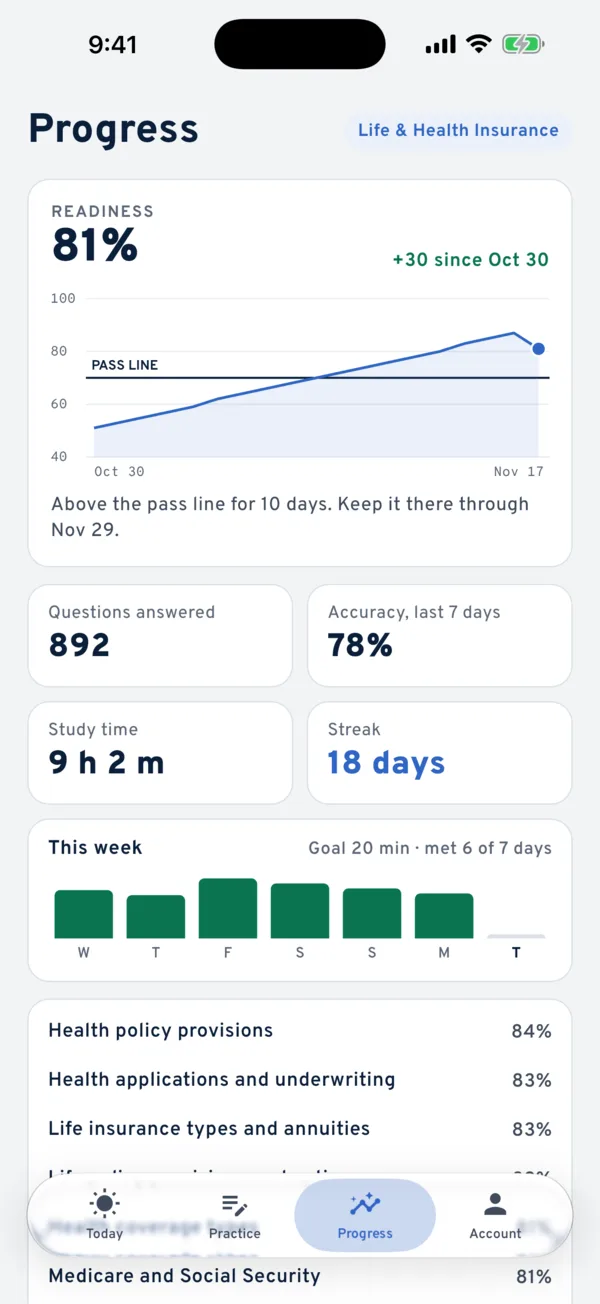
Get the license that matches the job you want. If you’ll sell life insurance, annuities, disability or health coverage, you need life and health. If you’ll sell home, auto or business insurance, you need property and casualty. Many agents eventually hold both, but the first one should follow the paycheck.
What each license covers
The NAIC Producer Licensing Model Act, which most state licensing laws follow, defines the lines of authority.1
Life covers insurance on human lives, including endowments and annuities, and can include accidental death and disability income benefits.1
Accident and health or sickness covers sickness, bodily injury and accidental death, and can include disability income.1
Property covers direct or consequential loss of or damage to property.1
Casualty covers legal liability for death, injury, disability or property damage.1
Personal lines is a narrower P&C license for coverage sold to individuals and families for noncommercial purposes, which mostly means home and auto.1
Life and accident and health are usually tested together, as are property and casualty, and those combined licenses are what people mean by “life and health” and “P&C.”
How the exams compare
| Life and health | Property and casualty | |
|---|---|---|
| New York pre-licensing | 40 hours | 90 hours |
| Florida pre-licensing | Usually 60 hours | 200 hours, or a year of qualifying work |
| Georgia pre-licensing | 8 hours per line | 8 hours per line |
| Texas exam | 150 minutes, $49 | 150 minutes, $49 |
| Texas pass rate (February 2021) | 60% | 53% |
Sources are New York DFS,45 the Florida statutes,67 the Georgia handbook,8 the Texas handbook3 and the Texas Department of Insurance.2
The P&C exam is usually the bigger lift. The policy forms are longer, commercial lines add a whole category of material, and coinsurance and auto scenarios reward careful reading. The pre-licensing hours reflect that in states like New York and Florida.456
How the jobs differ
Life and health work is often relationship and needs-based selling. Life insurance, annuities, disability income, long-term care, Medicare supplement and individual or group health plans. Many roles are commission-heavy, especially early on. Some are salaried, like benefits roles at agencies and call center positions selling Medicare or health plans during enrollment season.
P&C work centers on recurring needs. Everyone with a car or a mortgage needs coverage, and policies renew every year. That makes P&C agency jobs more likely to come with a base salary, especially customer service and account manager roles. Commercial lines producers who write business insurance tend to deal with more complex accounts.
Neither is universally better. If you’re joining a specific company, the company decides which license you need first. Ask before you pay for a course.
Getting both
Many agents add the second license within their first year or two. A home and auto agency that can also write life insurance keeps more of each customer’s business, and a life agent who can quote auto has a reason to talk to every client every year.
Each license is a separate exam and usually a separate pre-licensing course. Continuing education is generally combined. In Texas, most licenses need 24 hours every two years, including 3 hours of ethics.3
Whichever license you get, your home state is where you take the exam. Once you hold a resident license in good standing, other states that follow the NAIC model generally issue you a nonresident license for the same lines without another exam, as long as you apply and pay their fees.1 So the first license you earn at home can follow you across state lines, which matters if you’ll sell to clients in more than one state.
If you’re planning both, take them in the order your job needs, and don’t schedule the two exams back to back. They share some contract law and state law, but the products are completely different, and cramming both at once is a common way to fail one of them.
Starting work before you pass
Some states let a sponsoring company put you to work on a temporary license while you prepare. Texas offers a 180-day temporary license for life agent, personal lines P&C, general lines and limited lines applicants if the sponsoring company, agent or agency requests it. You must complete 40 hours of company training within 30 days of applying and pass the exam within the 180 days, and the temporary license can’t be renewed.3
Georgia also issues temporary agent licenses for life, accident and sickness, property, casualty and personal lines, but an insurer has to sponsor you, and you only get one temporary license in your lifetime.8 If a company offers you a temporary license, treat the deadline as real. Missing it usually means starting over.
The securities connection
If you lean toward life and health, know that some products need more than an insurance license. Variable life insurance and variable annuities are securities, so you also need a FINRA registration. New York asks for proof that you’ve passed the Series 6, 7 or 63 before it adds variable authority to a life license.4 Georgia requires an 8-hour variable products course, a separate state exam and FINRA certification such as the Series 6 or 7, on top of an agent license with the life line.8 P&C agents rarely run into this.
That’s one more reason life and health careers can branch into financial planning, while P&C careers tend to branch into commercial insurance and agency ownership.
If you’re still undecided
Three questions settle it for most people.
Who’s hiring near you? Look at actual job postings for licensed agents in your area and note which license they ask for. That’s the market telling you.
Do you want a salary or pure commission? P&C roles more often come with a base. Life roles more often lean on commission. There are exceptions on both sides.
How much study time do you have? If you need a license quickly and your state requires heavy P&C education, life and health is the faster start.
For the details on each exam, see the life and health exam guide and the property and casualty exam guide. If you’ve picked P&C, our P&C exam study plan gives you a week-by-week schedule. Clinched has a life and health course for the general part of the exam and a Texas property and casualty course. For other states, tap “Notify me” in the app.
Questions people ask
Can I hold both a life and health and a P&C license?
Yes. Many agents hold both, especially at agencies that sell home and auto alongside life insurance. You pass a separate exam for each line, though some states let you add a line later without repeating anything you already have.
Which insurance license is easier to get?
Life and health is usually easier. It typically requires fewer pre-licensing hours, and Texas reported a 60% pass rate for life, accident and health versus 53% for property and casualty in February 2021.
Which license do captive agents need?
It depends on the company. Agents for carriers that mainly sell home and auto need P&C first, and many add life and health later. Life insurance companies need life and health. Ask before you start a course.
Sources
- Producer Licensing Model Act (MDL-218)National Association of Insurance Commissioners
- Careers in insurance, How to become an insurance agent or adjusterTexas Department of Insurance
- Texas Insurance Licensing Candidate HandbookPearson VUE for the Texas Department of Insurance
- Life and Accident/Health and Variable Life/Variable Annuity Agent or BrokerNew York State Department of Financial Services
- Property and Casualty Agent or BrokerNew York State Department of Financial Services
- Florida Statutes, Section 626.732 (general lines agent qualifications)The Florida Senate
- Florida Statutes, Section 626.8311 (health agent qualifications)The Florida Senate
- Georgia Insurance Licensing Candidate Handbook (October 2026)Pearson VUE for the Georgia Office of Insurance and Safety Fire Commissioner
ClinchedLife and Health Insurance
Pass Life and Health Insurance on the first try.
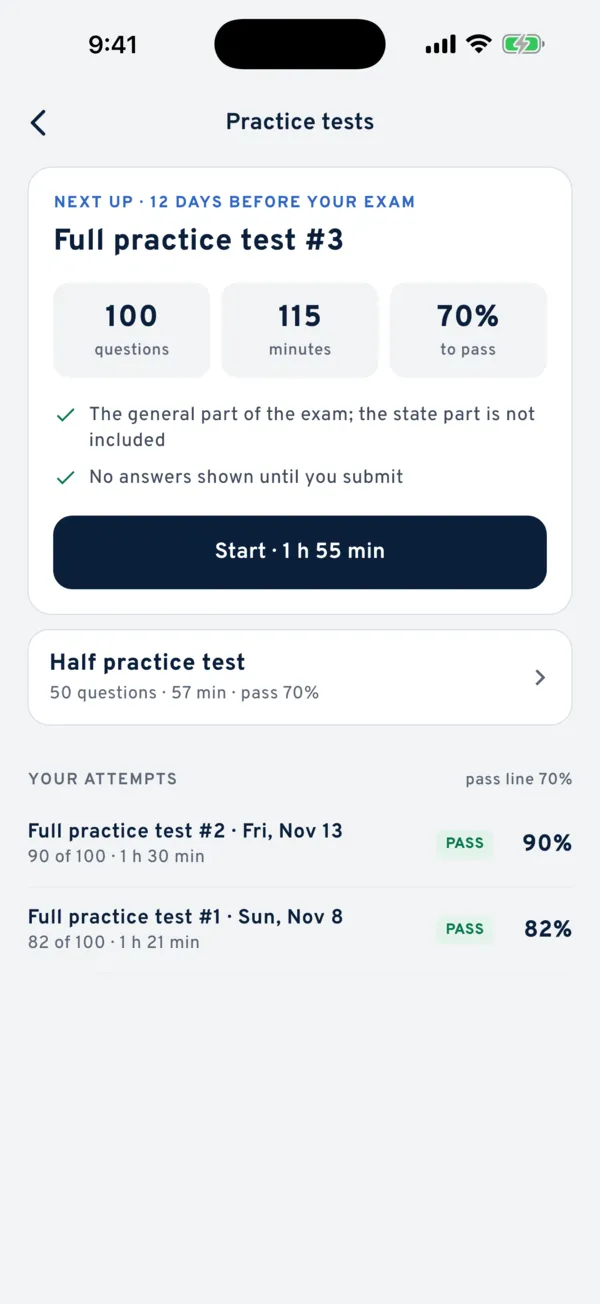
Practice questions written from the official sources, full practice tests in the real format and a plan that ends on your test date. Free to start.
Keep reading
- Study plan · Property and Casualty Insurance
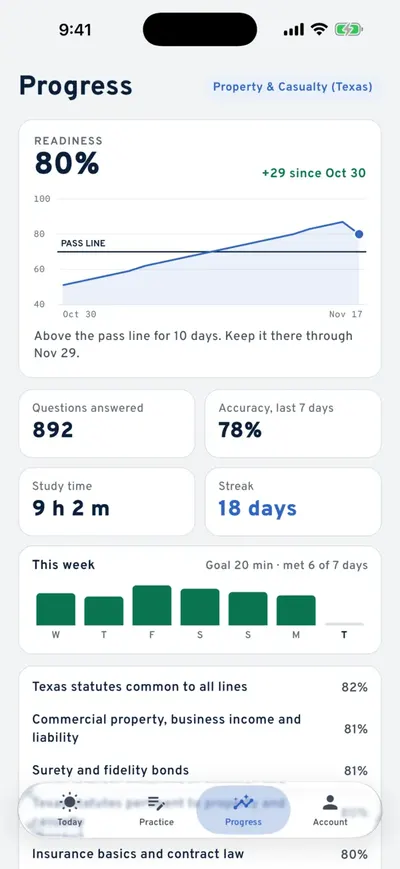 Property and Casualty Exam Study Plan: 5 Weeks to Test DayA 5-week P&C exam study plan built on a real state outline. What to study each week, how to drill coinsurance and auto scenarios, and when you're ready to book.
- Study strategy · Life and Health Insurance
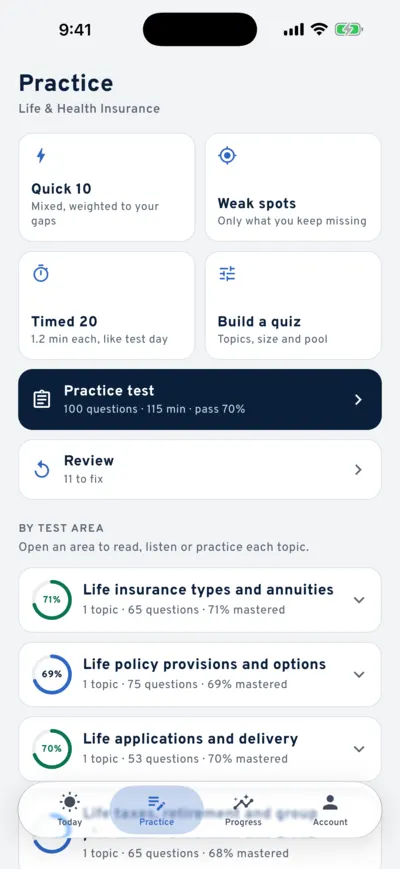 How Hard Is the Life Insurance Exam? What the Numbers ShowTexas reported a 60% pass rate on its life, accident and health exam. Why so many people fail, which topics cause it, and how much study you really need to pass.
- After the exam · SIE · Series 7
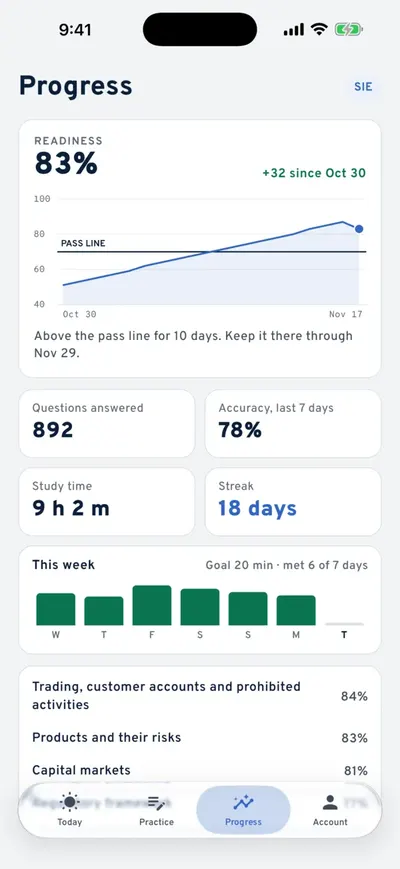 Which Securities Licenses Do You Need, and in What Order?Most brokers need the SIE, Series 7 and Series 63. Advisers need the Series 65. Dual reps add the Series 66. The order, costs and sponsor rules for each license.