Securities and insuranceState insurance departments
The life and health insurance exam, explained
The life and health insurance exam is the state test you pass to get a producer license to sell life insurance, annuities and accident and health coverage. Each state writes and runs its own, so the details vary. Texas gives 130 scored questions in 150 minutes for $49, Georgia gives 125 scored questions in 2.5 hours for $67, and most states require a score of 70 to pass. Pre-licensing education ranges from none in Texas to 40 hours in New York.
Life and Health Insurance at a glance
- Who licenses you
- Your home state's insurance department, under laws based on the NAIC Producer Licensing Model Act1
- Minimum age
- 181
- Texas (Pearson VUE)
- 130 scored + 15 pretest questions, 150 minutes, $49, scaled score of 70 to pass2
- Florida 2-15 (Pearson VUE)
- 2 hours 45 minutes, $44, 70% to pass, 5 attempts per 12 months4
- California (PSI)
- 150 questions in 3 hours for the combined Life and Accident and Health exam6
- Georgia (Pearson VUE)
- Combined exam 2.5 hours, $67, 70% to pass, 14-day wait after a 1st or 2nd failure9
- Pre-licensing education
- None in Texas, 40 hours in New York for life plus accident and health8
- Illinois format
- Separate General and State exams for each line, both passed within 90 days10
What the life and health exam covers
Every state licenses its own insurance producers, but most follow the same blueprint. The NAIC Producer Licensing Model Act lists the major lines of authority, and life and “accident and health or sickness” are the first two.1 Life covers insurance on human lives, including annuities, and can include accidental death and disability income riders. Accident and health covers sickness, injury and accidental death, and can include disability income.1 Most states let you test for each line on its own or for both together, and most people take the combined exam.
The exam itself has two layers. A general section tests product knowledge that’s the same everywhere, and a state section tests your state’s insurance code. Texas is a good example of a typical split. Its combined exam has 100 scored general questions and 30 scored state questions.3
| Texas combined exam section | Scored questions |
|---|---|
| Life policy types | 15 |
| Life riders, provisions, options and exclusions | 15 |
| Completing the application, underwriting and delivering the policy | 12 |
| Retirement and other insurance concepts | 8 |
| Health policy types | 16 |
| Health policy provisions, clauses and riders | 15 |
| Social insurance | 6 |
| Other health insurance concepts | 5 |
| Health field underwriting procedures | 8 |
| Texas law common to life and health | 14 |
| Texas law for life only | 6 |
| Texas law for accident and health only | 7 |
| Texas law for HMOs | 3 |
Source for the table is the Texas outline effective September 1, 2026.3 Other states use different numbers, but the topics are close.
Where people lose points
Policy provisions. Beneficiary designations (primary, contingent, revocable, irrevocable), nonforfeiture options, settlement options, the grace period, reinstatement, incontestability and misstatement of age all appear on the Texas outline and almost every other state’s.3 Learn what each one does for the policyowner, not just its name.
Annuities. People mix up the accumulation and annuitization phases, and fixed, indexed and variable products. Know who bears the investment risk in each.
Disability income and health definitions. Own occupation versus any occupation, elimination periods, benefit periods, and the difference between a coinsurance percentage and a copay.
The application and underwriting. Required signatures, what to do when an applicant changes an answer, warranties versus representations, collecting the first premium and issuing a receipt, insurable interest, and consumer reports under the Fair Credit Reporting Act all sit in this section of the Texas outline, which gives it 12 scored questions by itself.3 Questions here often hinge on timing, like when coverage starts or who has to sign.
Social insurance. Medicare Parts A through D, Medicaid and Social Security benefits have their own section in Texas.3 It’s only 6 questions there, but Medicare parts get confused constantly, and the same knowledge feeds the Medicare supplement questions in the health section.
State law. It’s a smaller share of the questions but it’s pure memorization, so it’s where good students pick up easy points and rushed ones lose them. Expect licensing rules, replacement rules, unfair trade practices like rebating and twisting, and your state’s guaranty association.3
How the exam works
The exams are computer-based multiple choice, delivered by a state contractor, usually Pearson VUE or PSI. Many include unscored pretest questions mixed in without labels.2 There’s no penalty for guessing, so answer everything.2
How the score is reported varies. Florida and Georgia report a straight percentage, and 70% correct passes.49 Texas uses a scaled score from 0 to 100 where 70 passes, and the scaled number isn’t the percentage you got right.2 Either way, you leave the test center with your official score report.2
Calculators aren’t needed much, but the rules differ. Texas allows your own silent, nonprinting calculator without an alphabetic keypad, and bans financial calculators.2 Florida doesn’t allow personal calculators but will hand you one if you ask.4 Texas and Florida both offer extra time for candidates whose first language isn’t English, if it’s approved before you book.24 In Texas it’s 1.5 times the normal length.2
Eligibility, cost and scheduling by state
The national baseline is simple. You must be at least 18, and you must complete any pre-licensing course your state requires and pass the exam for each line you want.1 The differences are in the details, and they’re big.
Texas has one unusual route worth knowing about. A sponsoring insurer, agent or agency can request a 180-day temporary license for you before you pass, as long as you complete 40 hours of company training within 30 days of applying. You still have to pass the exam within those 180 days, and the temporary license can’t be renewed.2
| State | Test vendor | Pre-licensing education | Exam |
|---|---|---|---|
| Texas | Pearson VUE | None for the General Lines life, accident and health license | 130 scored + 15 pretest, 150 minutes, $49 |
| Florida | Pearson VUE | 60 hours covering several lines including health (or separate life and health courses) within 4 years before applying | 2-15 exam, 2 hours 45 minutes, $44 |
| California | PSI | 12-hour ethics and California Insurance Code course only, since the 20-hour course was repealed January 1, 2026 | 150 questions, 3 hours |
| New York | PSI | 40 hours for life plus accident and health, 20 hours for a single line | Pass within 2 years of applying |
| Georgia | Pearson VUE | 8-hour life course and 8-hour accident and sickness course within the last 12 months | Combined exam 2.5 hours, $67 |
| Illinois | Pearson VUE | 20 hours per line, 7.5 of them in a classroom | Separate General and State exams for each line |
Sources for each row are the Texas handbook and outline,23 the Florida handbook and statute,45 the California exam table and notice,67 New York’s licensing page,8 the Georgia handbook9 and the Illinois Department of Insurance.10 Fees and rules change, so confirm with your own state’s insurance department before you pay for anything.
- Finish pre-licensing educationTake a state-approved course if your state requires one. Illinois won't let you sit for the exam without your signed completion certificate.
- Book the examSchedule online with your state's vendor and pay the exam fee. Florida, Texas, Georgia and Illinois use Pearson VUE, and California and New York use PSI.
- Pass and get fingerprintedMost states run an FBI and state background check. Texas and Georgia use IdentoGO, and Florida uses Live Scan.
- Apply for the licenseApply online, usually through Sircon or NIPR, and pay the application fee. Texas charges $50 and Georgia $100 plus a $20 processing fee.
- Get appointedAn insurer has to appoint you before you can sell its products. Georgia calls this a certificate of authority.
The certificate rule comes from the Illinois Department of Insurance,10 and the fingerprint vendors, fees and appointment rules come from the Texas, Florida and Georgia handbooks.249
A four-week study plan
Most pre-licensing courses take one to two weeks. Plan on two to three more weeks of practice questions after that, at about an hour a day, before you book the exam. Here’s a four-week plan for the combined life and health exam.
- Week 1Finish your state's pre-licensing course (or, in Texas, a structured course of your choice). Take notes on every policy provision and rider, and take a diagnostic test at the end of the week.
- Week 2Life insurance and annuities. Policy types, riders, beneficiaries, nonforfeiture and settlement options, underwriting, and annuity phases. 50 practice questions a day.
- Week 3Health insurance. Disability income, medical expense, long-term care, group coverage, Medicare and Social Security basics, and the required policy provisions.
- Week 4State law plus two full timed practice exams. Memorize your state's licensing, replacement and unfair trade practice rules, then review every miss and book the test.
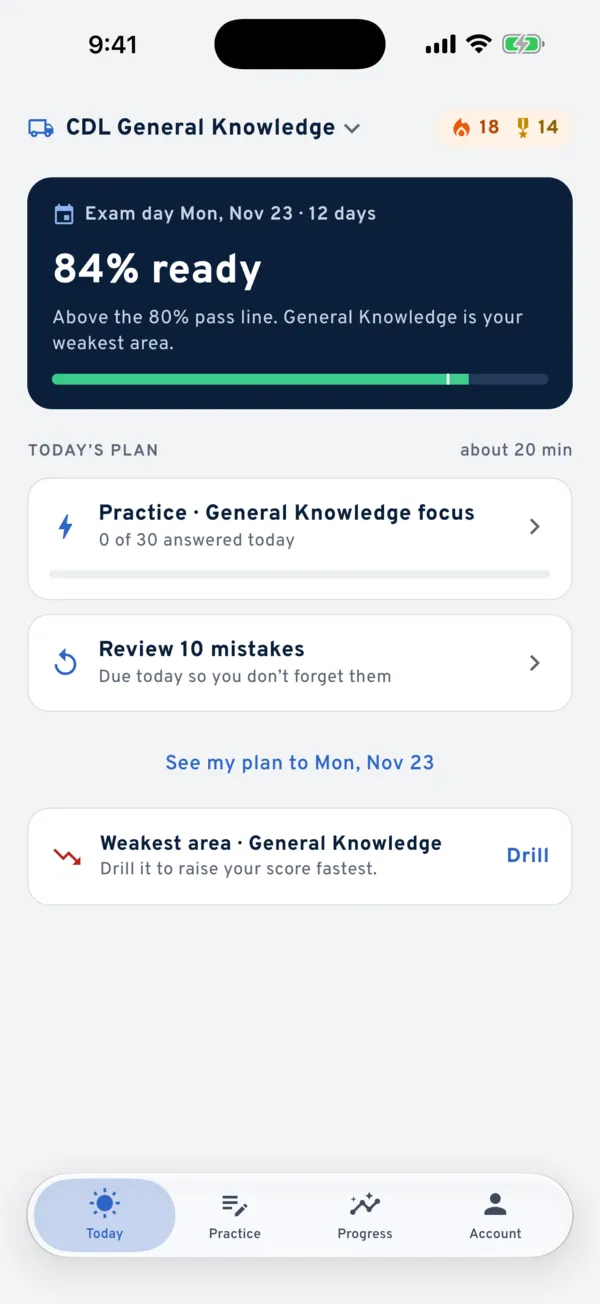
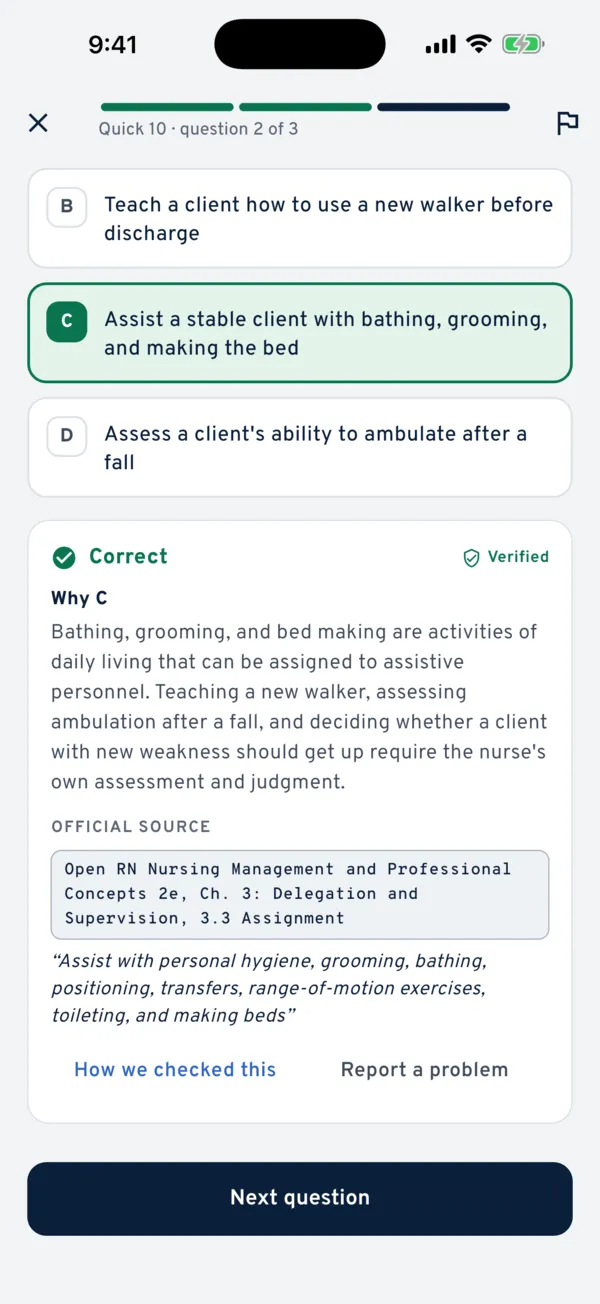
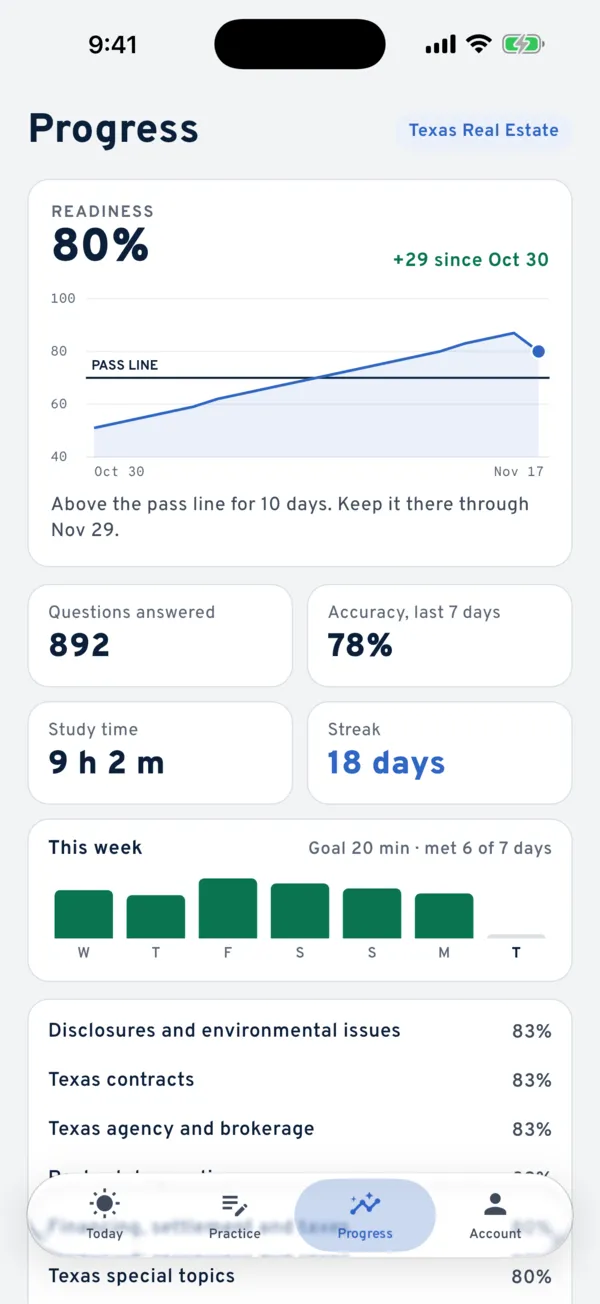
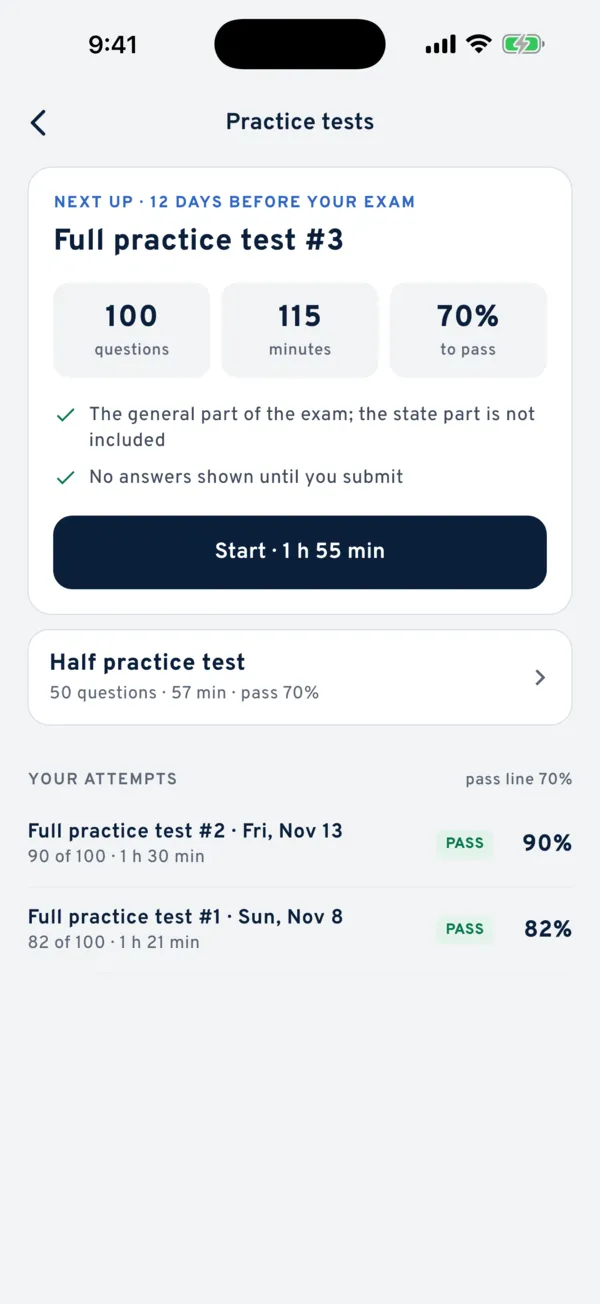
Clinched has a life and health course for the general (national) part of the exam, with every explanation quoting its source. State law sections are on the way. If you want a fuller picture of the difficulty first, read how hard the life insurance exam really is.
Test day
ID rules are stricter than people expect, and they differ by state. Texas and Georgia want two forms of current signature ID, a primary government photo ID plus a secondary ID such as a Social Security card or a credit card.29 Florida wants one current government photo ID with a signature.4 The name has to match your registration exactly, and Pearson VUE doesn’t honor grace periods on expired IDs.2
- Primary government photo ID with signature, unexpired, name matching your booking
- A secondary signature ID if your state requires two (Texas and Georgia do)
- Your signed pre-licensing completion certificate if your state requires it (Illinois does for first-time candidates)
- Arrival 30 minutes early for check-in, photo and the candidate rules agreement
Everything else goes in a locker. Pearson VUE notes that most exam sponsors allow unscheduled breaks, but the clock keeps running.2
After you pass, or if you don’t
Passing the exam isn’t the license. You still have to apply, and the clock starts when you pass. Texas and Florida give you one year from the exam to complete your application, or you test again.24 New York requires that you passed within two years of applying.8 In Georgia, your pre-licensing course is only good for one year, so a slow start means retaking the course too.9
Retake rules vary just as much. Texas lets you rebook the next day with no limit on attempts.2 Florida caps you at five attempts at the same exam in any 12-month period.4 Georgia makes you wait 14 days after your first and second failures and 60 days after the third and later ones.9 In Illinois, you must pass both the General and State exams within 90 days of each other.10
Once you’re licensed, plan on continuing education every renewal period. In Texas, most licenses need 24 hours every two years, including 3 hours of ethics.2 If you’ll also sell car and home insurance, the property and casualty exam guide covers the second license.
Variable products and other add-ons
The life license alone doesn’t let you sell variable life insurance or variable annuities, because those are securities. You need a FINRA registration too, usually the Series 6 or Series 7, plus your state’s variable products authority. New York asks for proof that you’ve passed the Series 6, 7 or 63.8 Georgia requires an 8-hour variable products course, a separate state exam and FINRA certification, on top of an agent license with the life line.9 If annuities are central to your plans, many states also require annuity training before your first sale, so check with your state insurance department as soon as you’re licensed.
Questions people ask
How many questions are on the life and health insurance exam?
It depends on your state. Texas uses 130 scored questions plus 15 unscored pretest questions, Georgia's combined exam has 125 scored plus 10 pretest, and California's combined exam has 150 questions. Your state's candidate handbook lists the exact number.
Do you need a class before the life and health exam?
In most states, yes. New York requires 40 hours for life plus accident and health, Illinois 20 hours per line and Florida usually 60 hours for its 2-15 license. Texas has no pre-licensing requirement, and California dropped its 20-hour course on January 1, 2026, though it still requires a 12-hour ethics course before licensing.
What score do you need to pass the life and health exam?
Most states set the passing mark at 70. Florida and Georgia use a straight 70% of questions correct, while Texas and Illinois report a scaled score where 70 passes. Check your state's handbook for how it scores.
How much does the life and health insurance exam cost?
Exam fees range from $44 in Florida to $67 in Georgia among the larger states, with Texas at $49. You'll also pay a separate license application fee and usually a fingerprinting fee, so budget for all three.
Can I take the life insurance exam online?
Some states allow remote proctoring and others don't. California, for example, stopped scheduling remote producer exams on November 6, 2026 and requires in-person testing from January 1, 2027. Check your state's vendor page before you plan around testing from home.
Sources
- Producer Licensing Model Act (MDL-218)National Association of Insurance Commissioners
- Texas Insurance Licensing Candidate HandbookPearson VUE for the Texas Department of Insurance
- Texas Insurance Content Outlines, effective September 1, 2026Pearson VUE for the Texas Department of Insurance
- Florida Insurance Licensing Candidate HandbookPearson VUE for the Florida Department of Financial Services
- Florida Statutes, Section 626.8311 (health agent qualifications)The Florida Senate
- Examinations, Time Limit and Number of QuestionsCalifornia Department of Insurance
- Notice, New Law Repeals the 20-Hour Prelicensing Requirements for Insurance ProducersCalifornia Department of Insurance
- Life and Accident/Health and Variable Life/Variable Annuity Agent or BrokerNew York State Department of Financial Services
- Georgia Insurance Licensing Candidate Handbook (October 2026)Pearson VUE for the Georgia Office of Insurance and Safety Fire Commissioner
- How to Become a Resident Producer / Illinois Insurance AgentIllinois Department of Insurance
More on Life and Health Insurance
- After the exam · Life and Health Insurance · Property and Casualty Insurance
 Life and Health vs Property and Casualty: Which License First?Life and health lets you sell life, annuities and health coverage. P&C covers home, auto and business. How the exams, education hours and jobs compare by state.
- Study strategy · Life and Health Insurance
 How Hard Is the Life Insurance Exam? What the Numbers ShowTexas reported a 60% pass rate on its life, accident and health exam. Why so many people fail, which topics cause it, and how much study you really need to pass.