

After the examSIESeries 7Series 63, 65 and 66
Which Securities Licenses Do You Need, and in What Order?
Short answer
A typical broker at a broker-dealer needs the SIE ($100, no sponsor), the Series 7 ($395, sponsor required) and the Series 63 ($147) for state registration. A fee-only adviser needs only the Series 65 ($187). A dually registered rep usually takes the SIE, Series 7 and Series 66 ($177).
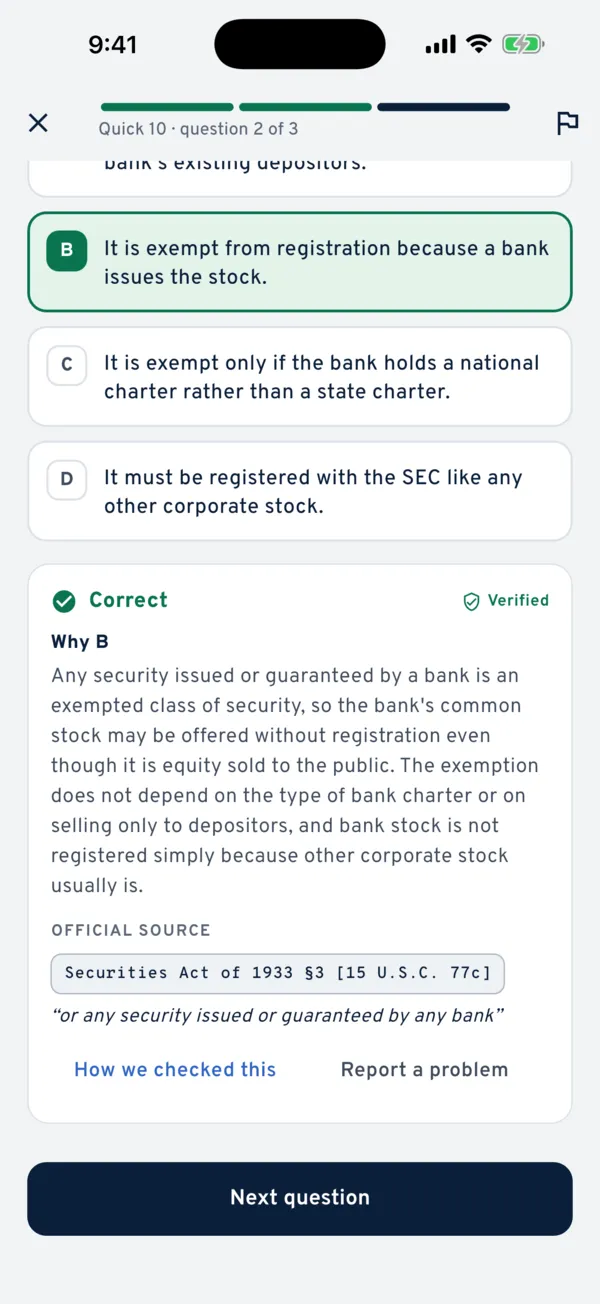
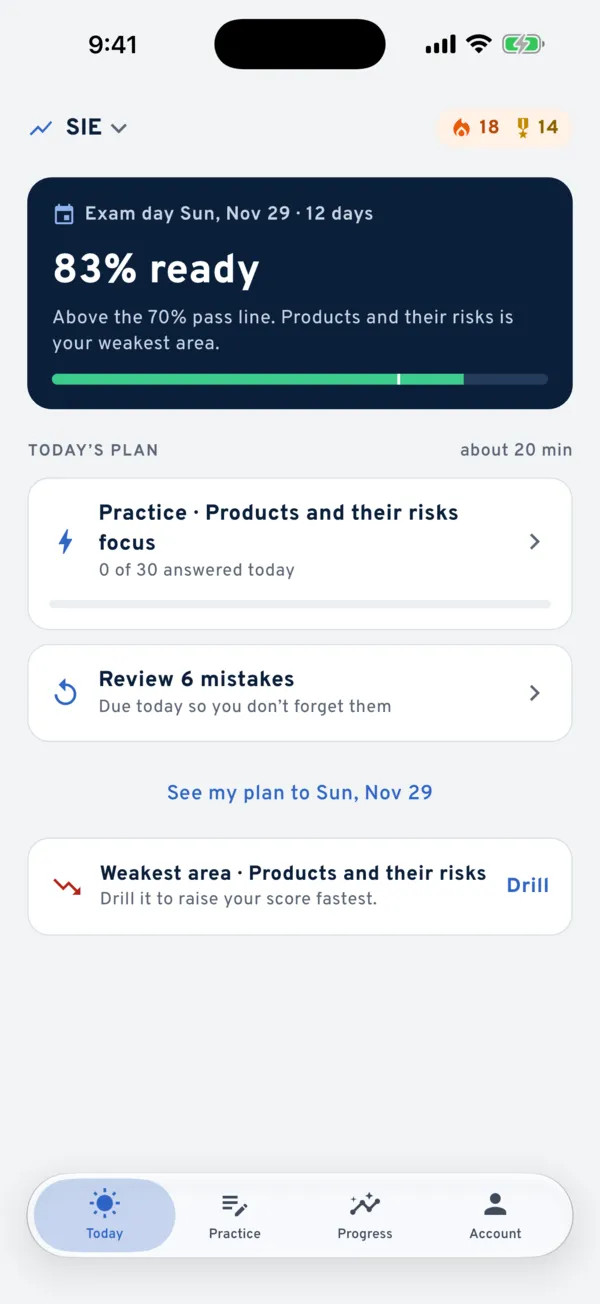
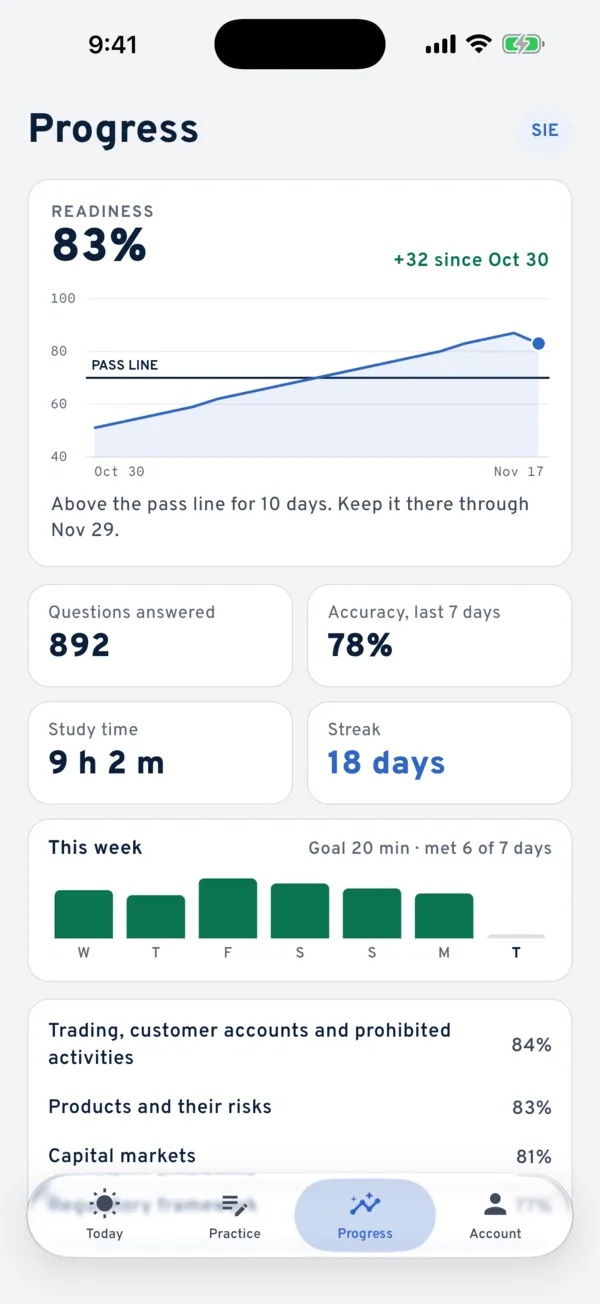
Most people who sell securities at a broker-dealer need three exams, in this order. The SIE, then the Series 7, then the Series 63. Advisers who only charge fees need just the Series 65. And people who do both often take the SIE, the Series 7 and the Series 66. Here’s how to tell which path is yours.
The three common paths
| Your job | Exams you’ll need | Total exam fees |
|---|---|---|
| Broker or registered rep at a broker-dealer | SIE, Series 7, Series 63 | $642 |
| Fee-only adviser at a registered investment adviser | Series 65 | $187 |
| Dually registered rep (commissions and advisory fees) | SIE, Series 7, Series 66 | $672 |
Fees are $100 for the SIE,1 $395 for the Series 7,2 $147 for the Series 63,3 $187 for the Series 654 and $177 for the Series 66.5 Your firm usually pays for the Series 7 and the state exams. The SIE you might pay yourself if you take it before you’re hired.
Step 1. The SIE
The Securities Industry Essentials exam is the foundation. It’s open to anyone 18 or older with no sponsor, and a pass stays valid for four years.1 It covers general knowledge, from capital markets and products to trading rules and the regulatory framework.
If you’re job hunting, take it now. It’s the one exam you can finish entirely on your own, and it shows a hiring manager you’re serious. Our post on taking the SIE without a sponsor walks through enrollment.
Step 2. The Series 7
Once a broker-dealer hires you, it sponsors you for the Series 7, the General Securities Representative exam.2 It’s the core license for selling stocks, bonds, options, munis and most other securities. You can’t take it without a sponsoring firm.2
The SIE is its co-requisite, so you need both passes for registration, in either order.2 Most firms schedule the SIE first and the Series 7 a month or two later.
Some roles use a narrower representative exam instead. A rep who only sells mutual funds and variable annuities might take the Series 6, for example. Your firm will tell you which one your job needs.
Step 3. The state exam
FINRA registers you at the federal level, but each state regulates securities business with its residents. Almost every state requires agent registration, and that usually means the Series 63.3 It’s short (60 scored questions in 75 minutes) and all state law and ethics.3
If you’ll also act as an investment adviser representative, earning fees for advice, you’ll need adviser registration too. You can get there with the Series 63 plus the Series 65, or with the Series 66, which covers both and counts only alongside a Series 7.5 Our post on Series 65 vs Series 66 helps with that choice.
None of the three NASAA exams needs a sponsoring firm.6 If you’re with a firm, though, ask first, because it may need to request the exam on your Form U4.6
The adviser-only path
If you’ll work at a registered investment adviser and only charge fees, skip the FINRA exams entirely. The Series 65 has no co-requisite.4 Pass it, and your firm registers you as an investment adviser representative in the states where you’ll work.
Certain designations can replace the Series 65 under NASAA’s model rule. The CFP, ChFC, CFA, PFS and CIMA qualify in states that adopt the rule.6 If you hold one, check with your state regulator before booking.
Where insurance licenses fit
Many people on the broker path also need a state insurance license, and it’s easy to miss. Fixed annuities and life insurance are insurance products, so selling them takes a state life insurance producer license, not a FINRA registration. Variable annuities and variable life are both insurance and securities, so you need both kinds of license.
New York shows how the two connect. To add variable life and variable annuity authority to a New York life license, you have to show proof of passing the Series 6, 7 or 63.8 Other states have their own versions of that rule. If your firm sells annuities, ask whether it expects you to get the insurance license in your first year, and see our life and health exam guide for how that exam works.
Who pays for what
Firms almost always pay for the exams they sponsor, which means the Series 7 and usually the state exams.2 The SIE is different, because you can take it before anyone hires you, and then it’s your $100.1 A few firms reimburse the SIE after you start. Ask in your interview.
If you’re paying for a NASAA exam yourself, for example a Series 65 to start an advisory practice, budget the $187 fee plus your study materials.4
How long the whole path takes
For someone starting from scratch on the broker path, a realistic timeline is four to six weeks for the SIE, eight to twelve for the Series 7 and two to three for the Series 63, studying around a job. Many firms compress this with paid study time. Plan on three to five months from your first SIE study session to full registration.
The order matters for retention. The Series 63 is easiest right after the Series 7, because you won’t have to relearn the products the law questions refer to. The Series 66 is the same.
Keeping your licenses
Exam passes don’t last forever without registration. Your SIE is good for four years.1 For the Series 7 and other representative exams, FINRA generally requires you to requalify if two or more years pass after your registration ends.7 FINRA’s Maintaining Qualifications Program can extend that to five years with annual continuing education. NASAA’s Exam Validity Extension Program does something similar for the Series 63 and 65 in states that adopt it, also up to five years.34
If you’re changing firms, your registrations transfer when the new firm files your Form U4. If you’re leaving the industry for a while, look into those extension programs before your registration ends, not after.
For the full details on the state exams, see the Series 63, 65 and 66 guide. Clinched has courses for the SIE and the Series 63, 65 and 66. The Series 7 course is on the way, and you can tap “Notify me” in the app to hear when it opens.
Questions people ask
What licenses does a financial advisor need?
It depends on how you're paid. Advisors at broker-dealers who earn commissions usually need the SIE, Series 7 and Series 63. Fee-only advisers at registered investment advisers need the Series 65. Many advisors who do both hold the SIE, Series 7 and Series 66.
Can I get all my securities licenses without a firm?
Only some. The SIE and the NASAA exams (Series 63, 65 and 66) don't need a sponsor. The Series 7 does, and so does the actual registration that lets you do business.
Do I need an insurance license too?
If you'll sell fixed annuities or life insurance, yes. Those require a state insurance producer license, and variable annuities need both an insurance license and a FINRA registration such as the Series 6 or 7.
Sources
- Securities Industry Essentials (SIE) ExamFINRA
- Series 7, General Securities Representative ExamFINRA
- Series 63, Uniform Securities Agent State Law ExamFINRA
- Series 65, Uniform Investment Adviser Law ExamFINRA
- Series 66, Uniform Combined State Law ExamFINRA
- Exam FAQsNASAA
- FINRA Rule 1210, Registration RequirementsFINRA
- Life and Accident/Health and Variable Life/Variable Annuity Agent or BrokerNew York State Department of Financial Services
ClinchedSIE
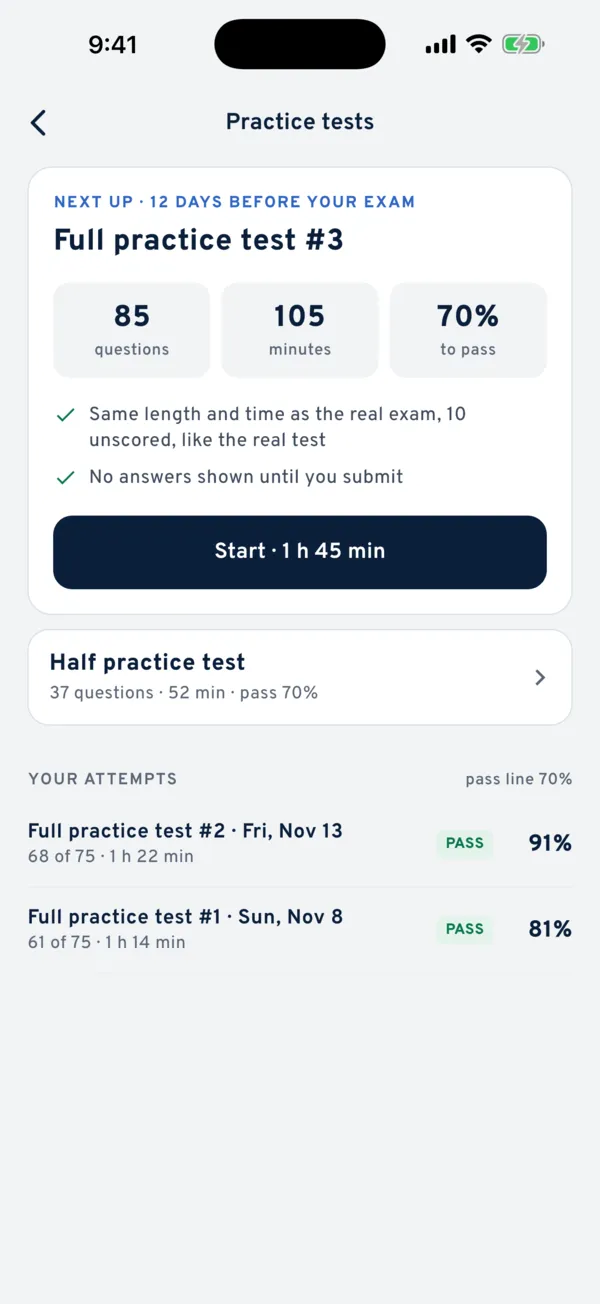
Pass SIE on the first try.
Practice questions written from the official sources, full practice tests in the real format and a plan that ends on your test date. Free to start.
Keep reading
- Exam guide · Series 63, 65 and 66
 Series 65 vs Series 66: Which One Should You Take?The Series 65 has 130 scored questions and stands alone. The Series 66 has 100 and only counts with a Series 7. How to choose based on your job and where you work.
- Exam guide · SIE · Series 7
 SIE vs Series 7: How the Two FINRA Exams Fit TogetherThe SIE has 75 scored questions and needs no sponsor. The Series 7 has 125 and needs a firm. How they differ in content, cost and difficulty, and which comes first.
- Exam guide · SIE · Series 7
 FINRA and NASAA Retake Waiting Periods Change in January 2027FINRA cuts SIE and Series 7 retake waits to 15 and 60 days on January 19, 2027. NASAA cuts the third-failure wait to 60 days on January 4. What changes for you.
- Exam guide · SIECan You Take the SIE Without a Sponsor? Yes, Here's HowYou can take the SIE without a sponsor if you're 18 or older. How to enroll on your own, what the $100 fee covers, and what you still need a firm for afterward.