SIE guideFree practice test
SIE practice test
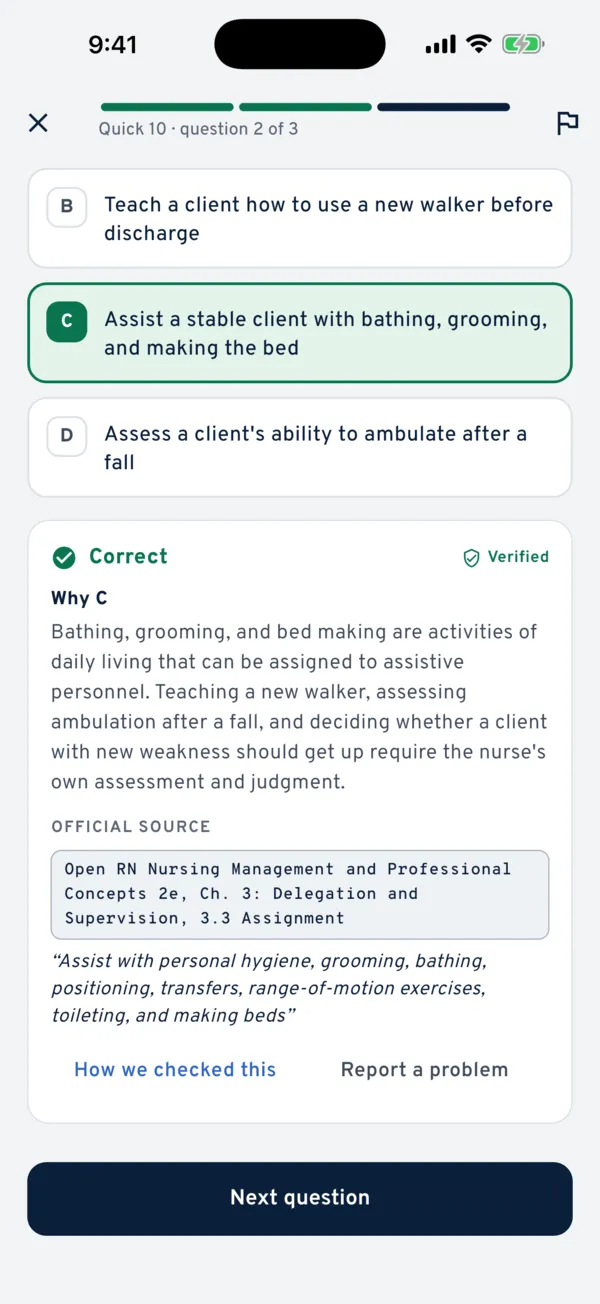
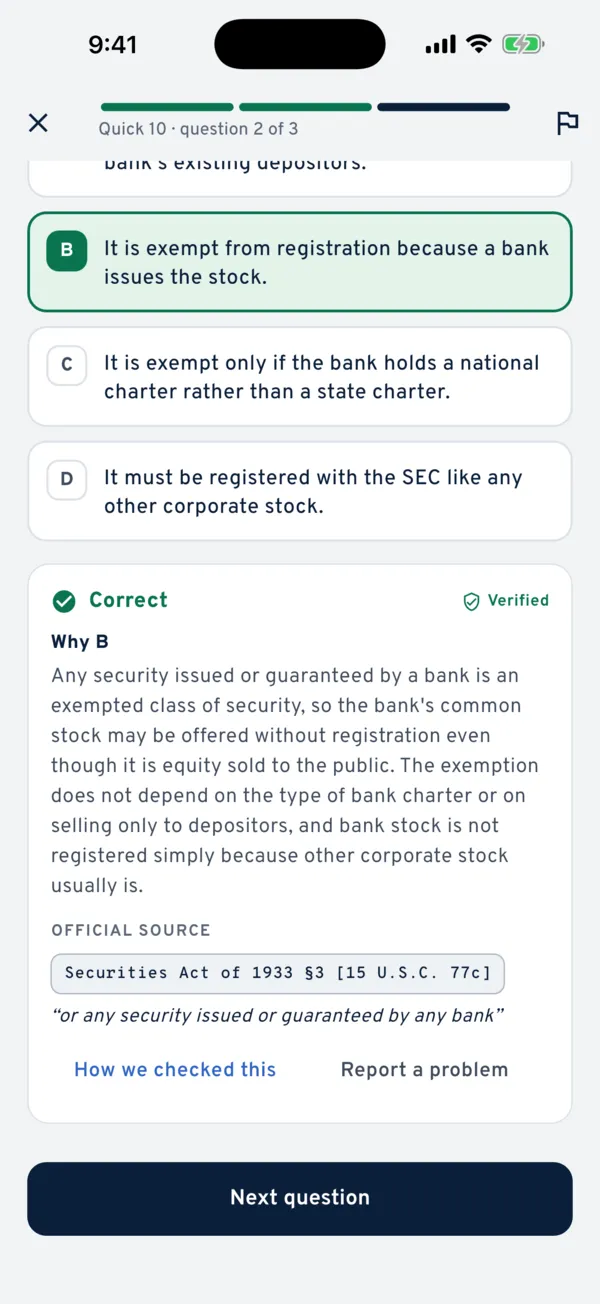
15 free SIE questions from the 570 in Clinched, chosen to match how the real test is weighted. Pick an answer to see the explanation and the official text it comes from. Nothing to sign up for.
-
Question 1 of 15Capital markets
A private operating company merges into a public shell company in a reverse merger. What happens to voting control of the surviving public company?
Correct answer B. The private company's shareholders gain a controlling interest in the public shell.
In a typical reverse merger the private operating company's shareholders exchange their shares for a large majority of the public company's shares and gain a controlling interest in its voting power and outstanding stock. The shell's existing holders do not keep control, the split is not equal, and the private company's management typically takes over the board and management of the public shell.
Official source Investor.gov (SEC): Reverse MergersAlthough the public shell company survives the merger, the private operating company’s shareholders gain a controlling interest in the voting power and outstanding shares of stock of the public shell company.
-
Question 2 of 15Capital markets
A single customer earned $240,000 two years ago, $150,000 last year, and reasonably expects to earn $260,000 this year. Does she satisfy the income test for accredited investor status?
Correct answer C. No, because her income fell short in one of the two prior years.
The income test looks at each of the two prior years, so a year below the threshold keeps her from qualifying on income even though her expected pay this year is higher. Averaging the years or looking only at the current year is not how the test works, and an individual can qualify on net worth alone without meeting the income test.
Official source Investor.gov (SEC): Private Placements under Regulation D – Updated Investor Bulletinearned income that exceeded $200,000 (or $300,000 together with a spouse or spousal equivalent) in each of the prior two years, and reasonably expects the same for the current year, OR
-
Question 3 of 15Capital markets
A firm wants to operate a trading venue as a national securities exchange. What must the venue do to become registered as a national securities exchange?
Correct answer B. File an application with the SEC that contains the exchange's rules
An exchange becomes a national securities exchange by filing a registration application with the SEC that contains the exchange's rules and other required information. A private venue cannot simply publish rules and start trading, broker-dealer registration is a different status, and a member vote does not substitute for SEC registration.
Official source Securities Exchange Act of 1934 §6 [15 U.S.C. 78f]by filing with the Commission an application for registration in such form as the Commission, by rule, may prescribe containing the rules of the exchange
-
Question 4 of 15Products and their risks
An investor withdraws part of the contract value of a deferred annuity three years after purchase, during the surrender charge period. What is the effect of the surrender charge?
Correct answer B. It reduces the value of the investment and its return.
A surrender charge applies when an investor takes a withdrawal of some or all of the contract value within the surrender charge period, and it reduces both the value of the investment and the return on it. It is a charge imposed under the contract, separate from any tax or tax penalty on the withdrawal, and a partial withdrawal can trigger it just as a full surrender can.
Official source Investor.gov (SEC): AnnuitiesSurrender charges will reduce the value of -- and the return on -- your investment.
-
Question 5 of 15Products and their risks
A private company plans a transaction in which it sells its shares to the public for the first time. How is this transaction best described?
Correct answer C. An initial public offering
An initial public offering generally refers to when a company first sells its shares to the public, which is exactly what this company is doing. A sale of shares by existing shareholders after the company is already public is a different transaction, a bond offering raises debt rather than equity, and a repurchase is the company buying shares back.
Official source Investor.gov Glossary: Indexed Annuities; Individual Retirement Account (IRA); Initial Public Offering (IPO)An initial public offering, or IPO, generally refers to when a company first sells its shares to the public.
-
Question 6 of 15Products and their risks
An investor is considering shares of a publicly traded closed-end fund. How do those shares trade?
Correct answer C. On an exchange, where they may trade above or below net asset value.
Closed-end fund shares are bought and sold in the market like other listed securities, so their price can sit at a premium to net asset value or at a discount to it. Shares that are redeemed on demand at net asset value are the feature of an open-end mutual fund, not a closed-end fund. The offering price at launch does not fix the price at which the shares later change hands.
Official source Investor.gov (SEC): Publicly Traded Closed-End FundsAsk questions about the fund, including whether its shares are trading at a discount or premium, if it uses leverage or debt, to what extent it holds illiquid investments, whether it follows a managed distribution policy, and what you will pay in fees and expenses.
-
Question 7 of 15Products and their risks
A customer's variable life insurance policy has built up cash value over several years, and the customer now withdraws part of the gain. How is that money taxed?
Correct answer D. It grows tax-deferred and is taxed at ordinary income rates when withdrawn
Cash value inside a variable life policy accumulates tax-deferred, and the customer faces federal income tax only when money is withdrawn, at ordinary income rates rather than the lower capital gains rates. The growth is not taxed annually while it stays in the policy, and withdrawals do not receive capital gains treatment.
Official source Investor.gov (SEC): Variable Life InsuranceYour cash value may accumulate on a tax-deferred basis. This means you will only be subject to federal income tax when you withdraw money from your policy.
Investor.gov (SEC): Variable Life Insurance“The policy’s gains will be subject to ordinary federal income tax rates rather than lower capital gains rates.” -
Question 8 of 15Regulatory framework
A court has permanently enjoined a person from acting as an investment adviser because of securities-related conduct. A broker-dealer is considering hiring the person as an associated person. What is the effect of the injunction?
Correct answer B. It is a statutory disqualification from association with a broker-dealer.
A court injunction that bars a person from acting as an investment adviser, broker, or dealer, or from securities-related conduct, is a ground that makes the person statutorily disqualified from associating with a broker-dealer. It is not limited to criminal convictions, and it is not limited to adviser work or to an additional SEC bar.
Official source Securities Exchange Act of 1934 §15(C) [15 U.S.C. 78o](C) is permanently or temporarily enjoined by order, judgment, or decree of any court of competent jurisdiction from acting as an investment adviser, underwriter, broker, dealer
-
Question 9 of 15Regulatory framework
A registered investment adviser is about to enter into an advisory contract with a new retail investor. What must the adviser do with its current Form CRS?
Correct answer A. Deliver it before or at the time the contract is signed
Form CRS must be delivered to a retail investor before or at the time the advisory contract is entered into, so delivery coincides with the start of the relationship. Posting the form is also required for advisers with a website, but it does not replace delivery, and the 30-day request and 60-day amendment periods apply to other situations.
Official source 17 CFR §275.204-5(a)Deliver to each retail investor your current Form CRS before or at the time you enter into an investment advisory contract with that retail investor.
-
Question 10 of 15Regulatory framework
An investment adviser is registered with the SEC and has advisory clients in several states. What is the adviser's registration obligation under state law?
Correct answer D. It does not have to register with the state securities regulators
A state law requiring registration or qualification as an investment adviser does not apply to a person that is registered with the SEC as an investment adviser, so the adviser does not also register state by state. Having clients in a state does not trigger state adviser registration, and the location of the main office or an extra office does not change that.
Official source Investment Advisers Act of 1940 §203A(3) [15 U.S.C. 80b-3a]No law of any State or political subdivision thereof requiring the registration, licensing, or qualification as an investment adviser or supervised person of an investment adviser shall apply to any person—
-
Question 11 of 15Regulatory framework
An individual was convicted several years ago under a federal statute prohibiting wire fraud in connection with a business scheme. How does that conviction affect the person's status under the federal securities laws?
Correct answer A. It can be a basis for statutory disqualification, because it involves a listed federal criminal statute.
Statutory disqualification can rest on a violation of specified federal criminal statutes, including the mail-fraud and wire-fraud provisions, so a wire-fraud conviction is a disqualifying event. The rule does not require that the fraud involve a security, and the fact that the conviction is several years old is not by itself a reason to disregard it.
Official source Securities Exchange Act of 1934 §15(ii) [15 U.S.C. 78o]involves the violation of section 152, 1341, 1342, or 1343 or chapter 25 or 47 of title 18, United States Code, or a violation of a substantially equivalent foreign statute.
-
Question 12 of 15Trading, customer accounts and prohibited activities
A customer sold short 100 shares of a stock and now wants to close the position. Which action will satisfy the closing requirement?
Correct answer C. Buy substantially identical property and deliver it to the lender
Closing a short sale requires the seller to buy substantially identical property and deliver it to the lender, or to make delivery out of property held at the time of the sale. Paying a cash difference does not complete the delivery requirement, and delivery of property borrowed from another lender does not satisfy it either.
Official source IRS Pub. 550 (2025), Short SalesAt a later date, you either buy substantially identical property and deliver it to the lender or make delivery out of property you held at the time of the sale. Delivery of property borrowed from another lender does not satisfy this requirement.
-
Question 13 of 15Trading, customer accounts and prohibited activities
A broker-dealer submits a short sale order in a covered security at a price below the current national best bid and marks the order “short exempt” only to avoid the price test. Is the marking proper?
Correct answer A. No; short exempt is limited to specified cases, such as an order above the best bid.
A short exempt marking is available only in specified circumstances, such as when the broker-dealer identifies the order as being at a price above the current national best bid at submission. It is not a general waiver that any broker-dealer may use for any short sale. The price test is not an absolute ban, because short exempt orders may execute without regard to the best bid in specified cases.
Official source 17 CFR §242.201(iii)a broker or dealer submitting a short sale order of the covered security in question to a trading center may mark the order “short exempt” if the broker or dealer identifies the order as being at a price above the current national best bid at the time of submission
17 CFR §242.201(iii)“The execution or display of a short sale order of a covered security marked “short exempt” without regard to whether the order is at a price that is less than or equal to the current national best bid.” -
Question 14 of 15Trading, customer accounts and prohibited activities
A customer deposits exactly $10,000 in cash into a brokerage account. What does the firm's currency transaction reporting obligation require?
Correct answer A. No report, because a report is required only for transactions of more than $10,000.
A currency transaction report is required for a currency transaction of more than $10,000, so a deposit of exactly $10,000 does not trigger the requirement. The threshold is not reached at exactly $10,000, and broker-dealers are not exempt from currency transaction reporting.
Official source 31 CFR §1010.311Each financial institution other than a casino shall file a report of each deposit, withdrawal, exchange of currency or other payment or transfer, by, through, or to such financial institution which involves a transaction in currency of more than $10,000, except as otherwise provided in this section.
-
Question 15 of 15Trading, customer accounts and prohibited activities
A customer complains that a broker-dealer routed an order to a market that filled it more slowly than another venue would have. The firm reviews, in the aggregate, which competing markets, market makers and ECNs offer the most favorable terms. Which duty is the firm applying?
Correct answer C. Best execution, seeking the most favorable terms reasonably available.
Best execution is the duty to seek the best execution reasonably available for customer orders by evaluating competing markets, market makers and ECNs in the aggregate and periodically assessing which offer the most favorable terms. It does not promise the lowest price on each individual order, and price improvement is an opportunity rather than a guarantee. Internalization is one routing choice, filling an order from the firm's own inventory, not the name of the duty itself.
Official source Investor.gov (SEC): Executing an OrderIn deciding how to execute orders, your broker has a duty to seek the best execution that is reasonably available for its customers' orders.
Want the other 555?
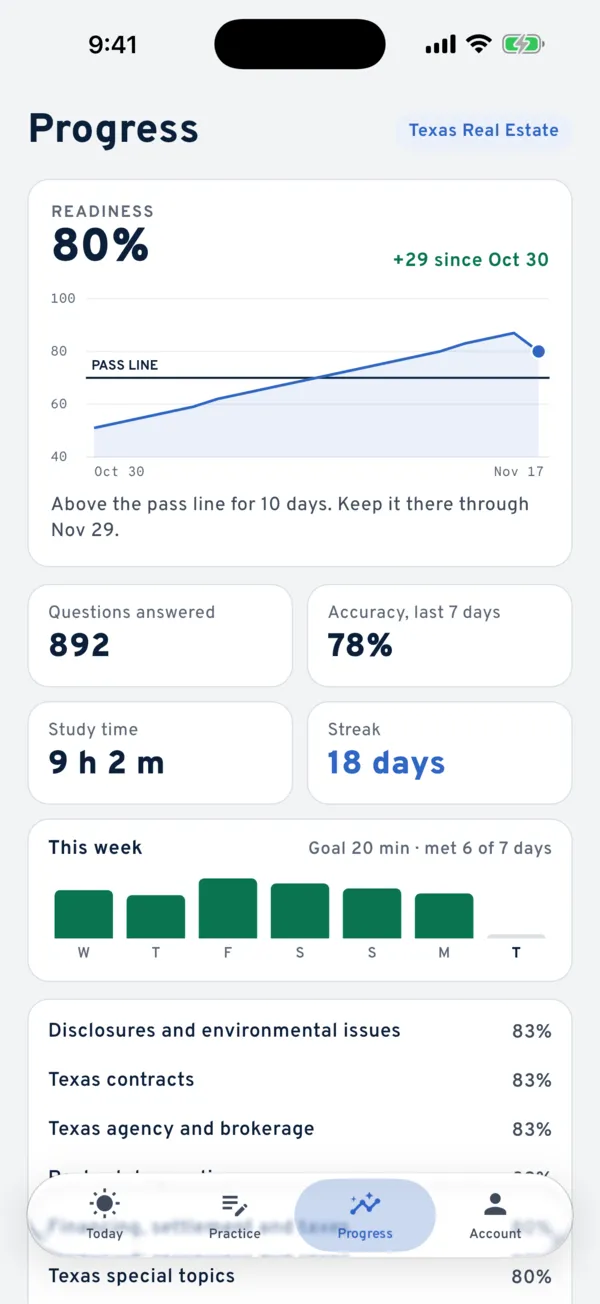
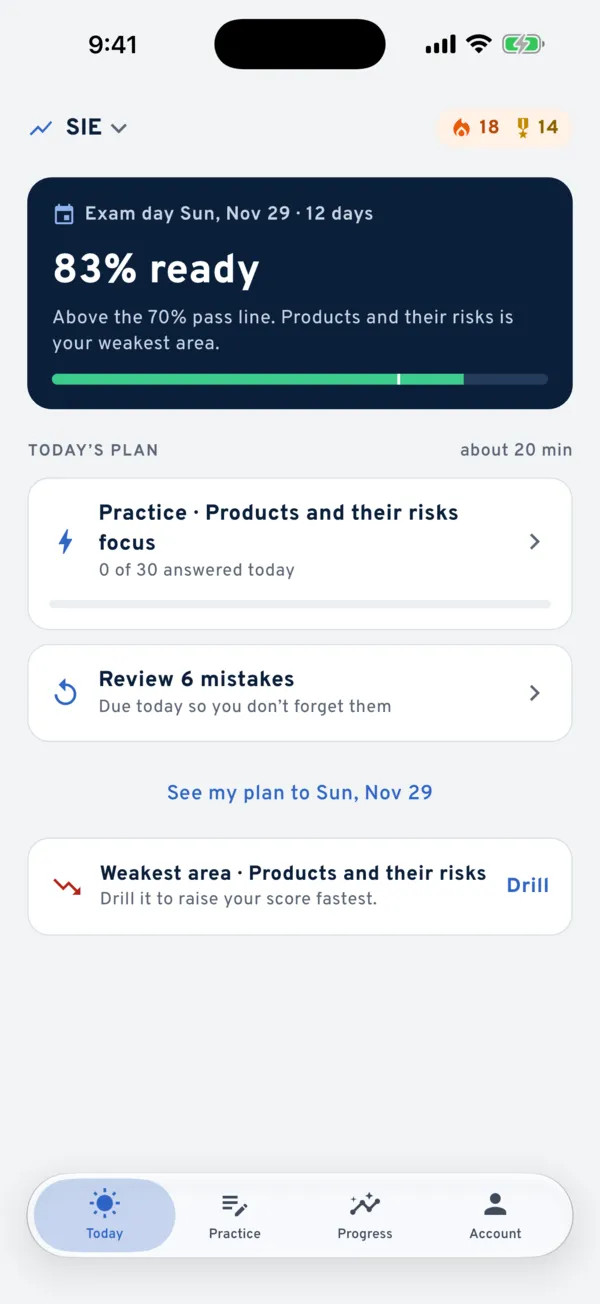
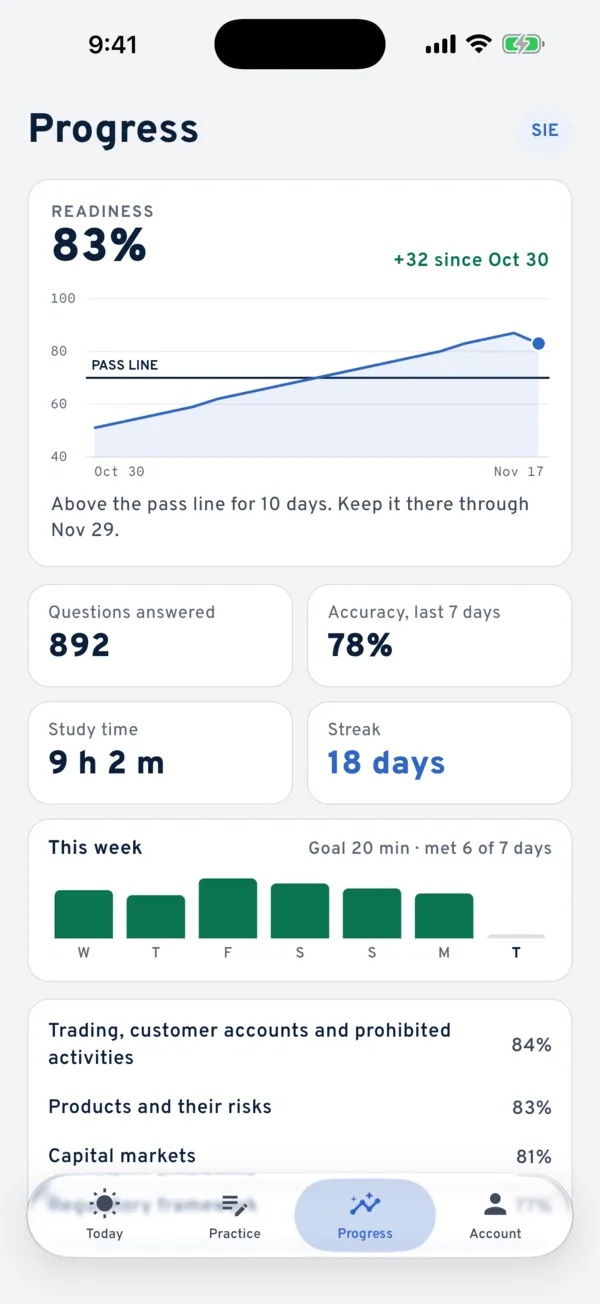
Clinched has every SIE question in this format, with full practice tests that match the real one, a readiness score by area and a plan to your test date. Free to start with 10 questions a day.
Read the SIE guide or see how we write and check every question.
Free on the App Store
Your exam, in your pocket.
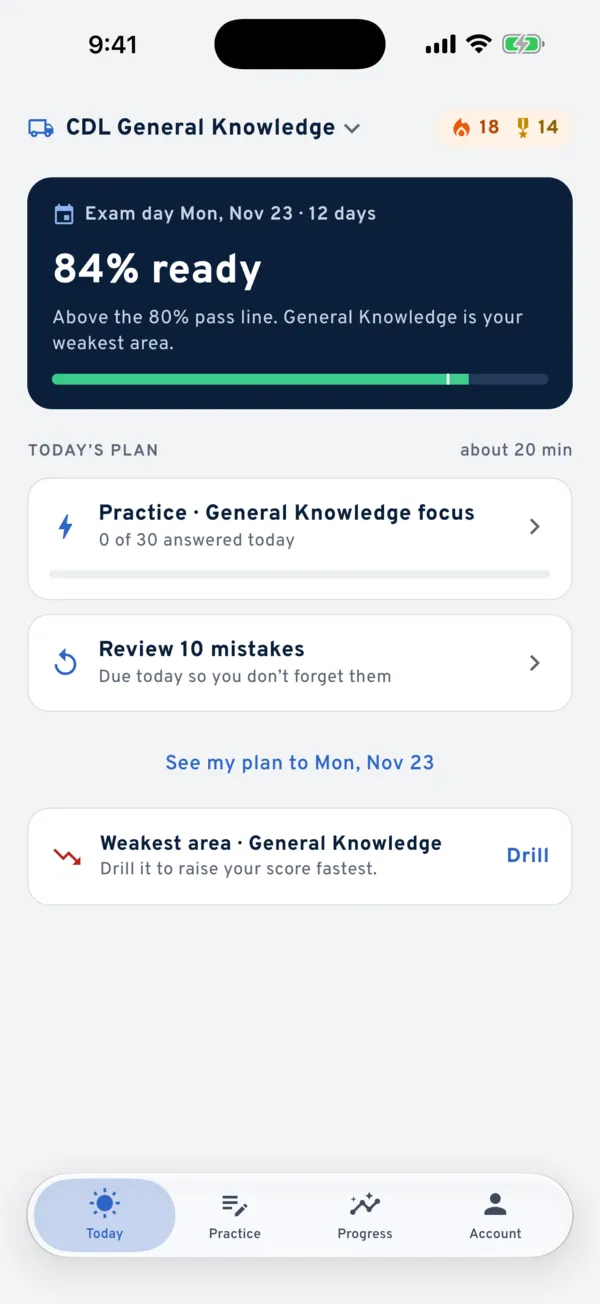
20 exams ready with questions written from the official sources, timed practice tests in the real format and a readiness score with a pass line.
On your computer?
Scan with your iPhone camera to get Clinched practice in the app.