Series 63, 65 and 66 guideFree practice test
Series 63 practice test
15 free Series 63 questions from the 281 in Clinched, chosen to match how the real test is weighted. Pick an answer to see the explanation and the official text it comes from. Nothing to sign up for.
-
Question 1 of 15Regulation of agents of broker-dealers and issuers
A corporation distributes to its existing shareholders rights to subscribe to additional common stock, and separately guarantees payment of principal on a bond issued by its subsidiary. Under the Uniform Securities Act, the rights and the guarantee are:
Correct answer B. securities
The definition of security reaches a guarantee of, and a warrant or right to subscribe to or purchase, any of the instruments listed as securities, so both the subscription rights and the guarantee are securities. That they are contracts rather than shares, who the guarantee benefits, and whether the rights are paid for do not change the result.
Official source S.C. Code Ann. §35-1-102a certificate of interest or participation in, temporary or interim certificate for, receipt for, guarantee of, or warrant or right to subscribe to or purchase, any of the foregoing.
-
Question 2 of 15Regulation of broker-dealers
A broker-dealer is registered in the state and maintains its principal office elsewhere. Under the Uniform Securities Act, the firm must:
Correct answer A. maintain the records required by rule
A broker-dealer registered in the state must make and maintain the accounts, correspondence, memoranda, papers, books, and other records required by rule. The duty does not arise only when the Administrator asks for records, and it is not displaced by federal recordkeeping rules or by the firm having no office in the state.
Official source S.C. Code Ann. §35-1-411shall make and maintain the accounts, correspondence, memoranda, papers, books, and other records required by rule adopted or order issued under this chapter;
-
Question 3 of 15Regulation of broker-dealers
A broker-dealer is registered with the Securities and Exchange Commission but has not registered in the state, and no exemption applies to it. It opens accounts for retail customers in the state. Under the Uniform Securities Act, the firm's activity is:
Correct answer B. unlawful, because it is not registered or exempt in the state
It is unlawful to transact business as a broker-dealer in the state unless the firm is registered there or exempt, and federal registration does not satisfy that requirement. Having no office in the state matters only through the exemptions, and giving customers federal paperwork does not register the firm.
Official source Minn. Stat. §80A.56It is unlawful for a person to transact business in this state as a broker-dealer unless the person is registered under this chapter as a broker-dealer or is exempt from registration as a broker-dealer under subsection (b) or (d).
-
Question 4 of 15Communication with customers and prospects
An investment adviser's advertisement promotes the potential tax savings clients may obtain from the firm's strategy but says nothing about the risks and limitations of that strategy. The advertisement is:
Correct answer A. prohibited, because the benefits are not balanced with material risks
An advertisement that discusses potential benefits of the adviser's services must give fair and balanced treatment of the material risks and limitations connected with those benefits. Pointing to risk disclosure elsewhere does not satisfy the rule, and avoiding a guarantee does not make an unbalanced benefit claim acceptable. Benefits may be described, but only with balanced risk treatment.
Official source 17 CFR §275.206(4)-1Discuss any potential benefits to clients or investors connected with or resulting from the investment adviser's services or methods of operation without providing fair and balanced treatment of any material risks or material limitations associated with the potential benefits;
-
Question 5 of 15Communication with customers and prospects
An investment adviser files a record with the Administrator that contains statements that are literally true but leaves out a material fact needed to keep those statements from misleading the Administrator. Under the Uniform Securities Act, the filing is:
Correct answer C. unlawful, because the omission makes the statements misleading
The rule reaches an omission of a material fact needed to make the statements made, in light of the circumstances, not false or misleading. Literal truth of the individual statements does not cure a misleading omission, and the duty does not depend on the Administrator requesting the fact.
Official source S.C. Code Ann. §35-1-505or, in connection with the statement, to omit to state a material fact necessary to make the statement made, in the light of the circumstances under which it was made, not false or misleading.
-
Question 6 of 15Ethical practices and obligations
An agent with a hidden interest in an offering has a friend at another firm take the customer's order and pass a payment back to the agent, so the agent never handles the customer's order or funds. Under the Uniform Securities Act, the agent's conduct is:
Correct answer C. unlawful, because the prohibition applies to acts done directly or indirectly
The fraud prohibition applies to conduct carried out directly or indirectly, so routing a customer's order through another person does not shield the agent. Whether the agent personally touched the order or funds, and whether the friend understood the arrangement, does not change that.
Official source S.C. Code Ann. §35-1-501It is unlawful for a person, in connection with the offer, sale, or purchase of a security, directly or indirectly:
-
Question 7 of 15Ethical practices and obligations
An agent recommends a fund that pays her firm more revenue sharing than a comparable fund, although her own pay is the same either way and she does not consciously favor the fund. Under Regulation Best Interest, a conflict of interest:
Correct answer A. exists, even though the agent is not conscious of the influence
A conflict of interest is any interest that might incline the firm or its associated person, consciously or unconsciously, to make a recommendation that is not disinterested. The agent's lack of awareness and her unchanged personal payout do not remove the conflict created by the firm's extra revenue sharing on the recommended fund.
Official source 17 CFR §240.15l-1(3) Conflict of interest means an interest that might incline a broker, dealer, or a natural person who is an associated person of a broker or dealer —consciously or unconsciously—to make a recommendation that is not disinterested.
-
Question 8 of 15Regulation of investment advisers under state law
An investment adviser asks the Administrator for permission to employ an individual who is barred from association with a broker-dealer by an order of a self-regulatory organization, and the adviser shows good cause. Under the Uniform Securities Act, the Administrator may:
Correct answer B. waive the prohibition in whole or in part by order
On the adviser's request and for good cause, the Administrator may by order waive the prohibition in whole or in part, so the adviser is not permanently shut out from employing the individual. Nothing in the law makes a self-regulatory organization's bar absolute, requires that body to lift the bar first, or ties the waiver to reinstatement of the individual's registration.
Official source S.C. Code Ann. §35-1-403Upon request from the investment adviser and for good cause, the Securities Commissioner, by order, may waive, in whole or in part, the application of the prohibitions of this subsection to the investment adviser.
-
Question 9 of 15Regulation of investment advisers under state law
An investment adviser knows that an individual it wants to hire to solicit advisory clients is barred from association with a broker-dealer by an order of a self-regulatory organization. The adviser employs the individual anyway. Under the Uniform Securities Act, the employment is:
Correct answer C. unlawful, because a bar covering broker-dealers also covers investment advisers
It is unlawful for an adviser to employ or associate with an individual to engage in activities related to investment advice when that individual is barred from association with an investment adviser, a federal covered investment adviser, or a broker-dealer by an order of the Administrator, the SEC, or a self-regulatory organization. The adviser here knows of the bar, so the limited protection for an adviser that did not know and could not have known does not apply.
Official source S.C. Code Ann. §35-1-403the individual is barred from employment or association with an investment adviser, federal covered investment adviser, or broker-dealer by an order under this chapter, the Securities and Exchange Commission, or a self-regulatory organization
-
Question 10 of 15Regulation of investment adviser representatives
An individual is registered as an investment adviser representative of a state-registered advisory firm and provides securities advice to the firm's clients for compensation. Under the Uniform Securities Act, the individual is:
Correct answer B. not an investment adviser, because a representative is excluded from the definition
The definition of investment adviser expressly does not include an investment adviser representative, so the individual registers as a representative and does not separately register as an adviser. Giving advice for compensation and holding out as an advice provider describe the advisory firm's activities, not a separate basis for the individual to be an adviser; the exclusion applies regardless of whether the firm is federal covered.
Official source S.C. Code Ann. §35-1-102(A) an investment adviser representative;
-
Question 11 of 15Regulation of investment adviser representatives
An investment adviser representative is registered in the state through one advisory firm. A second, unrelated advisory firm asks him to solicit its clients as well, and no rule or order permits him to act for more than one adviser. Under the Uniform Securities Act, the representative may:
Correct answer B. not transact business as a representative for the second firm
An individual may not transact business as a representative for more than one investment adviser or federal covered adviser unless a rule or order allows it, so the second firm's request cannot be accepted. Consent from the firms and disclosure to clients are not substitutes for a rule or order. Registration through one firm does not leave the representative free to serve others.
Official source S.C. Code Ann. §35-1-404An individual may not transact business as an investment adviser representative for more than one investment adviser or federal covered investment adviser unless a rule adopted or order issued under this chapter allows
-
Question 12 of 15Remedies and administrative provisions
The Administrator has reason to believe a person may be violating the securities Act. Under the Uniform Securities Act, the Administrator may:
Correct answer C. investigate inside or outside the state
The Administrator may conduct public or private investigations within or outside the state to determine whether a person has violated, is violating, or is about to violate the Act or its rules, or to aid enforcement or rulemaking. A completed violation, the state's borders, or a customer complaint are not conditions on that authority.
Official source S.C. Code Ann. §35-1-602conduct public or private investigations within or outside of this State which the Securities Commissioner considers necessary or appropriate to determine whether a person has violated, is violating, or is about to violate this chapter
-
Question 13 of 15Remedies and administrative provisions
An applicant for registration as an agent discloses that four years ago the applicant willfully violated a rule adopted under the Uniform Securities Act. The applicant was never charged with any crime, and no customer lost money. Under the Uniform Securities Act, the Administrator may:
Correct answer B. deny the application
A willful violation of, or willful failure to comply with, the Act or a rule or order issued under it within the previous ten years is a ground for denying an application. A criminal conviction is a separate ground, and neither the timing of the violation before the application nor the absence of customer losses removes the ground.
Official source Minn. Stat. §80A.67(2) willfully violated or willfully failed to comply with this chapter or the predecessor act or a rule adopted or order issued under this chapter or the predecessor act within the previous ten years;
-
Question 14 of 15Regulation of securities and issuers
A stock insurance company authorized to do business in the state issues and guarantees a debt security and offers it to investors in the state. Under the Uniform Securities Act, the security is:
Correct answer D. exempt from registration as a security
A security issued by, representing a debt of, or insured or guaranteed by an insurance company authorized to do business in the state is an exempt security, so no securities registration is needed. The exemption does not turn on who buys the security, and insurance company securities are among the listed exempt securities.
Official source S.C. Code Ann. §35-1-201a security issued by and representing an interest in, or a debt of, or insured or guaranteed by, an insurance company authorized to do business in this State;
-
Question 15 of 15Regulation of securities and issuers
An investment company security that is a federal covered security and is not otherwise exempt is about to be offered for the first time in the state. Under the Uniform Securities Act, the state may require the issuer to:
Correct answer B. file its SEC registration records, a consent to service of process, and a fee
For a federal covered investment company security, the state does not run its own registration; before the initial in-state offer it may require a notice filing consisting of the records that are part of the federal registration statement, a consent to service of process, and a fee. Coordination and qualification are state registration routes used for securities that are not federal covered, and a federal covered security is not free of all state filing requirements.
Official source S.C. Code Ann. §35-1-302(1) before the initial offer of a federal covered security in this State, all records that are part of a federal registration statement filed with the Securities and Exchange Commission under the Securities Act of 1933
S.C. Code Ann. §35-1-302“a consent to service of process complying with Section 35-1-611 signed by the issuer and the payment of a fee set forth by the Securities Commissioner by rule or order”
Want the other 266?
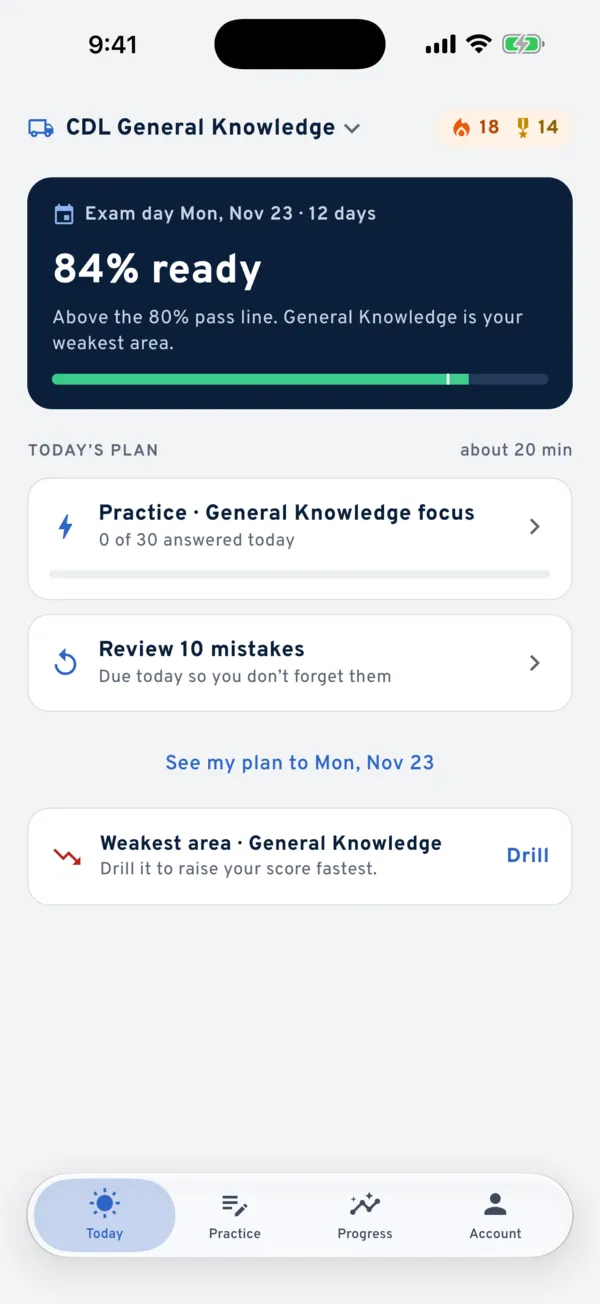
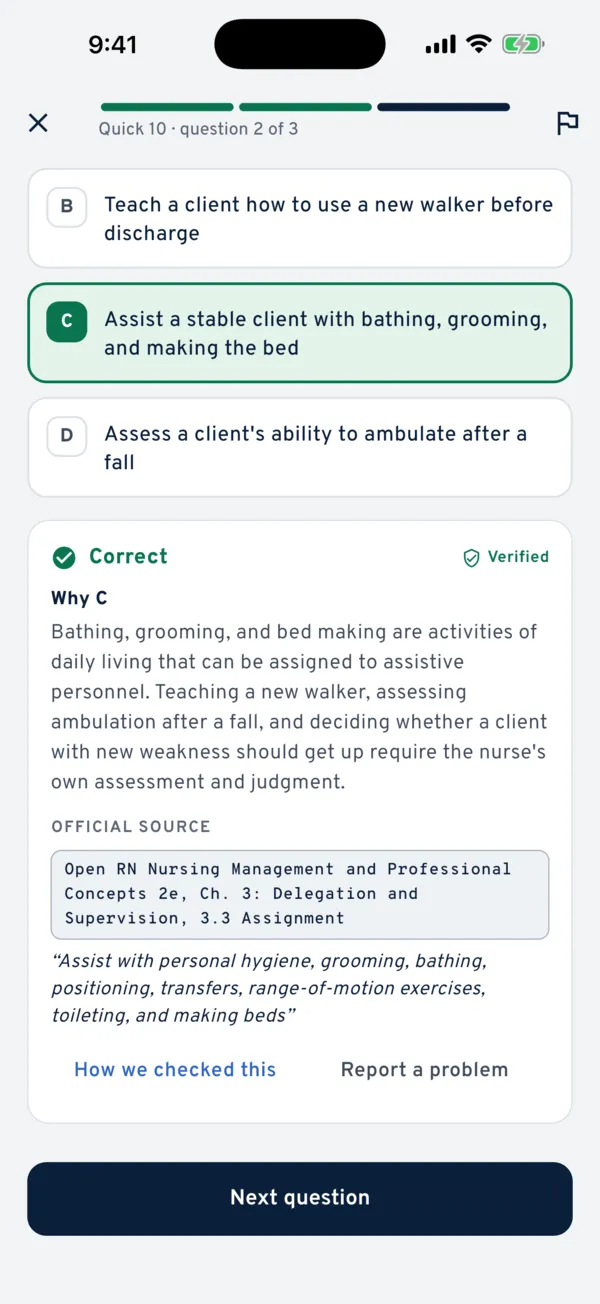
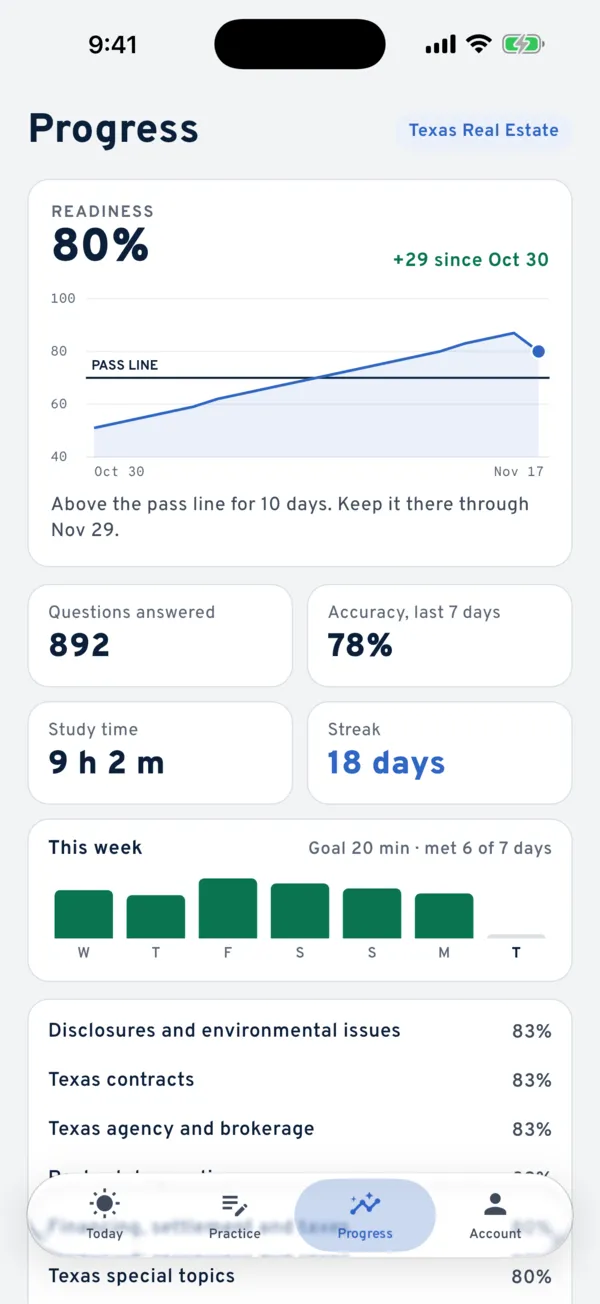
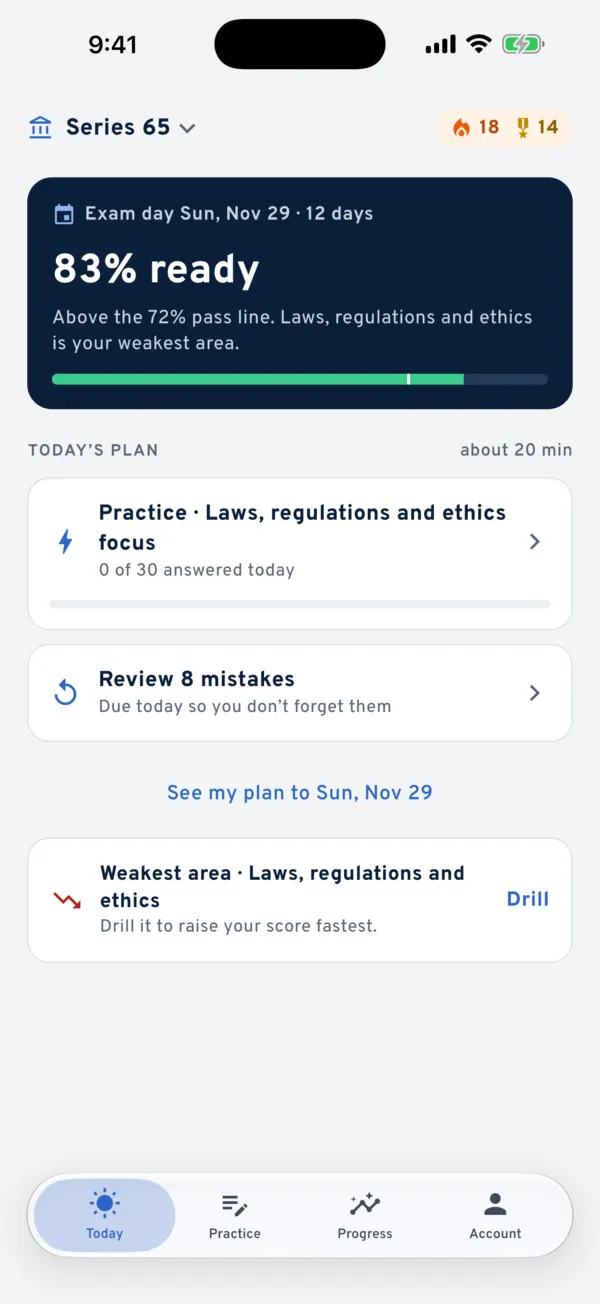
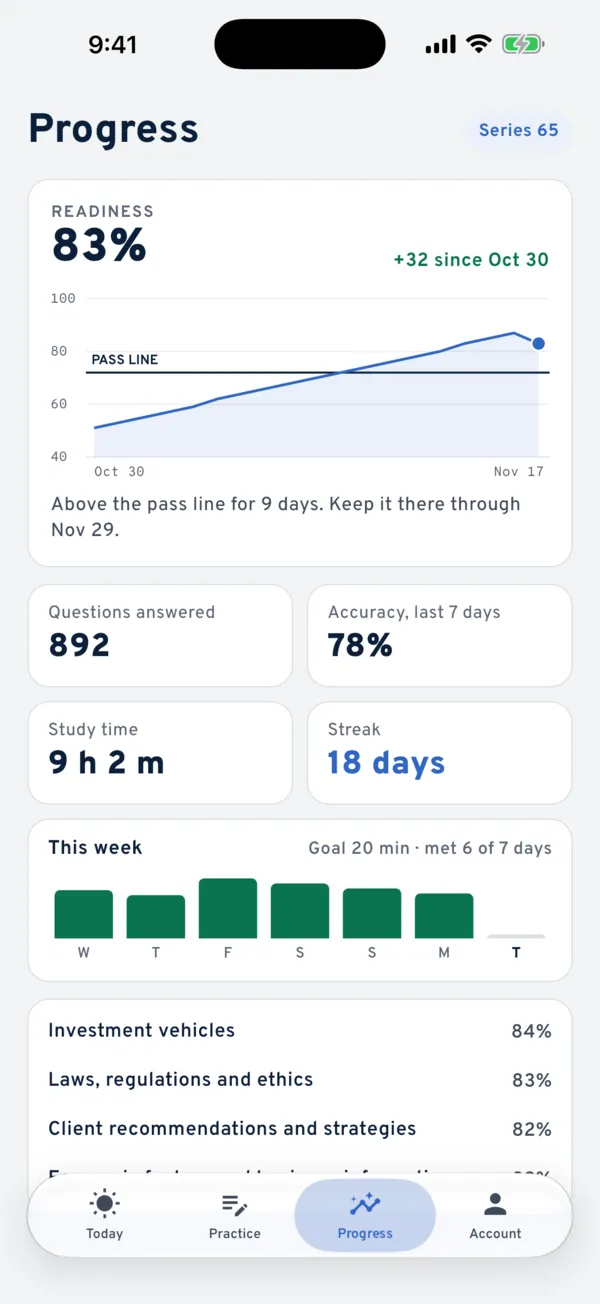
Clinched has every Series 63 question in this format, with full practice tests that match the real one, a readiness score by area and a plan to your test date. Free to start with 10 questions a day.
Read the Series 63, 65 and 66 guide or see how we write and check every question.
Free on the App Store
Your exam, in your pocket.
20 exams ready with questions written from the official sources, timed practice tests in the real format and a readiness score with a pass line.
On your computer?
Scan with your iPhone camera to get Clinched practice in the app.