Real Estate License guideFree practice test
New York Real Estate practice test
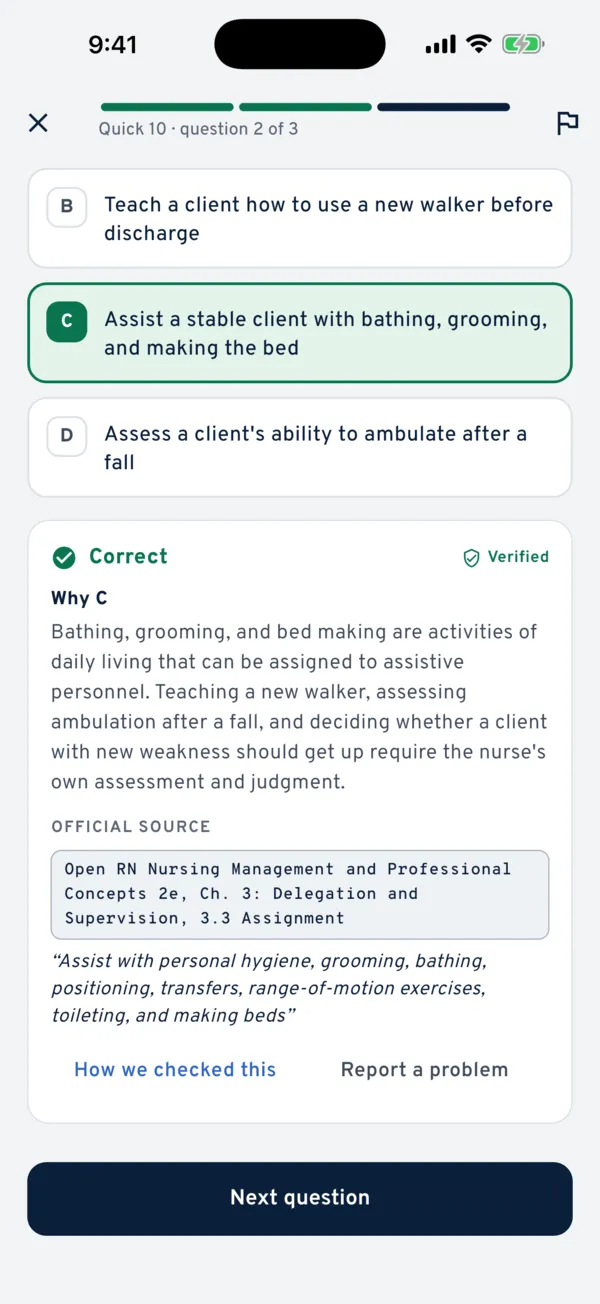
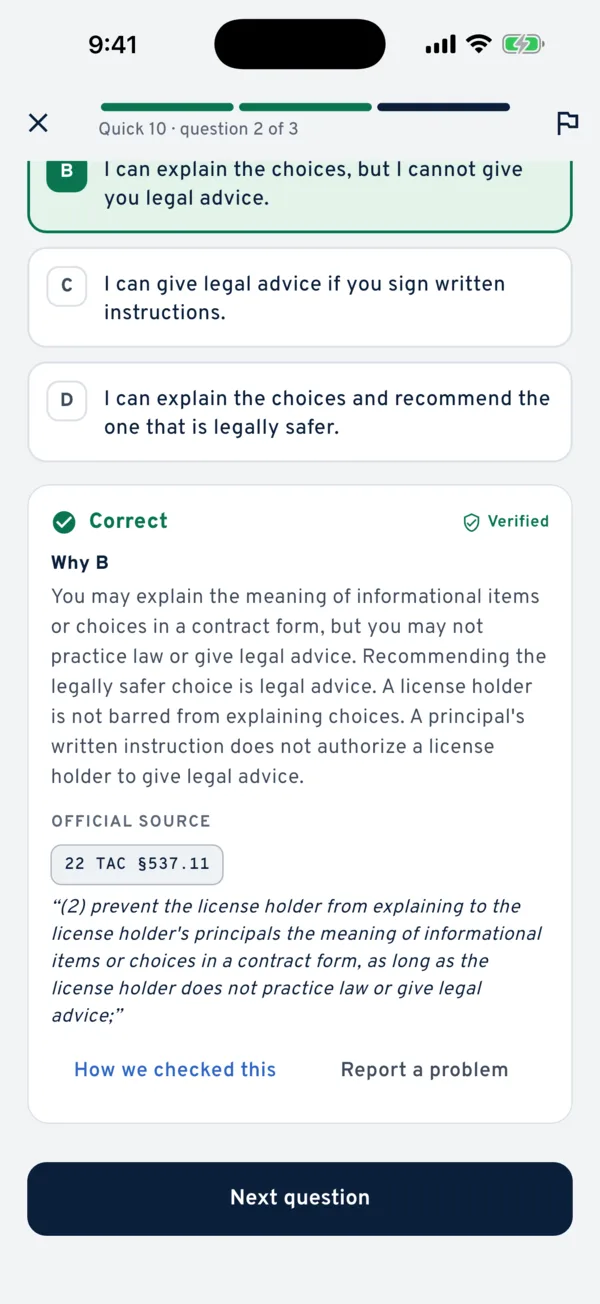
15 free New York Real Estate questions from the 432 in Clinched, chosen to match how the real test is weighted. Pick an answer to see the explanation and the official text it comes from. Nothing to sign up for.
-
Question 1 of 15Agency
A seller interviewing you about listing her house asks whether she can agree in advance that your brokerage may act as a dual agent if a buyer from your office wants the house. How may she give that advance informed consent?
Correct answer D. By indicating it on the state agency disclosure form
A seller or buyer may give advance informed consent to dual agency, and to dual agency with designated sales agents, by indicating it on the disclosure form itself. Waiting for a separate agreement after a conflict appears is too late, and an oral statement or a broker's later letter is not the written consent the form provides for.
Official source N.Y. Real Prop. Law §443A seller/landlord or buyer/tenant may provide advance informed consent to dual agency and dual agency with designated sales agents by indicating the same on the form set forth in subdivision four of this section.
-
Question 2 of 15Agency
An owner lists a home with a brokerage and later receives an offer through the agent, but no contract is signed. Under the agency disclosure law, how is the owner classified?
Correct answer B. A seller, because the owner listed the property with an agent.
The definition of seller includes an owner who lists residential real property for sale with an agent whether or not a transfer results, and an owner who receives an offer to purchase residential real property. A signed contract, an accepted offer or an actual transfer is not required to be treated as a seller for agency disclosure.
Official source N.Y. Real Prop. Law §443“Seller” means the transferor in a residential real property transaction, and includes an owner who lists residential real property for sale with an agent, whether or not a transfer results, or who receives an offer to purchase residential real property.
-
Question 3 of 15Agency
An owner lists her two-family house for rent with you. No offer has been made and no lease has been signed. For agency disclosure purposes, is she a landlord?
Correct answer D. Yes, because she has listed residential property for lease with an agent
A landlord includes an owner who lists residential property for lease with an agent, whether or not a lease results, and also an owner who receives an offer to lease. That means she is covered as soon as she lists the property with you, and the law reaches leasing situations rather than sale transactions only.
Official source N.Y. Real Prop. Law §443“Landlord” means the lessor in a residential real property transaction, and includes an owner who lists residential real property for lease with an agent, whether or not a lease results, or who receives an offer to lease residential real property.
-
Question 4 of 15Agency
You are the seller's agent on a residential listing and are working with a buyer who wants to make an offer. Which statement describes your relationship with that buyer?
Correct answer D. You represent the seller, not the buyer's interests
A seller's agent is engaged to represent the seller's interests and does not represent the buyer, so the buyer is not owed the seller's fiduciary duties of undivided loyalty and confidentiality. Even so, when dealing with the buyer you must exercise reasonable skill and care, deal honestly, fairly and in good faith, and disclose known facts materially affecting the value or desirability of the property. That rules out both automatic dual agency and the idea that you owe the buyer nothing.
Official source N.Y. Real Prop. Law §443A seller's agent does not represent the interests of the buyer.
N.Y. Real Prop. Law §443“A seller's agent has, without limitation, the following fiduciary duties to the seller: reasonable care, undivided loyalty, confidentiality, full disclosure, obedience and duty to account.” -
Question 5 of 15Agency
A buyer has hired you as her agent on a house listed by another brokerage. When must you provide the agency disclosure form to the seller or listing agent?
Correct answer C. At the time of first substantive contact with the seller or listing agent
A buyer's agent must give the disclosure form to the seller or the seller's agent at the time of first substantive contact with them and obtain a signed acknowledgment from the seller, landlord or listing agent. The buyer's agent also has a duty to the buyer, but that duty is in addition to this one rather than a substitute for it. Waiting until the offer is accepted or until closing puts the disclosure far too late.
Official source N.Y. Real Prop. Law §443A buyer’s agent or tenant’s agent shall provide the form to the seller, seller’s agent, landlord or landlord’s agent at the time of the first substantive contact with the seller or landlord and shall obtain a signed acknowledgment from the seller, landlord or the listing agent
-
Question 6 of 15Contracts and practice
A prospect's telephone number is on the do-not-call registry, you have no established business relationship with her, and she wrote her number on a lead form. During a call she says, "Sure, you can call me anytime." Which statement is correct?
Correct answer B. You need her signed written authorization naming the caller and number
A listed number may be called based on consent only if you can show the person's express written agreement to receive calls. That writing must authorize calls by or on behalf of a specific party, state the telephone number, and carry the person's signature. A verbal go-ahead or a phone number on a lead form is not enough, and the rule does not bar calling forever once she gives that signed authorization.
Official source 16 CFR §310.4Can demonstrate that the seller has obtained the express agreement, in writing, of such person to place calls to that person.
16 CFR §310.4“Such written agreement shall clearly evidence such person's authorization that calls made by or on behalf of a specific party may be placed to that person, and shall include the telephone number to which the calls may be placed and the signature 1 of that person; or” -
Question 7 of 15Contracts and practice
At a meeting, you and two competing brokers agree that every listing in your county will carry a 6% commission, a rate you all call fair and customary. What is the effect of that agreement?
Correct answer C. It is an illegal contract in restraint of trade, whatever the rate
An agreement among competitors on the commission rate they will charge is a contract in restraint of trade, which is declared illegal regardless of how reasonable the rate looks. Price fixing covers an agreed rate in any direction, and a combination or conspiracy is covered whether or not it is written down.
Official source 15 U.S.C. §1Every contract, combination in the form of trust or otherwise, or conspiracy, in restraint of trade or commerce among the several States, or with foreign nations, is declared to be illegal.
-
Question 8 of 15Disclosures and environmental issues
A seller of a pre-1978 house has peeling paint on the porch and plans to cover it with a fresh coat of regular paint. What should you tell him about that plan?
Correct answer B. It is only a temporary fix; permanent removal takes a certified lead abatement contractor.
Abatement — removing, sealing or enclosing lead-based paint with special materials — is what permanently addresses a lead hazard, and it should be done by a certified lead abatement contractor. Painting over the hazard with regular paint will not permanently address it, and repairing damaged painted surfaces is likewise a temporary step that needs ongoing attention. A certified renovator uses lead-safe work practices during repair or painting but does not permanently eliminate the hazard.
Official source Protect Your Family From Lead (2026), p. 12Abatement methods (which are designed to permanently address lead-based paint hazards) include removing, sealing or enclosing lead-based paint with special materials. Just painting over the hazard with regular paint will not permanently address the lead-based paint hazards.
-
Question 9 of 15Disclosures and environmental issues
A house you are listing received federal disaster flood assistance years ago, and the owner carries flood insurance on it. A prospective buyer asks whether he would have to keep that coverage after closing. What do you tell him?
Correct answer A. The requirement passes to all future owners of the property
For a property that has received federal disaster flood assistance, the requirement to obtain and maintain flood insurance runs with the property and binds every future owner, so the buyer must keep coverage after closing. The obligation does not stop with the owner who received the aid, and it does not depend on the buyer's lender or on the flood zone. Failing to obtain and maintain the insurance can also leave an individual ineligible for future assistance.
Official source N.Y. Real Prop. Law §462For properties that have received federal disaster assistance, the requirement to obtain flood insurance passes down to all future owners. Failure to obtain and maintain flood insurance can result in an individual being ineligible for future assistance.
-
Question 10 of 15Fair housing
A property manager tells a woman who declined his suggestion that they "get together" that the apartment she asked about was just rented. The apartment is still available. Which statement is correct under federal fair housing law?
Correct answer A. It is unlawful discrimination under the Fair Housing Act.
Reporting a unit as unavailable in response to a request for a sexual favor is a prohibited discriminatory representation, so the conduct is unlawful fair housing discrimination. Signing or refusing a lease is not required, the manager's role as an employee rather than the owner does not matter, and the conduct is not merely personal.
Official source 24 CFR §100.80(6) Representing to an applicant that a unit is unavailable because of the applicant's response to a request for a sexual favor or other harassment because of race, color, religion, sex, handicap, familial status, or national origin.
-
Question 11 of 15Fair housing
A tenant objects to a neighbor's harassing remarks about her religion, and the landlord then doubles her security deposit when the lease renews. How do the fair housing rules treat the landlord's action?
Correct answer B. It is unlawful, because terms or services cannot depend on a person's response to harassment
It is unlawful to condition the terms, conditions or privileges of a rental, or to deny or limit services, on a person's response to harassment because of a protected class, so raising her deposit because she objected to harassment is prohibited. The ban reaches the landlord's action, not just the person who made the remarks, and ordinary lease discretion does not cover action tied to her response. The violation does not depend on showing that another tenant received better terms.
Official source 24 CFR §100.65(6) Conditioning the terms, conditions, or privileges relating to the sale or rental of a dwelling, or denying or limiting the services or facilities in connection therewith, on a person's response to harassment because of race, color, religion, sex, handicap, familial status, or national origin.
-
Question 12 of 15Finance
An investor closes the sale of an apartment building on April 1 and wants to defer the gain with a like-kind exchange. By what date must she identify the replacement property?
Correct answer A. On or before the 45th day after the April 1 transfer
The identification deadline runs from the date the taxpayer transfers the relinquished property, and replacement property not identified by the 45th day after that transfer is treated as not like-kind. Counting from the contract date uses the wrong trigger, the 180-day figure is the outer limit for completing the exchange, and the return due date is the other closing deadline, not the identification deadline.
Official source 26 U.S.C. §1031such property is not identified as property to be received in the exchange on or before the day which is 45 days after the date on which the taxpayer transfers the property relinquished in the exchange, or
-
Question 13 of 15Finance
A licensed salesperson performs only real estate brokerage activities in a home sale and refers a buyer to a lender. The salesperson is paid solely by the broker from the sale commission. Under federal law, is the salesperson a loan originator?
Correct answer B. No, because the salesperson performs only brokerage services and is not paid by a creditor, a loan originator, or their agent for this transaction
A licensed person who performs only real estate brokerage activities is not a loan originator unless paid for the particular credit transaction by a creditor, a loan originator, or an agent of either. The salesperson is paid from the sale commission, so a referral does not make the salesperson a loan originator. The exclusion is conditional: a licensee compensated by the lender or loan originator for the loan transaction can become a loan originator.
Official source 12 CFR §1026.36(C) A person that performs only real estate brokerage activities and is licensed or registered in accordance with applicable State law, unless such person is compensated by a creditor or loan originator or by any agent of such creditor or loan originator for a particular consumer credit transaction subject to this section.
-
Question 14 of 15New York license law and Secretary of State rules
An owner gives your broker written notice that she does not want to be solicited to sell, lease, or list her residential property. The next week, another salesperson in the same office calls her about listing it. How does the notice apply?
Correct answer B. It binds everyone in the brokerage, so no associate broker or salesperson there may solicit her.
Once an owner gives written notice that she does not want to be solicited, no licensee may solicit her to sell, lease or list the residential property, and notice given to the broker is notice to all associate brokers and salespersons employed by that broker. The other salesperson is therefore covered even though he never saw the notice himself. A cease-and-desist notice is a different step used in designated zones, and the owner's written notice is not limited to sales talk.
Official source 19 NYCRR §175.15, 175.17Notice provided under the provisions of this subdivision to a real estate broker shall constitute notice to all associate brokers and salespersons who are employed by the real estate broker.
-
Question 15 of 15New York license law and Secretary of State rules
You manage a rental property for an owner and collect rent money for the client. What must you do with money you collect for the client and do not spend on the client's behalf?
Correct answer B. Account for it and remit it within a reasonable time
A broker must render an account to the client and remit to the client any money collected for the client that is left unexpended, and this must happen within a reasonable time. The duty does not wait for the client to ask or for the management agreement to end, and simply keeping the money in a trust account does not discharge it.
Official source 19 NYCRR §175.2, 175.3A real estate broker shall, within a reasonable time, render an account to this client and remit to him, any monies collected for his client, and unexpended for his account.
Want the other 417?
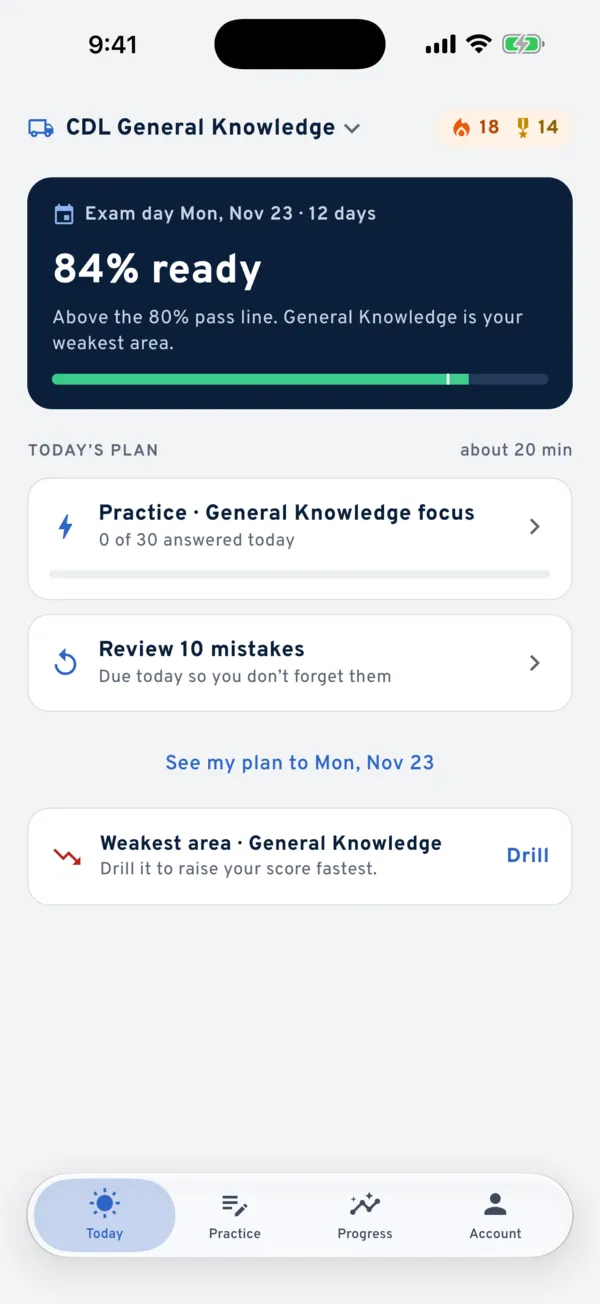
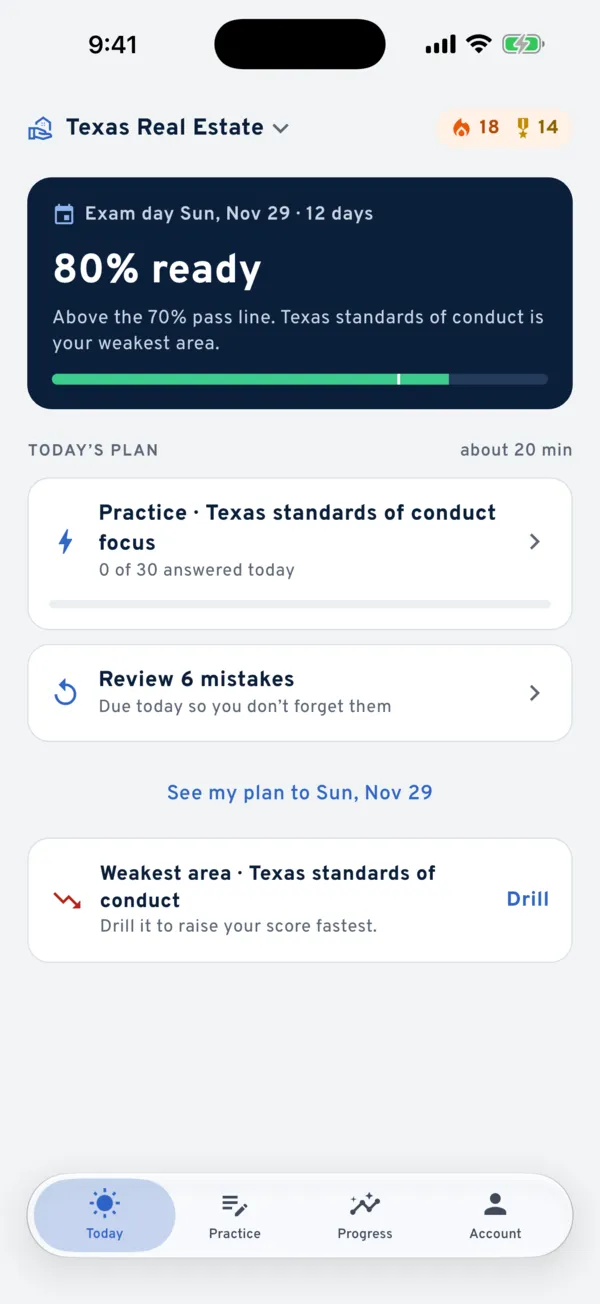
Clinched has every New York Real Estate question in this format, with full practice tests that match the real one, a readiness score by area and a plan to your test date. Free to start with 10 questions a day.
Read the Real Estate License guide or see how we write and check every question.
Free on the App Store
Your exam, in your pocket.
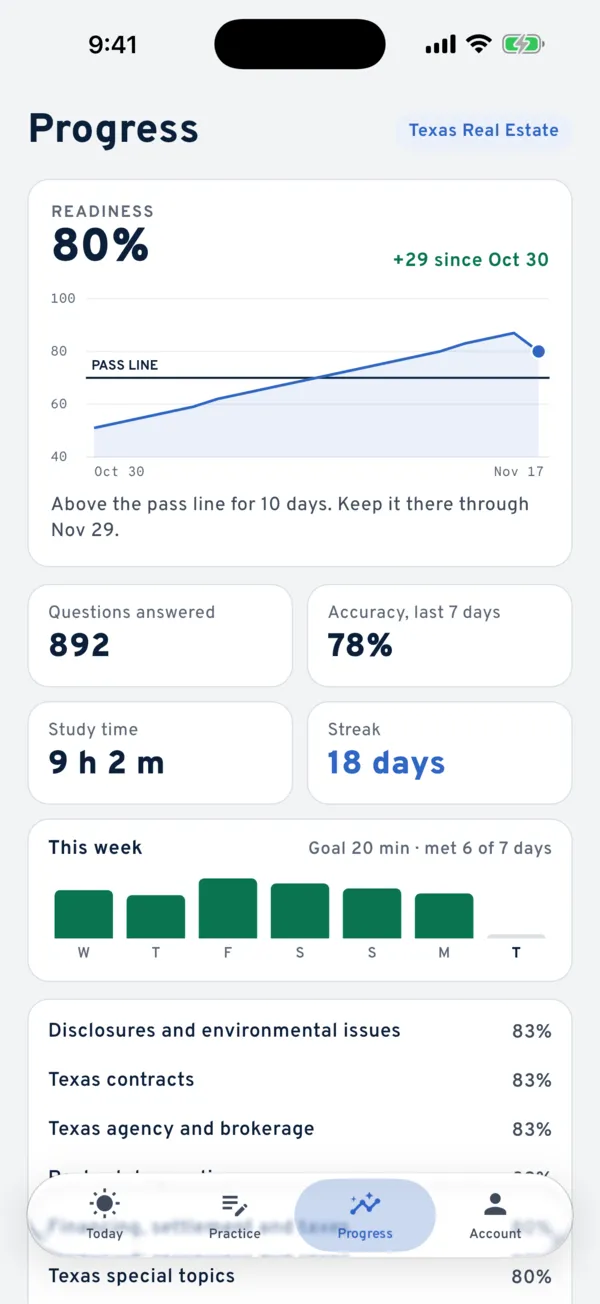
20 exams ready with questions written from the official sources, timed practice tests in the real format and a readiness score with a pass line.
On your computer?
Scan with your iPhone camera to get Clinched practice in the app.