Real Estate License guideFree practice test
California Real Estate practice test
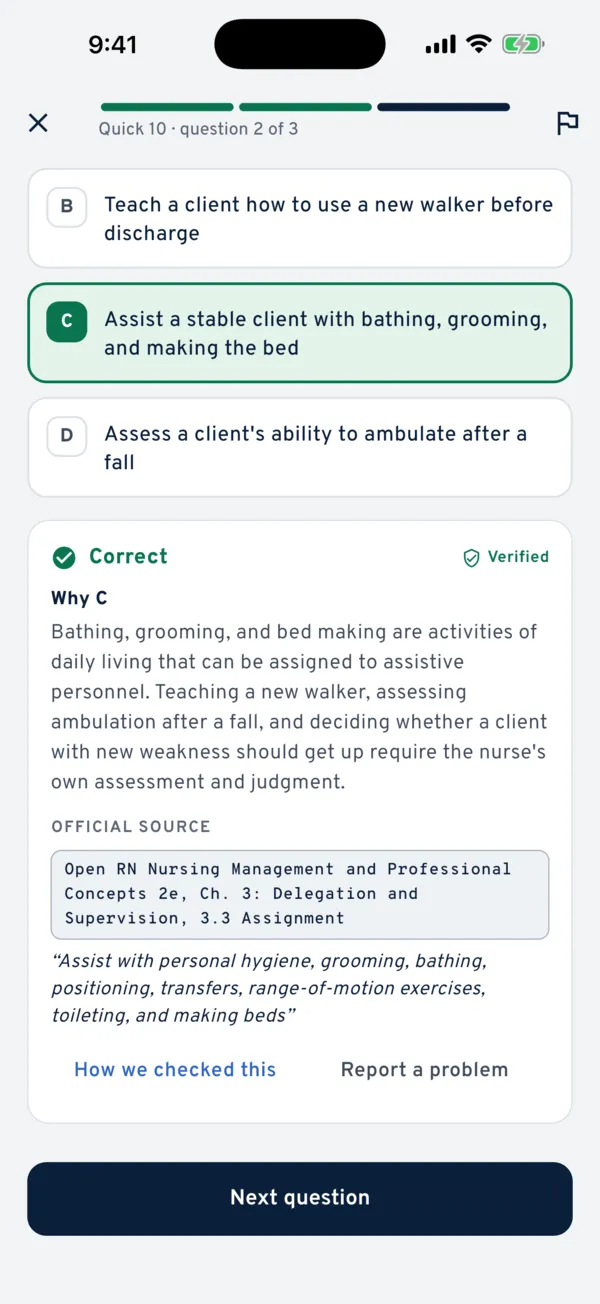
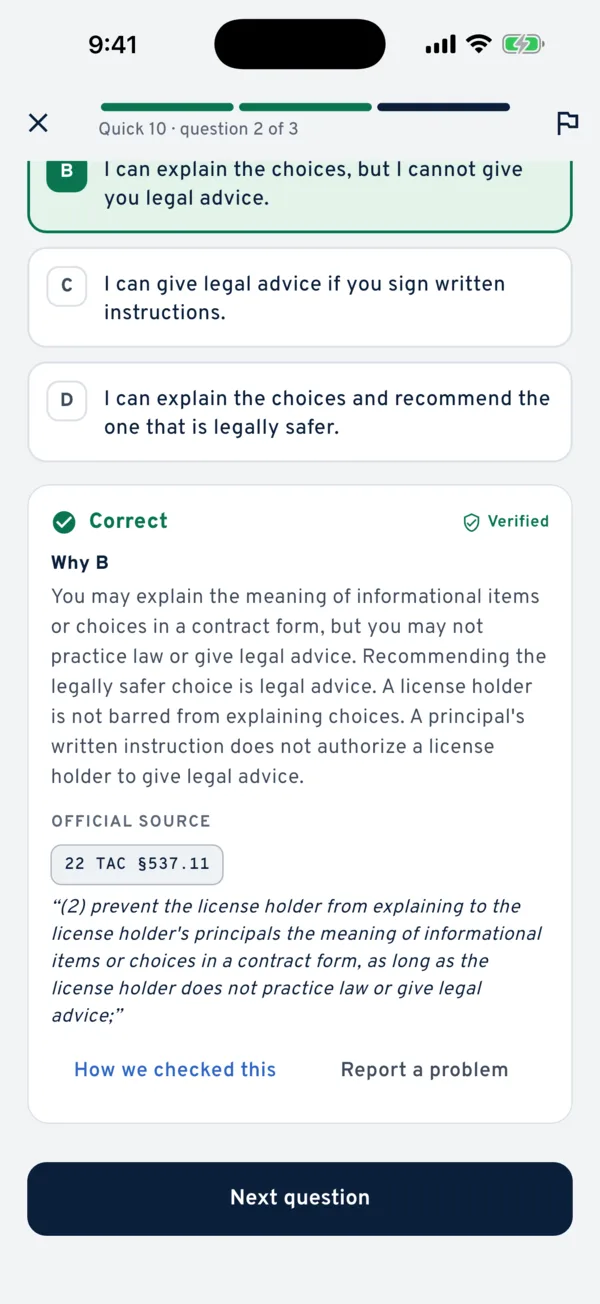
15 free California Real Estate questions from the 499 in Clinched, chosen to match how the real test is weighted. Pick an answer to see the explanation and the official text it comes from. Nothing to sign up for.
-
Question 1 of 15Agency
A homeowner asks what level of duty you owe her as her listing agent, beyond the fair dealing you owe everyone in the deal. What do you owe her?
Correct answer A. Utmost care, integrity, honesty, and loyalty.
The seller's agent owes the seller a fiduciary duty of utmost care, integrity, honesty and loyalty in dealings with the seller. Honest and fair dealing and good faith, along with reasonable skill and care, are duties owed to both the buyer and the seller, so they are not the whole of what the seller is owed. Loyalty is not split equally between the parties when the agent represents the seller alone.
Official source Cal. Civ. Code §2079.15, 2079.16To the Seller: A fiduciary duty of utmost care, integrity, honesty, and loyalty in dealings with the Seller.
-
Question 2 of 15Agency
A listing is executed under Broker Nakamura's license, and salesperson Okafor, also licensed under Nakamura, obtains the buyer's offer to purchase. Who is the "agent" in this real property transaction?
Correct answer A. Broker Nakamura, under whose license the listing was executed
An agent includes a licensed real estate broker under whose license a listing is executed or an offer to purchase is obtained, so Broker Nakamura is the agent here. The salesperson functions as an agent of that broker, and the salesperson's duty to a party is equivalent to the broker's duty; that does not make the salesperson and the broker two separate agents. The seller is the principal, not the agent.
Official source Cal. Civ. Code §2079.13includes a person who is licensed as a real estate broker under Chapter 3 (commencing with Section 10130) of Part 1 of Division 4 of the Business and Professions Code, and under whose license a listing is executed or an offer to purchase is obtained.
-
Question 3 of 15Agency
You represent a buyer who tells you she will skip the home inspection to save money and rely on you to look the house over. What does California's agency disclosure say about her responsibility?
Correct answer A. The agent's duties do not relieve the buyer of the responsibility to protect her own interests.
The agency disclosure states that the duties of the agent in a real estate transaction do not relieve a seller or buyer from the responsibility to protect their own interests. Hiring an agent does not shift the whole burden of self-protection onto the agent, and the agent is not obligated to inspect the property or to choose inspections for the buyer.
Official source Cal. Civ. Code §2079.15, 2079.16The above duties of the agent in a real estate transaction do not relieve a Seller or Buyer from the responsibility to protect their own interests.
-
Question 4 of 15Contracts
A buyer and seller form a purchase agreement by email, each typing a signature into the electronic document. The seller later refuses to perform, arguing that no paper contract was ever signed. Is the agreement enforceable?
Correct answer C. Yes, because an electronic record satisfies the writing requirement
A contract may not be denied legal effect or enforceability solely because an electronic record was used in its formation, and an electronic signature satisfies a law requiring a signature. The seller's objection that the agreement was never put on paper therefore fails. Notarization is not needed to make the agreement enforceable, and printing and signing a copy adds nothing that the electronic record lacks.
Official source Cal. Civ. Code §1633.7, 880.020(b) A contract may not be denied legal effect or enforceability solely because an electronic record was used in its formation.
-
Question 5 of 15Contracts
Your seller has delivered the deed to the buyer, and the buyer has paid the full purchase price. Neither party owes the other anything further under their purchase agreement. How is that contract classified?
Correct answer D. Executed, because its object has been fully performed
A contract is executed when the object of the contract is fully performed; every other contract is executory. Here the deed has passed and the price is paid, so nothing remains to be done. Signing the agreement is not performance, and neither recording nor taking possession is the object that the contract had to accomplish.
Official source Cal. Civ. Code §1661, 1584, 1585An executed contract is one, the object of which is fully performed. All others are executory.
-
Question 6 of 15Financing
A lender plans to hand your buyer the federal Truth in Lending disclosures at the closing table, at the moment the loan is consummated. When must those disclosures be given?
Correct answer D. Before the transaction is consummated
The creditor must make the disclosures before consummation of the transaction, so handing them over at the closing table is too late. Consummation is the moment the obligation is created, and disclosures delivered at or after that point do not satisfy the timing rule.
Official source 12 CFR §1026.17The creditor shall make disclosures before consummation of the transaction.
-
Question 7 of 15Financing
A trustee is preparing a notice of default for recording against your client's property. What must the notice contain about the servicer's dealings with the borrower?
Correct answer C. A declaration of the servicer's contact efforts with the borrower
A recorded notice of default must include a declaration that the servicer contacted the borrower, tried with due diligence to contact the borrower, or that no contact was required because the person did not meet the definition of borrower. An itemization of the reinstatement amount is something the borrower gets by written request, not something the notice of default must contain. The other two statements are not required in a notice of default at all.
Official source Cal. Civ. Code §2923.5A notice of default recorded pursuant to Section 2924 shall include a declaration that the mortgage servicer has contacted the borrower, has tried with due diligence to contact the borrower as required by this section
-
Question 8 of 15Practice and disclosures
You list a house built in 1968. What must your seller do for the buyer regarding lead before the buyer becomes obligated under the purchase contract?
Correct answer C. Provide an EPA-approved lead hazard information pamphlet.
The seller must give the buyer an EPA-approved lead hazard information pamphlet, such as Protect Your Family From Lead in Your Home, before the buyer is obligated under any contract to purchase target housing. Handing it over at closing or after signing is too late, and the seller is not required to conduct any evaluation or reduction activity, so a risk assessment report is not the seller's obligation.
Official source 24 CFR §35.88The seller or lessor shall provide the purchaser or lessee with an EPA-approved lead hazard information pamphlet.
-
Question 9 of 15Practice and disclosures
Your seller never delivered a transfer disclosure statement. After closing, the buyer discovers a defect and sues, asking the court to set the sale aside and to award damages. What does the disclosure law provide?
Correct answer C. The sale stands, but a willful or negligent violation makes the violator liable for actual damages.
A transfer is not invalidated solely because someone failed to comply with the disclosure article, so the sale is not undone by the missing statement. The remedy is damages: a person who willfully or negligently violates the article is liable to the buyer for the actual damages suffered, so negligence is enough and rescission is not the prescribed remedy.
Official source Cal. Civ. Code §1102.13, 1102.15No transfer subject to this article shall be invalidated solely because of the failure of any person to comply with any provision of this article.
Cal. Civ. Code §1102.13, 1102.15“However, any person who willfully or negligently violates or fails to perform any duty prescribed by any provision of this article shall be liable in the amount of actual damages suffered by a transferee.” -
Question 10 of 15Property ownership and land use
A client holds an interest that entitles her to take possession of a fourplex immediately. In terms of the time of enjoyment, how is her interest classified?
Correct answer B. A present interest
A present interest entitles the owner to immediate possession of the property, which is exactly what your client has. A future interest gives possession only at a later period, and perpetual and limited describe how long an interest lasts rather than when possession begins.
Official source Cal. Civ. Code §687–691A present interest entitles the owner to the immediate possession of the property.
-
Question 11 of 15Property ownership and land use
A deed conveys a lot "to Alvarez and her heirs, but if the lot is ever used as a kennel, the grantor may re-enter and retake it." How is Alvarez's estate best described?
Correct answer B. A fee that is defeasible, not a fee simple absolute
Every estate of inheritance is a fee, but only a fee that is not defeasible or conditional is a fee simple absolute. Because the grantor may re-enter if the lot is used as a kennel, Alvarez holds a conditional fee rather than an absolute one. A life estate is measured by a person's lifetime and an estate at will by the parties' wishes, so neither describes this inheritance.
Official source Cal. Civ. Code §761, 762, 763Every estate of inheritance is a fee, and every such estate, when not defeasible or conditional, is a fee simple or an absolute fee.
-
Question 12 of 15Transfer of property
A title officer tells you that the deed of trust your buyer's lender is about to record is not a conveyance, so recording it does not affect title. Is that correct?
Correct answer D. No; a conveyance includes any written instrument that mortgages or encumbers real property.
For recording purposes a conveyance embraces every written instrument by which an estate or interest in real property is created, transferred, mortgaged or encumbered, or by which title may be affected, with wills as the single exception. A deed of trust therefore is a conveyance and recording it affects title. A will is the one instrument the definition leaves out.
Official source Cal. Civ. Code §1215, 1216The term “conveyance,” as used in Sections 1213 and 1214, embraces every instrument in writing by which any estate or interest in real property is created, aliened, mortgaged, or incumbered, or by which the title to any real property may be affected, except wills.
-
Question 13 of 15Transfer of property
Rosa acquired title as Rosa Kim and later changed her name. She now conveys the property by a recorded deed that does not set forth Rosa Kim and is signed only "Rosa Vega." A later lender loans money to the buyer with no actual knowledge of the name change. What is the effect of the recording?
Correct answer A. No constructive notice to the lender, but the deed is valid between the parties.
A grantor whose name changed after taking title must set forth in the conveyance the name under which title was acquired; a recorded conveyance that omits it does not impart constructive notice to later purchasers and encumbrancers. The deed still remains valid between the parties and against anyone who has notice of it, so recording is not meaningless and the deed is not void.
Official source Cal. Civ. Code §1095, 1096Any person in whom the title of real estate is vested, who shall afterwards, from any cause, have his or her name changed, must, in any conveyance of said real estate so held, set forth the name in which he or she derived title to said real estate.
Cal. Civ. Code §1095, 1096“Any conveyance, though recorded as provided by law, which does not comply with the foregoing provision shall not impart constructive notice of the contents thereof to subsequent purchasers and encumbrancers” -
Question 14 of 15Valuation
You are bringing a building's original construction cost up to today's price level. What do you multiply the cost incurred in a given year by?
Correct answer A. An appropriate price index factor
Original cost is adjusted for price level changes since construction by multiplying the cost incurred in a given year by an appropriate price index factor. A capitalization rate and a gross rent multiplier both convert income into value, so they belong to the income approach rather than to a price-level adjustment. Multiplying by the number of years since construction measures age, not the change in price levels.
Official source 18 CCR §6The original cost of reproducible property shall be adjusted, in the aggregate or by groups, for price level changes since original construction by multiplying the cost incurred in a given year by an appropriate price index factor.
-
Question 15 of 15Valuation
A warehouse cost $400,000 to build in 1998. You want its reproduction cost at today's prices, and the construction cost is known. Which step is correct?
Correct answer B. Multiply the cost incurred in the construction year by a price index factor
Original cost is brought to current price levels by multiplying the cost incurred in a given year by an appropriate price index factor. The unadjusted construction cost is a historical figure, not today's reproduction cost; acquisition cost is substituted only when original cost is unknown; and deducting deterioration is a depreciation step, not a price-level conversion.
Official source 18 CCR §6The original cost of reproducible property shall be adjusted, in the aggregate or by groups, for price level changes since original construction by multiplying the cost incurred in a given year by an appropriate price index factor.
Want the other 484?
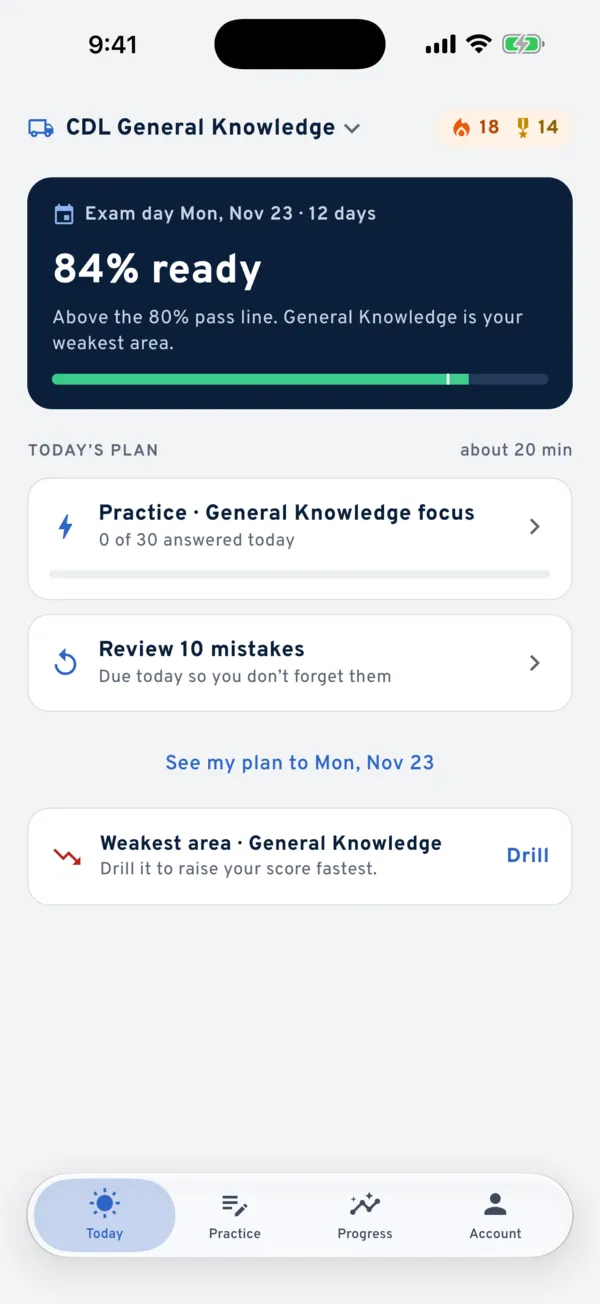
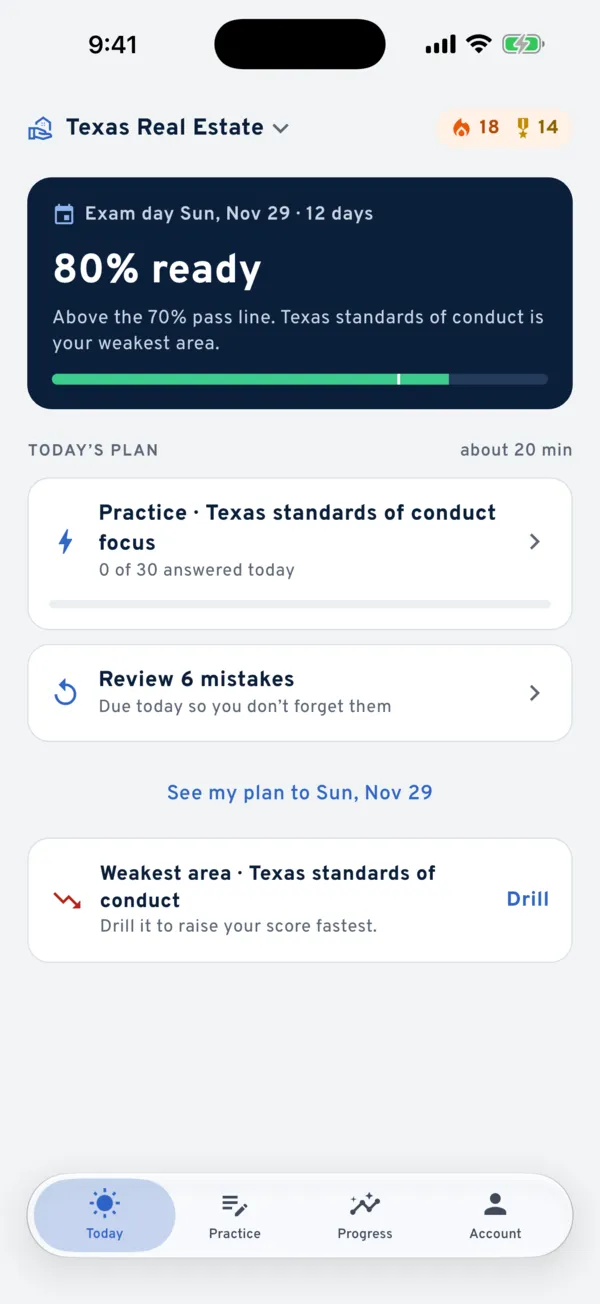
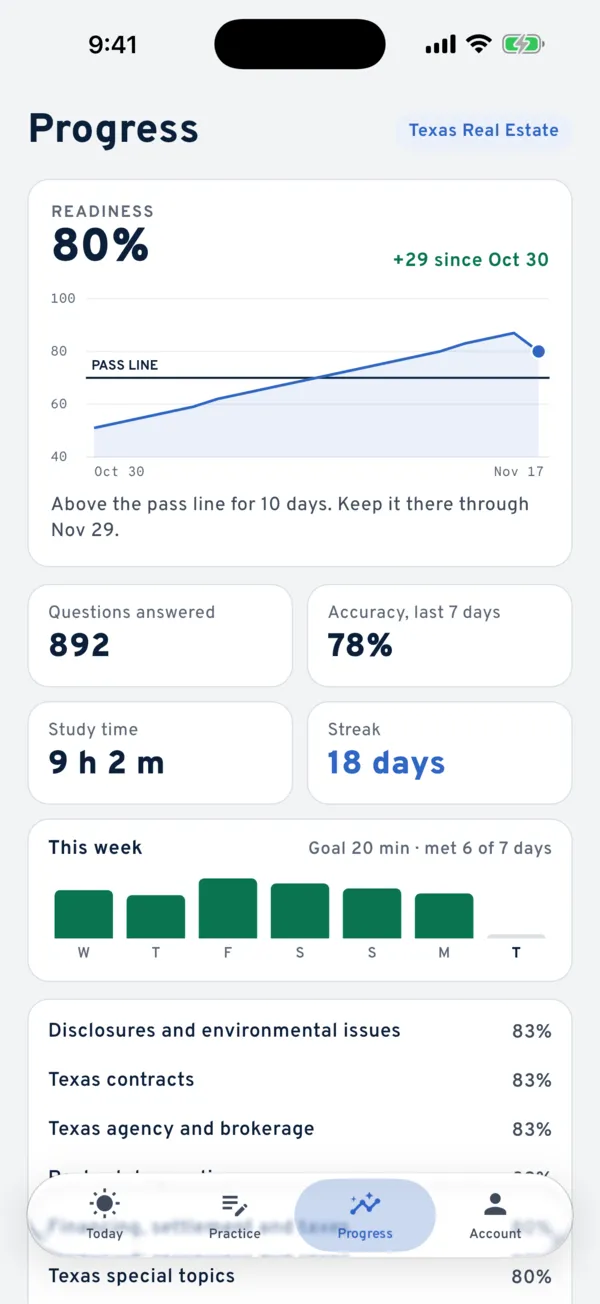
Clinched has every California Real Estate question in this format, with full practice tests that match the real one, a readiness score by area and a plan to your test date. Free to start with 10 questions a day.
Read the Real Estate License guide or see how we write and check every question.
Free on the App Store
Your exam, in your pocket.
20 exams ready with questions written from the official sources, timed practice tests in the real format and a readiness score with a pass line.
On your computer?
Scan with your iPhone camera to get Clinched practice in the app.