NREMT EMT guideFree practice test
NREMT EMT practice test
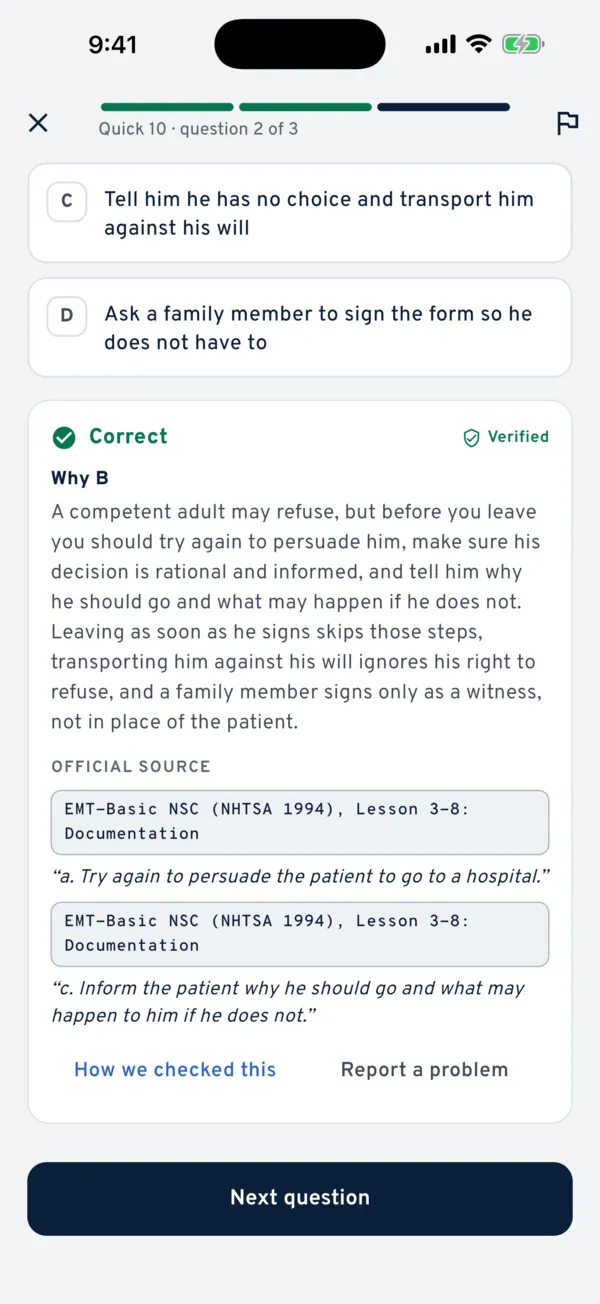
15 free NREMT EMT questions from the 618 in Clinched, chosen to match how the real test is weighted. Pick an answer to see the explanation and the official text it comes from. Nothing to sign up for.
-
Question 1 of 15EMS operations
You are the first EMS unit at a three-car crash on a highway and you establish command. A crew member asks who is responsible for ensuring safety at the incident. What should you say?
Correct answer B. The Incident Commander ensures incident safety
Ensuring incident safety is one of the Incident Commander's responsibilities, so the person in command at this crash carries that duty. A Safety Officer may be assigned to support safety functions, but safety does not belong to that position alone, and neither the first-arriving fire crew nor the law enforcement officer on scene holds that responsibility.
Official source FEMA EMI ICS Review Document, p. 14The Incident Commander is responsible for: • Having clear authority and knowing agency policy. • Ensuring incident safety.
-
Question 2 of 15EMS operations
You gave aspirin to a 55-year-old man with chest pain during transport, then later realize you never recorded it in the patient care report. Months afterward, the run is reviewed in a legal case. How is the care you gave generally viewed?
Correct answer C. As not done, because it was not documented
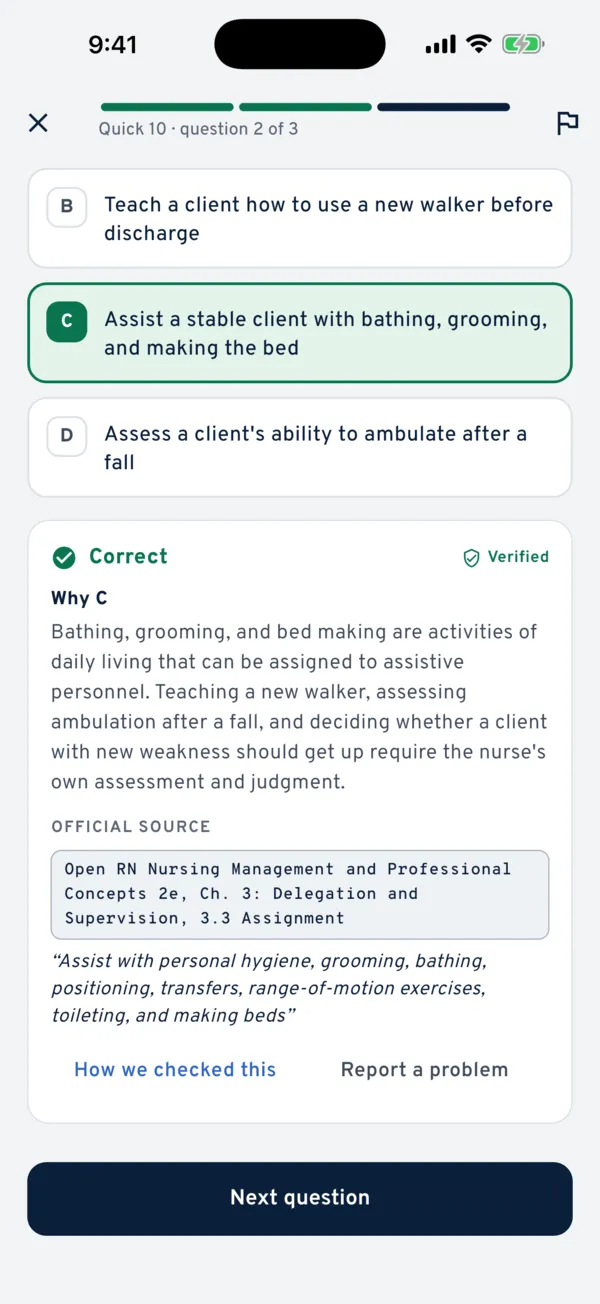
Documentation is a legal record, and in a court of law it is generally viewed that if it wasn't documented, it wasn't done. Your memory, a verbal report to the receiving nurse, or what bystanders saw does not replace the written record of the care you provided.
Official source Open RN Nursing Fundamentals 2e (WisTech Open), 2.5 DocumentationIn a court of law, it is generally viewed that, “If it wasn’t documented, it wasn’t done.”
-
Question 3 of 15EMS operations
You are called to a grocery store for a 45-year-old man with a headache. He tells you he has no infectious diseases, and he has no bleeding or other signs of illness. How should you handle infection control?
Correct answer D. Use standard precautions, including gloves, for all contact
Standard precautions are used for all patient care and are based on a risk assessment, not on whether the patient reports an infection. A patient's statement that he is disease-free does not rule out infection, and waiting for visible blood, a fever, or a rash means you may have already contacted infectious material.
Official source CDC, "standard precautions" (web page, retrieved 2026-11-11)Standard Precautions are used for all patient care. They're based on a risk assessment and make use of common sense practices and personal protective equipment use that protect healthcare providers from infection and prevent the spread of infection from patient to patient.
-
Question 4 of 15Primary assessment and life threats
You are called for a 19-year-old man who ate cookies containing peanuts. He has hives on his face and chest and tells you the room is spinning; he nearly passed out walking to the door. What does his dizziness most likely mean?
Correct answer B. A serious allergic reaction that can be life-threatening
Anaphylaxis can affect the nervous system, causing dizziness or fainting, and the heart, causing a weak pulse, passing out and shock, so dizziness in this setting is a warning sign of a severe reaction. Anxiety, low blood sugar and dehydration do not explain hives that appeared right after eating peanuts.
Official source MedlinePlus, "Anaphylaxis" health topic summary (NLM)Nervous system - dizziness or fainting
MedlinePlus, "Anaphylaxis" health topic summary (NLM)“Heart - weak pulse, passing out, shock” -
Question 5 of 15Primary assessment and life threats
You continue deflating the cuff on a 47-year-old woman and listen as the ticking sounds fade. You hear the last sound and then all sound disappears. How should you record the point at which that last sound was heard?
Correct answer B. As the diastolic pressure
The point at which the last sound is heard is recorded as the patient's diastolic pressure. The systolic pressure was already recorded at the first sound, and the pressure the cuff was inflated to is not a reading you record.
Official source OpenStax Anatomy & Physiology 1e, 20.2 Blood Flow, Blood Pressure, and ResistanceThe point at which the last sound is heard is recorded as the patient’s diastolic pressure.
-
Question 6 of 15Primary assessment and life threats
You are transporting a 62-year-old woman who was alert and oriented when you first assessed her. Ten minutes later she stops answering your questions and keeps looking around the back of the ambulance with a blank stare. What should you do?
Correct answer A. Obtain emergency assistance right away
A sudden change in a patient's mental status is a concern that calls for emergency assistance according to agency policy, so you escalate immediately rather than waiting. Rechecking in 15 minutes, assuming fatigue, or reporting it only at the hospital delays care for a patient who may be getting worse.
Official source Open RN Nursing Skills 2e (WisTech Open 2023), 1.4 Basic ConceptsIf you are concerned about a sudden change in a patient’s mental status, obtain emergency assistance according to agency policy.
-
Question 7 of 15Secondary assessment
You arrive to find a 71-year-old man with diabetes sitting in a chair, confused and slow to answer. His breathing is snoring and gurgling, and his daughter tells you his sugar has been low before. What should you do first?
Correct answer C. Open his airway and be ready to ventilate or suction
Emergency care for a patient with altered mental status starts with assuring the airway is open and being prepared to artificially ventilate or suction, because a confused patient with noisy breathing may not be moving air well. Glucose, history questions, and a full-body exam come after that life threat is addressed.
Official source EMT-Basic NSC (NHTSA 1994), Lesson 4-4: Diabetes/Altered Mental Status1. Assure patency of airway.
EMT-Basic NSC (NHTSA 1994), Lesson 4-4: Diabetes/Altered Mental Status“2. Be prepared to artificially ventilate/suction.” -
Question 8 of 15Secondary assessment
A 45-year-old motorcyclist is unresponsive after a crash and has vomit in his mouth. He is wearing a full-face helmet that blocks your access to his mouth, and you cannot clear his airway with it on. What should you do?
Correct answer A. Remove the helmet and manage his airway
When a helmet prevents you from assessing or managing the airway or breathing, it is removed so you can clear and support the airway. Leaving it on and working around the shield, ventilating through the opening, or driving off with a blocked airway all leave the life threat untreated.
Official source EMT-Basic NSC (NHTSA 1994), Lesson 5-4: Injuries to the Head and Spinea. Inability to assess and/or reassess airway and breathing.
EMT-Basic NSC (NHTSA 1994), Lesson 5-4: Injuries to the Head and Spine“b. Restriction of adequate management of the airway or breathing.” -
Question 9 of 15Secondary assessment
You are taking a history from a 60-year-old woman who has chest discomfort. Which question belongs to the OPQRST questions you ask about her chief complaint?
Correct answer A. "Have you done anything to try to relieve the discomfort?"
The questions asked about the chief complaint cover onset, provocation, quality, radiation, severity, time, and interventions, so what she has already tried to relieve the discomfort is part of that set. Her daily medications and her last oral intake belong to other parts of the history, and family heart problems are not a question about the descriptive features of the discomfort itself.
Official source EMT-Basic NSC (NHTSA 1994), Lesson 4-2: Respiratory Emergencies1. Onset 2. Provocation 3. Quality 4. Radiation 5. Severity 6. Time 7. Interventions
-
Question 10 of 15Scene size-up and safety
Which set of injuries meets the anatomic criteria for transport to a facility that provides the highest level of care within the trauma system?
Correct answer A. Fractures of both femurs
The anatomic criteria list two or more proximal long-bone fractures, and fractures of both femurs meet that threshold. A single long-bone fracture, even an open one, does not by itself meet the criteria, and a dislocation without a fracture is not a listed anatomic criterion.
Official source CDC MMWR 2012;61(RR-1) Field Triage Guidelines 2011, p. 11• two or more proximal long-bone fractures;
CDC MMWR 2012;61(RR-1) Field Triage Guidelines 2011, p. 11“Step Two of the Guidelines recognizes that certain patients, on initial presentation to EMS providers, have normal physiology but have an anatomic injury that might require the highest level of care within the defined trauma system.” -
Question 11 of 15Scene size-up and safety
A worker exposed to an industrial chemical has been brought to the warm zone for decontamination. Which statement best describes what decontamination involves?
Correct answer D. Removing the hazardous material from the patient and his equipment as needed to prevent harm
Decontamination is the removal of hazardous materials from personnel and equipment to the extent necessary to prevent adverse health effects, so it covers both the patient and his gear. Washing only exposed skin or removing only clothing leaves contamination behind, and cleaning only the equipment leaves the patient contaminated during transport.
Official source ERG2024, GlossaryThe removal of hazardous materials/dangerous goods from personnel and equipment to the extent necessary to prevent potential adverse health effects.
-
Question 12 of 15Scene size-up and safety
You are the first EMT to reach a bus crash and you need to request more ambulances on a radio channel shared by several responding agencies. How should you make the request?
Correct answer A. In clear text, stating plainly what you need and where you need it
Clear text means communication that does not use codes, so plain language is used on shared channels and every responding agency understands the request the first time. Ten-codes and dispatch-specific codes can mean different things to different agencies and delay the resources you are asking for, and secrecy is not the goal of an incident radio request.
Official source NIMS 3rd ed. (FEMA 2017), p. 52Clear Text: Communication that does not use codes. See Plain Language.
-
Question 13 of 15Patient treatment and transport
You are asked to transfer a 68-year-old man from a nursing home to the hospital for suspected tuberculosis. He has a productive cough. What should you do before you enter his room?
Correct answer A. Wear an N95 respirator and put it on before entering the room
Tuberculosis and measles are spread by the airborne route, and personnel caring for these patients wear an N95 or higher-level respirator that is put on before room entry. A surgical mask is the protection used for droplet spread, putting the respirator on after you are inside leaves you unprotected as you enter, and masking only the patient does not protect you.
Official source CDC 2007 Guideline for Isolation Precautions, p. 74Healthcare personnel caring for patients on Airborne Precautions wear a mask or respirator, depending on the disease-specific recommendations (Respiratory Protection II.E.4, Table 2, and Appendix A), that is donned prior to room entry.
CDC 2007 Guideline for Isolation Precautions, p. 74“providing N95 or higher level respirators or masks if respirators are not available for healthcare personnel will reduce the likelihood of airborne transmission” -
Question 14 of 15Patient treatment and transport
Which of these is a cause of hypovolemic shock?
Correct answer C. Severe vomiting and diarrhea
Hypovolemic shock happens when a lot of blood or fluid is lost, and severe vomiting and diarrhea are listed causes along with bleeding, burns and dehydration. A severe allergic reaction causes anaphylactic shock, a heart attack can cause cardiogenic shock, and spinal cord damage causes neurogenic shock.
Official source MedlinePlus, "Shock" health topic summary (NLM)Hypovolemic shock happens when you lose a lot of blood or fluids. Causes include internal or external bleeding, dehydration, burns, and severe vomiting and/or diarrhea.
-
Question 15 of 15Patient treatment and transport
You are caring for a 45-year-old woman who was found lying in a snowbank. Her jacket and pants are soaked through. She is alert and shivering. What should you do?
Correct answer C. Move her out of the cold and replace her wet clothing with dry clothing
Rewarming begins with removing the patient from the cold environment and replacing wet clothing with dry clothing, which should be prioritized right away. A blanket over soaked clothes keeps her wet and cold, and waiting until the hospital or trying to dry the clothes in place allows continued heat loss.
Official source ATP 4-02.11 (Army, Mar 2026), para 8-8Actions such as replacing wet clothing with dry ones and placing the casualty on an insulated surface should be prioritized.
Want the other 603?
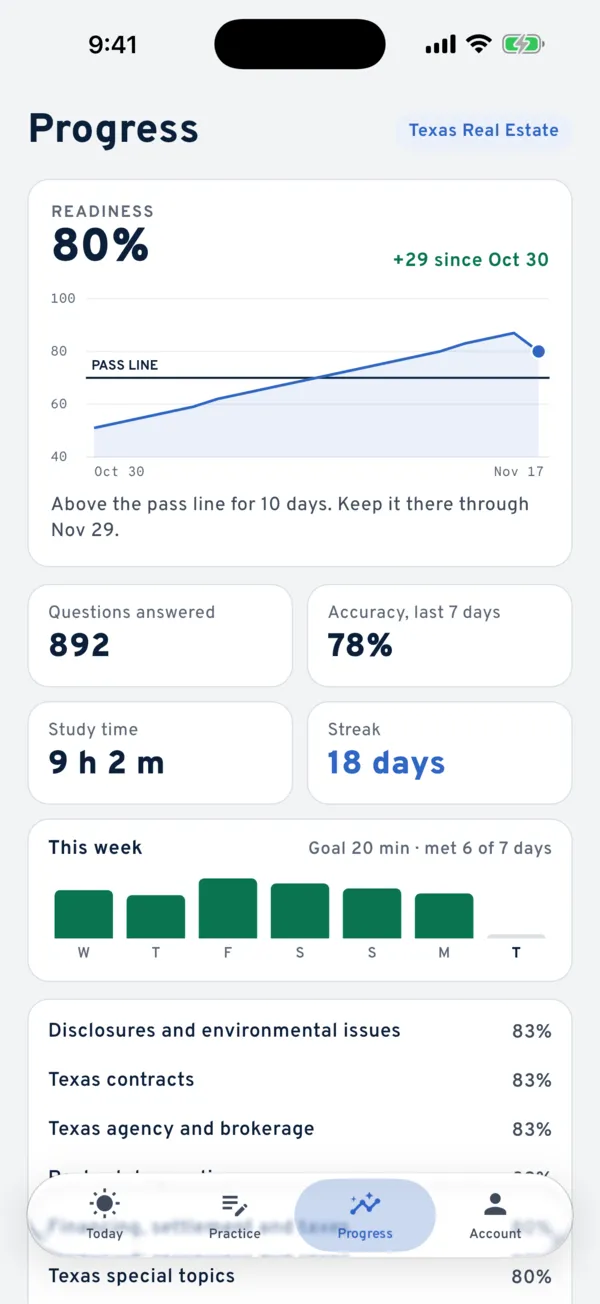
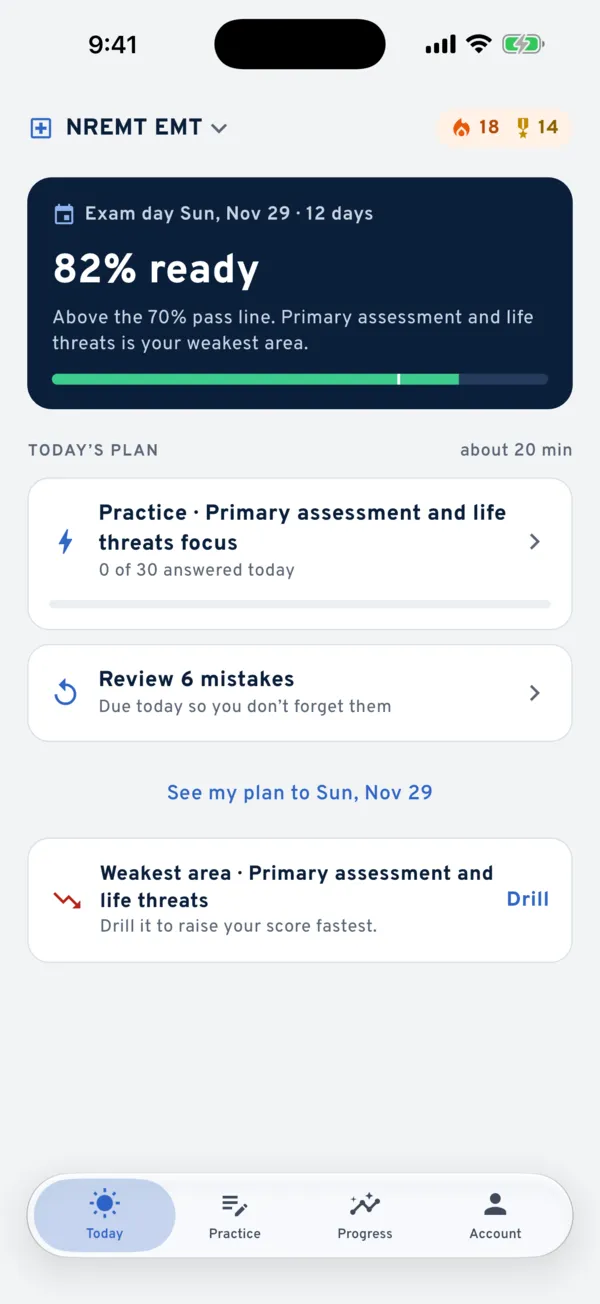
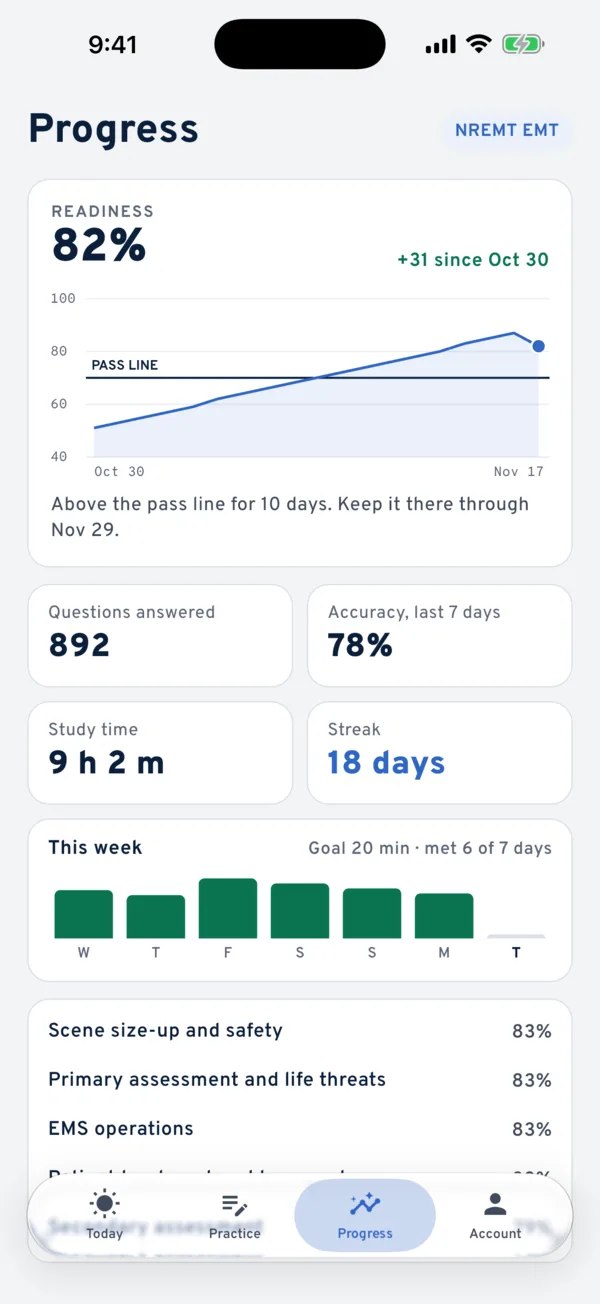
Clinched has every NREMT EMT question in this format, with full practice tests that match the real one, a readiness score by area and a plan to your test date. Free to start with 10 questions a day.
Read the NREMT EMT guide or see how we write and check every question.
Free on the App Store
Your exam, in your pocket.
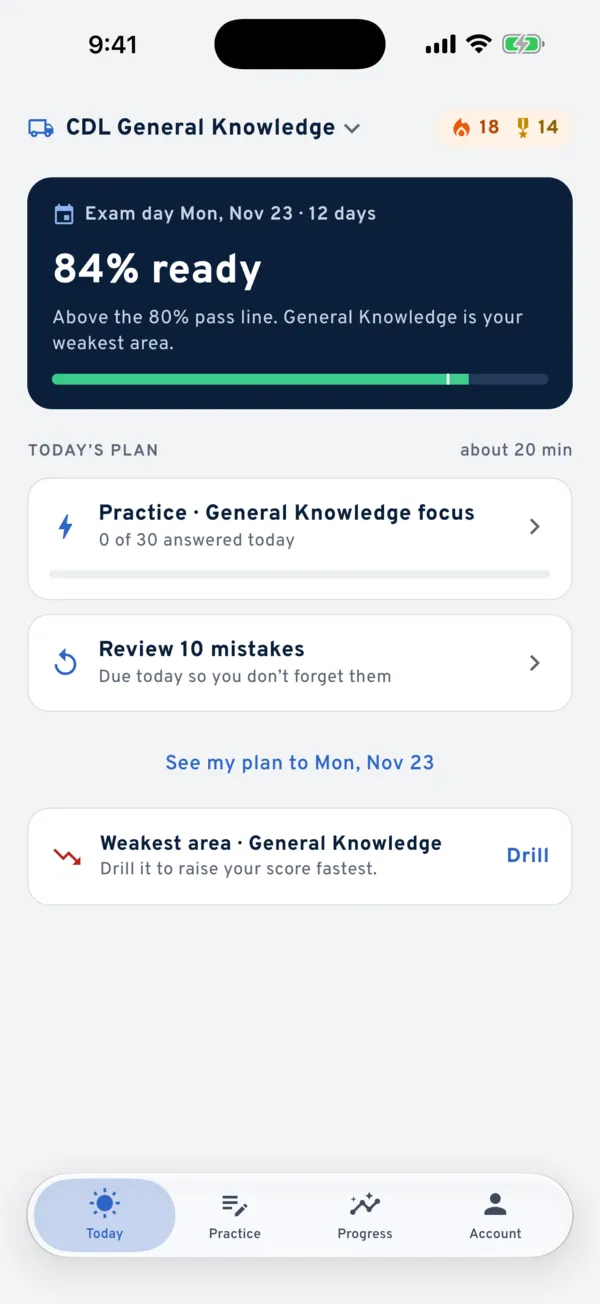
20 exams ready with questions written from the official sources, timed practice tests in the real format and a readiness score with a pass line.
On your computer?
Scan with your iPhone camera to get Clinched practice in the app.