

Top 200 Drugs for the PTCE: How to Study Them by Class
Short answer
PTCB doesn't publish a drug list, but the Medications domain is 35% of the PTCE and starts with generic names, brand names and drug classes. The common top 200 lists are rankings of US prescription volume from federal survey data, and the current one runs from atorvastatin at number 1. Learn them in class groups using name stems, add one indication and one hallmark fact per drug, and you can cover the list in about 6 weeks.
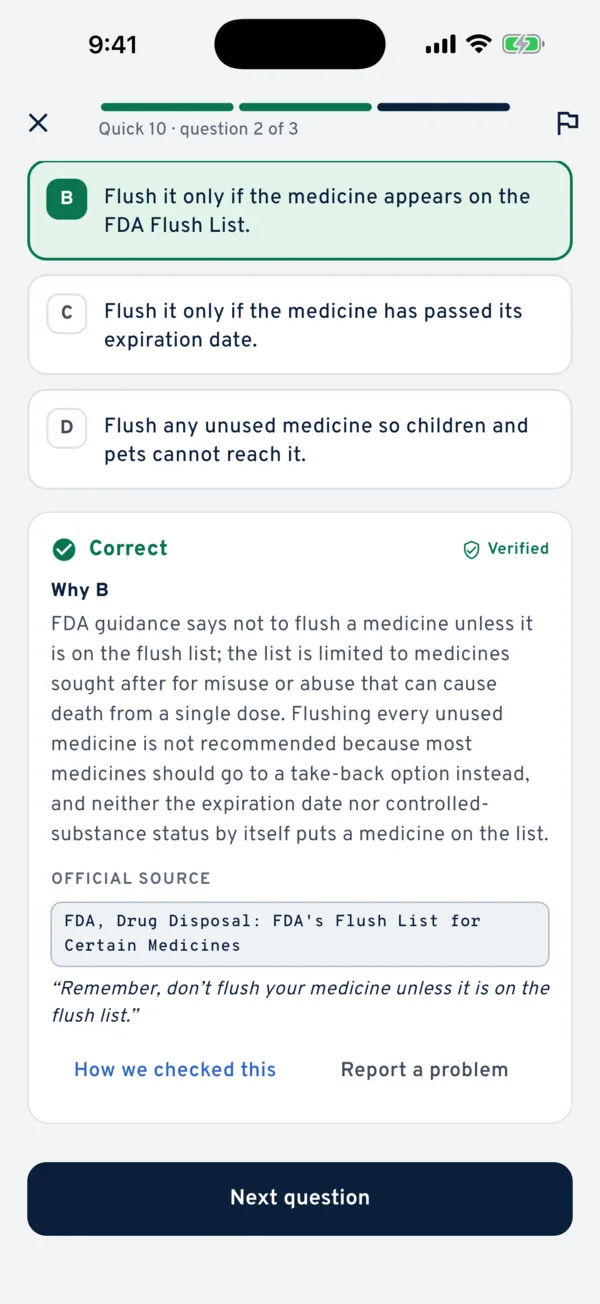
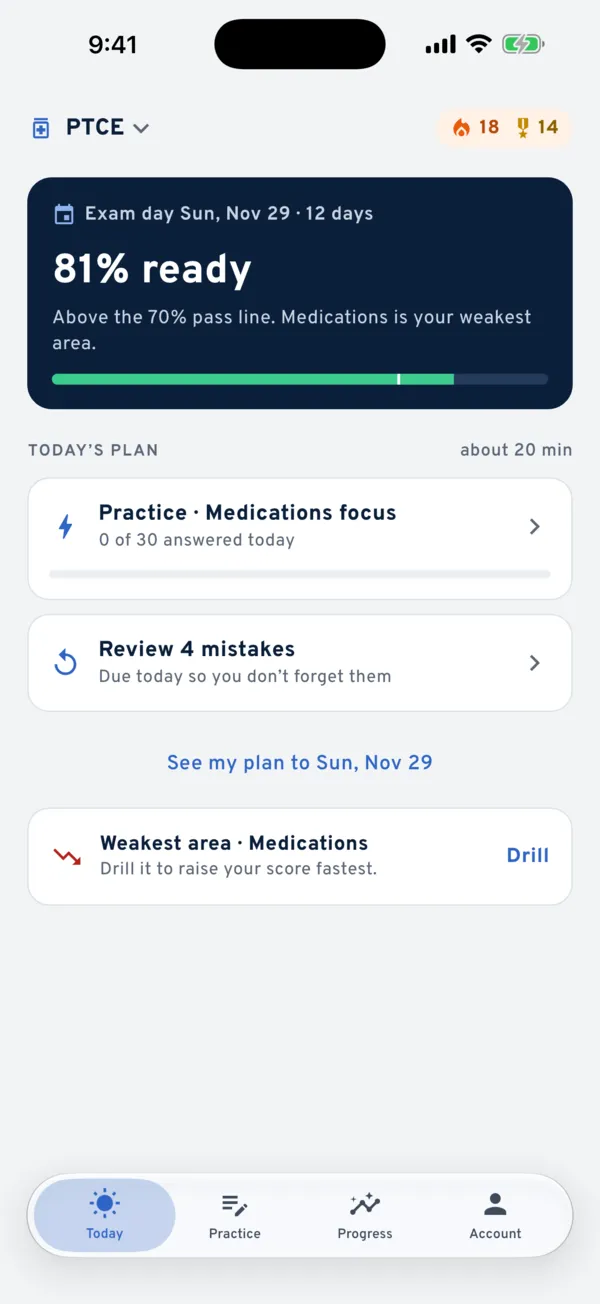
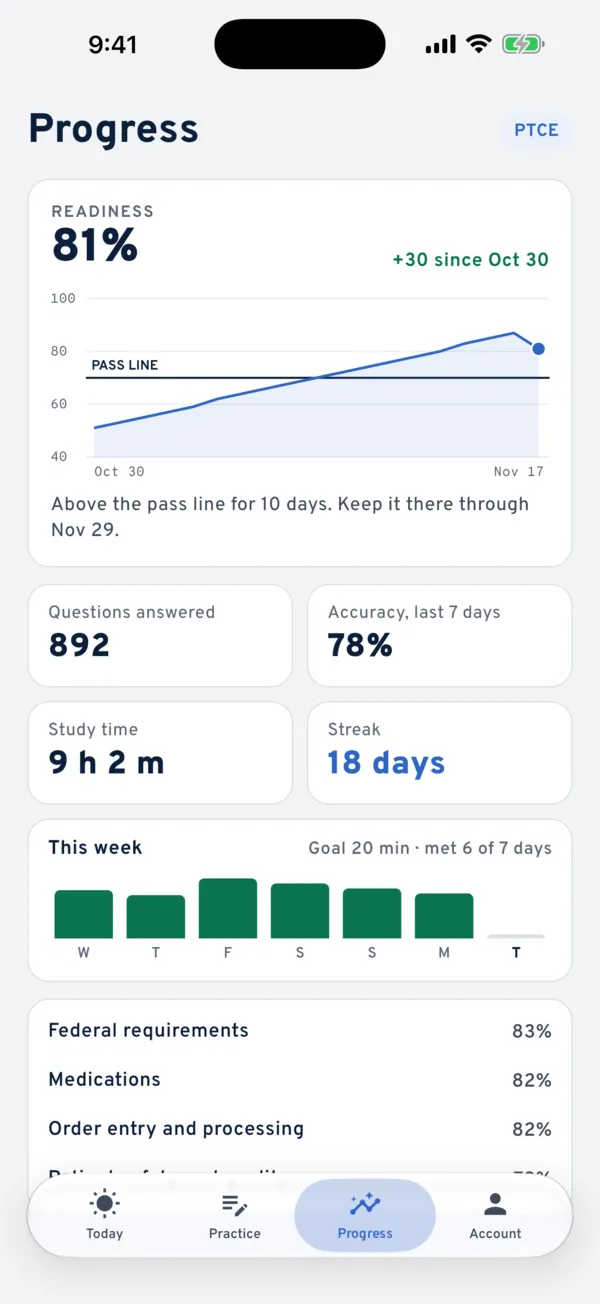
PTCB doesn’t publish a list of drugs for the PTCE, so the top 200 is a study tool you choose, not a syllabus. What PTCB does publish is the Medications domain, which is 35% of the exam. Its first statement is “generic names, brand names, and classifications of medications,” followed by therapeutic duplications, interactions, side effects, indications, dosage forms, stability and storage.1 Every one of those hangs off knowing the drug in the first place.
Where top 200 lists come from
Most top 200 lists trace back to the Medical Expenditure Panel Survey (MEPS), a federal survey run by the Agency for Healthcare Research and Quality.3 The ClinCalc DrugStats Database turns the MEPS prescribed medicines file into a ranked list. Its current edition covers 2024, with atorvastatin first at about 116 million prescriptions, followed by levothyroxine, metformin, amlodipine and lisinopril.2
Two things follow from that. First, the list changes every year. NHA, which updates its own top 200 flashcards from this data, notes that each release reflects survey data from two years earlier.6 Second, an old deck can be badly out of date. Semaglutide ranked 14th in 2024, so a list that skips it or buries it near the bottom was built on old numbers.2 Use a current list and don’t worry if it differs from a classmate’s by a few drugs at the bottom.
Learn drugs by stem and class
Two hundred unrelated flashcards is the slow way. Most generic names carry a stem that tells you the class, so learning one stem teaches you a dozen drugs at once.
| Stem | Class | Examples (generic and brand) |
|---|---|---|
| -olol | Beta blockers | metoprolol (Lopressor, Toprol-XL), atenolol (Tenormin) |
| -pril | ACE inhibitors | lisinopril (Prinivil, Zestril), enalapril (Vasotec) |
| -sartan | Angiotensin II receptor blockers (ARBs) | losartan (Cozaar), valsartan (Diovan) |
| -dipine | Calcium channel blockers | amlodipine (Norvasc), nifedipine (Procardia) |
| -statin | HMG-CoA reductase inhibitors (statins) | atorvastatin (Lipitor), rosuvastatin (Crestor) |
| -prazole | Proton pump inhibitors (PPIs) | omeprazole (Prilosec), pantoprazole (Protonix) |
| -gliflozin | SGLT2 inhibitors | empagliflozin (Jardiance), dapagliflozin (Farxiga) |
| -glutide | GLP-1 receptor agonists | semaglutide (Ozempic, Rybelsus), dulaglutide (Trulicity) |
| -gliptin | DPP-4 inhibitors | sitagliptin (Januvia) |
| -xaban | Factor Xa inhibitors | apixaban (Eliquis), rivaroxaban (Xarelto) |
| -azepam, -azolam | Benzodiazepines | lorazepam (Ativan), alprazolam (Xanax) |
| -floxacin | Fluoroquinolones | ciprofloxacin (Cipro), levofloxacin |
| -cycline | Tetracyclines | doxycycline (Vibramycin), minocycline |
Where stems mislead you
Stems are a shortcut, and the exam likes the exceptions.
- Not every beta blocker ends in -olol. Carvedilol (Coreg) and labetalol end in -lol with a different letter in front. Read the whole stem.
- “-azole” spans several classes. Omeprazole is a PPI, fluconazole (Diflucan) is an antifungal, and metronidazole (Flagyl) is an antibiotic. Only “-prazole” points to a PPI.
- “-mycin” isn’t one class. Azithromycin (Zithromax) is a macrolide, gentamicin is an aminoglycoside, and clindamycin (Cleocin) is a lincosamide.
- Salt forms matter. Metoprolol tartrate is Lopressor and metoprolol succinate is the extended release Toprol-XL. They aren’t interchangeable on a prescription, and a question can hinge on that.
- Some top drugs have no stem at all. Levothyroxine (Synthroid), metformin (Glucophage), gabapentin (Neurontin), montelukast (Singulair), clopidogrel (Plavix), sertraline (Zoloft) and escitalopram (Lexapro) just have to be learned.
Put the right facts on each card
A brand-generic pair alone won’t carry you through the Medications domain. PTCB’s outline asks about indications, side effects, interactions and duplications too.1 Give each drug one card with these fields.
- Generic name and the brand names you'd actually see on a stock bottle
- Drug class, written out in full
- The main condition it treats
- One hallmark side effect or warning that the class is known for
- Its federal controlled substance schedule, if it has one
- Any special storage or handling, such as refrigeration or dispensing in the original container
Keep the facts at the level the exam tests. ACE inhibitors are known for a dry cough. Statins are associated with muscle pain. Levothyroxine absorption drops when it’s taken with calcium or iron products, and warfarin interacts with foods high in vitamin K. A profile with lisinopril and enalapril on it shows a therapeutic duplication, because both are ACE inhibitors. These are test facts, not instructions for patients. On the job, any question about what a patient should do goes to the pharmacist.
Controlled substances on the list
Mark every controlled drug with its federal schedule, because the Federal Requirements domain will ask. Hydrocodone combination products, oxycodone, amphetamine mixed salts (Adderall) and methylphenidate (Ritalin) are Schedule II. Alprazolam, lorazepam, zolpidem (Ambien) and tramadol (Ultram) are Schedule IV. Pregabalin (Lyrica) is Schedule V.5 Gabapentin isn’t on the federal schedules at all, and the PTCE tests federal law.5
Look-alike and sound-alike pairs
Patient Safety is 23.75% of the PTCE, and its first statement covers high-alert and look-alike/sound-alike (LASA) drugs.1 The FDA’s Name Differentiation Project uses Tall Man lettering to set the confusing parts of paired names apart.4 Several pairs on the FDA list involve drugs you’ll be studying anyway.
- hydrALAZINE and hydrOXYzine
- buPROPion and busPIRone
- glipiZIDE and glyBURIDE
- traZODone and traMADol
- predniSONE and prednisoLONE
- niCARdipine and NIFEdipine
Those six come straight from the FDA list.4 When you make a card for any of these drugs, add its partner on the back so you learn them as a pair.
A 6 week schedule
At about 35 new drugs a week, grouped by body system, you’ll cover the list with time for review. Spend 15 minutes on new cards and 15 on old ones each day.
- Week 1Blood pressure and cholesterol. ACE inhibitors, ARBs, beta blockers, calcium channel blockers, diuretics such as hydrochlorothiazide and furosemide (Lasix), and statins.
- Week 2Diabetes and blood thinners. Metformin, SGLT2 inhibitors, GLP-1 agonists, DPP-4 inhibitors, the common insulins, factor Xa inhibitors, warfarin and clopidogrel.
- Week 3Mental health and the nervous system. SSRIs, SNRIs, bupropion, trazodone, benzodiazepines, sleep drugs, ADHD stimulants and anticonvulsants. Write the federal schedule on every controlled drug.
- Week 4Breathing, stomach and allergy. Albuterol, inhaled steroids, montelukast, PPIs, H2 blockers and antihistamines.
- Week 5Infections, pain, thyroid and steroids. Penicillins, cephalosporins, macrolides, fluoroquinolones, tetracyclines, NSAIDs, opioids, levothyroxine and prednisone.
- Week 6Shuffle everything. Drill the Tall Man pairs, quiz yourself in both directions, and do timed medication questions until you stop missing the same drugs.
Quiz both ways every day. Brand to generic, generic to brand, and drug to class are three different recall paths, and the exam can use any of them. Say the answer out loud or write it before you flip the card. Recognizing a name feels like knowing it, but it isn’t the same thing.
Fitting this into your PTCE prep
Drug study is one piece of a bigger plan. Medications is the largest domain, but Federal Requirements, Patient Safety and Order Entry together still make up 65% of the exam.1 Our PTCE exam guide has a full 8 week plan that runs this drug work in parallel with the math and law. If you’re still deciding between exams, PTCE vs ExCPT compares the two, and the ExCPT also has items on frequently prescribed medications.
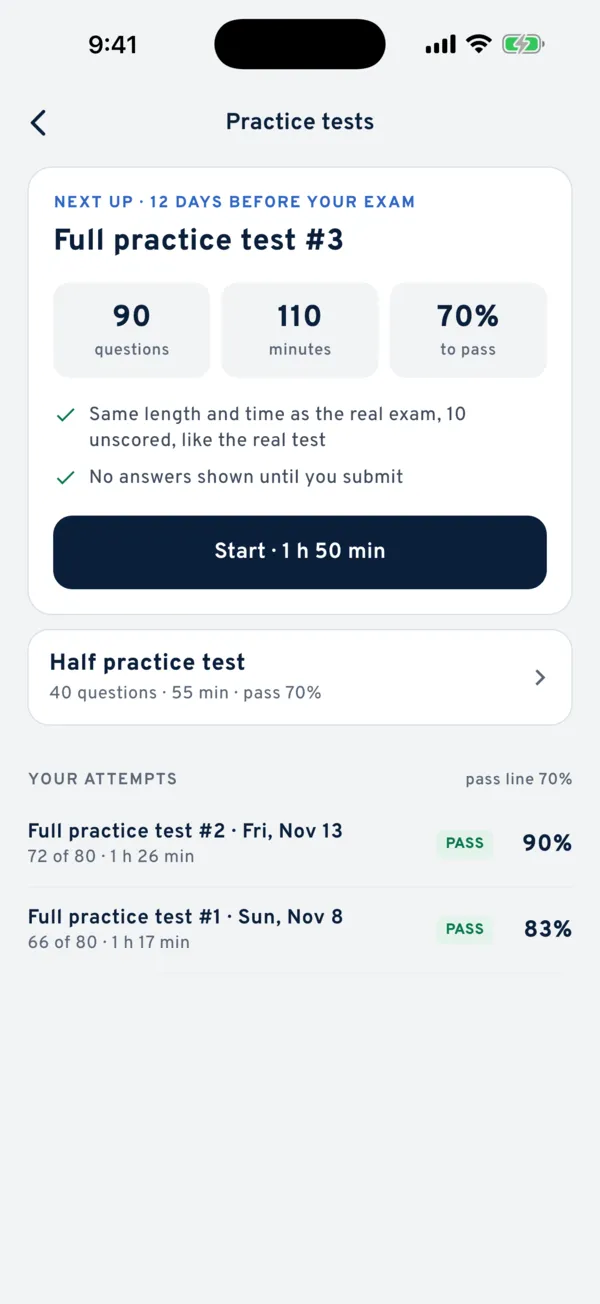
Clinched has a PTCE course with questions tied to the official outline and full practice tests in the 90-question format.
Questions people ask
Does the PTCE use an official top 200 drugs list?
No. PTCB's content outline says the exam covers generic names, brand names and classifications of medications, but it doesn't name specific drugs. Top 200 lists are rankings of US prescription volume, and they're a sensible way to decide which drugs to learn first.
How many drugs do I need to know for the PTCE?
PTCB doesn't set a number. Most candidates study the top 200 by prescription volume, and that covers the drugs you'll see most often in practice. Learning them by class matters more than the exact count, because questions often ask about a drug's class, use or interactions rather than just its brand name.
How long does it take to learn the top 200 drugs?
About 6 weeks at 35 drugs a week works for most people who study daily and review old cards along with new ones. If you've never worked in a pharmacy, allow 8 weeks so you have time to learn the conditions each class treats.
Sources
- PTCE Content Outline, Effective January 6, 2026Pharmacy Technician Certification Board
- The Top 300 of 2024ClinCalc DrugStats Database
- Medical Expenditure Panel SurveyAgency for Healthcare Research and Quality
- FDA Name Differentiation ProjectU.S. Food and Drug Administration
- 21 CFR Part 1308, Schedules of Controlled SubstancesElectronic Code of Federal Regulations
- Product and Certification Portal UpdatesNational Healthcareer Association
ClinchedPTCE
Pass PTCE on the first try.
Practice questions written from the official sources, full practice tests in the real format and a plan that ends on your test date. Free to start.
Keep reading
- Exam guide · PTCE
 PTCE vs ExCPT: Which Pharmacy Technician Exam Should You Take?PTCE or ExCPT? Compare questions, time, eligibility, content and testing options for the two national pharmacy technician exams, plus how states treat them.
- Topic explainer · Food Protection Manager
 ServSafe Manager vs Other Food Protection Manager ExamsServSafe Manager, NRFSP, Learn2Serve and Always Food Safe compared on questions, time, passing score, proctoring, retakes and how long the certificate lasts.
- Topic explainer · Phlebotomy Technician · NHA CCMA
 Order of Draw for Phlebotomy Exams: Tubes, Colors and WhyThe venous order of draw is blood cultures, citrate, serum, heparin, EDTA, then fluoride. Learn the capillary order, the discard tube rule and why it matters.