

Infection Control on the Cosmetology Exam: What to Know
Short answer
Infection control is the largest single content area on cosmetology written exams, 30% of the PSI theory exam used in California and Illinois, 28% in Texas and 34% of Florida's Written Theory exam. You need to know the difference between cleaning, disinfecting and sterilizing, what an EPA registered disinfectant must kill, why contact time on the label matters and what to do when a client bleeds.
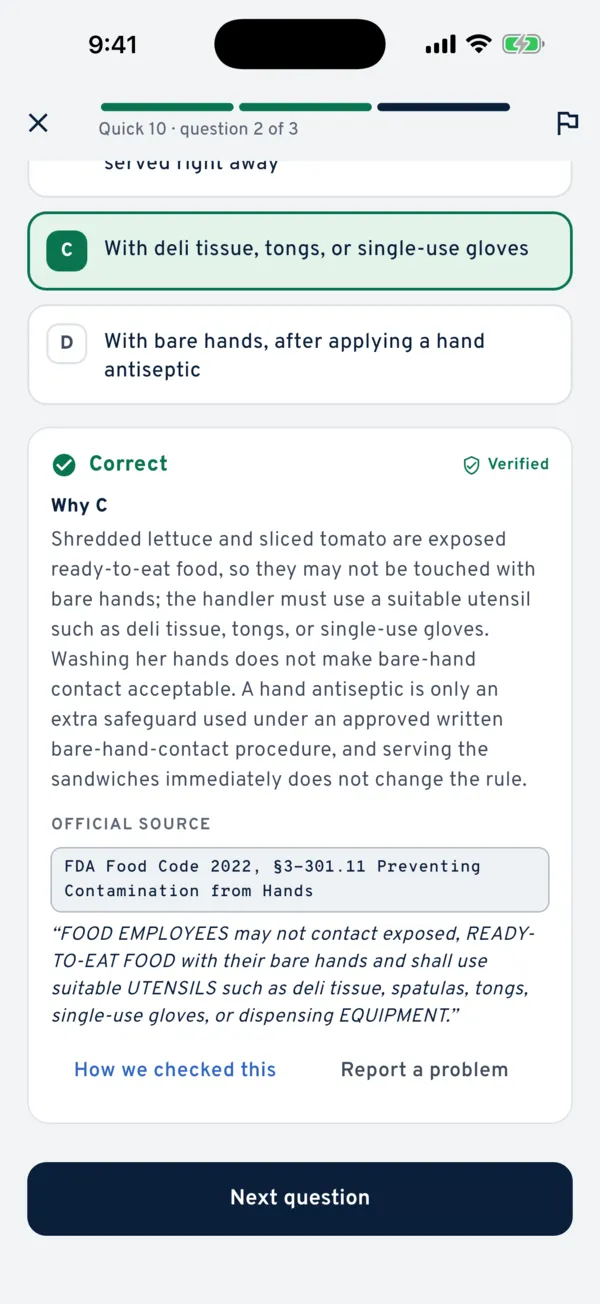
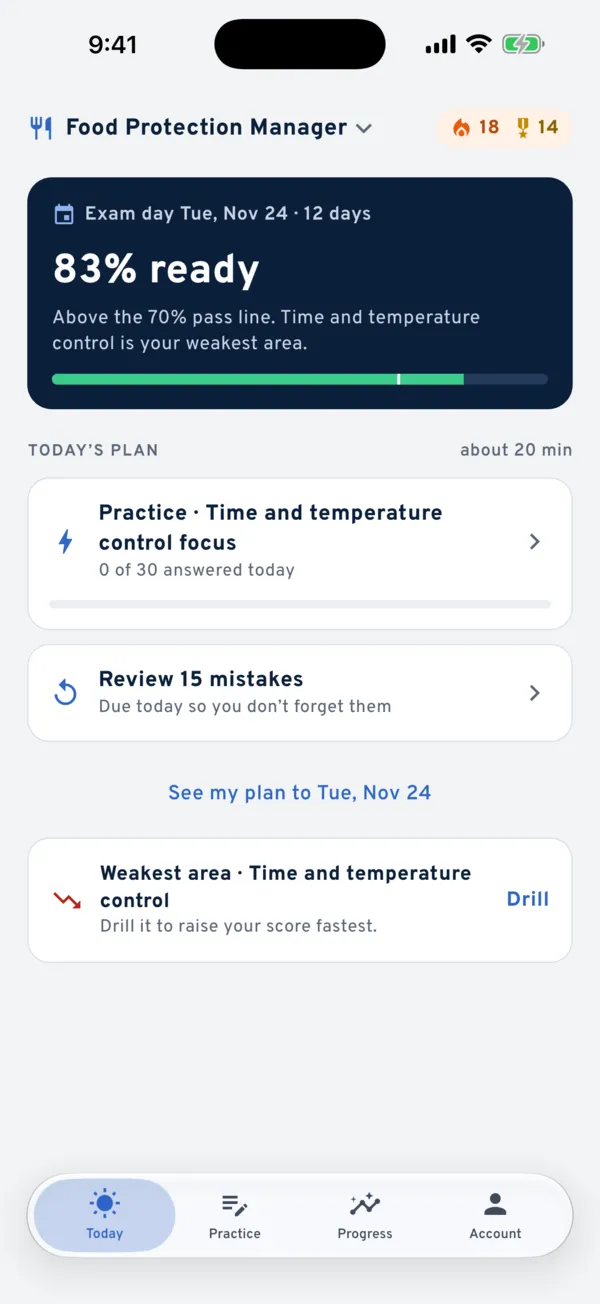
Infection control is the single largest content area on most cosmetology written exams. On the PSI theory exam used by California and Illinois it’s 30 of 100 scored questions.1 Texas gives infection control 28% of its written exam,2 and Florida puts 34% of its Written Theory exam on general safety and sanitation.3 If you only had time to study one topic well, this would be it.
The questions aren’t hard once you learn the vocabulary the way the state uses it. Most misses come from mixing up terms or assuming a rule that sounds sensible but isn’t what the regulation says.
Cleaning, disinfecting and sterilizing
The exam treats these as three distinct levels of decontamination, and the PSI outline lists “levels of decontamination (i.e., cleaning, disinfection, sterilization)” as a named topic.1 California’s regulations give clean definitions to learn from.4
| Level | What it does | How |
|---|---|---|
| Cleaning | Removes visible debris such as hair, dust and skin | Soap or detergent and water |
| Disinfection | Destroys harmful bacteria, viruses and pathogens on tools | An EPA registered chemical disinfectant |
| Sterilization | Removes or kills all microbial life, including spores | Autoclave or dry heat sterilizer |
Two exam traps hide in that table. First, cleaning always comes before disinfecting. A disinfectant can’t work through hair and product buildup, which is why every state procedure starts with removing debris. Second, sterilization is the only level that kills spores. Most salon tools are disinfected, not sterilized. California, for example, requires an autoclave or dry heat sterilizer only where electrolysis is performed.4
You’ll also see “contaminated” on the exam. California defines it as blood or other potentially infectious materials on a surface, or visible debris such as dust, hair and skin.4
What makes a disinfectant acceptable
Not every cleaning product counts. California defines a disinfectant as a product registered with the U.S. Environmental Protection Agency (EPA) that has demonstrated bactericidal, fungicidal and virucidal activity. It must carry a manufacturer label showing the EPA registration.4 Liquid form is required for immersing non-electrical tools, and spray or wipe form for electrical tools and shears.4
Florida uses similar language with one more layer.5
- For tools that haven’t touched blood or body fluids, the label must show EPA registration as a hospital grade bactericidal, virucidal and fungicidal disinfectant.
- For tools that have touched blood or body fluids, the label must show EPA registration as a disinfectant in accordance with 29 CFR 1910.1030, the OSHA bloodborne pathogens standard.
- For pedicure equipment, the disinfectant must also be pseudomonacidal.
Know the suffixes. Bactericidal kills bacteria, fungicidal kills fungi, virucidal kills viruses, and pseudomonacidal kills Pseudomonas, a group of bacteria that thrives in water.
Contact time
The label tells you how long the disinfectant has to stay on the surface to work. The EPA’s guidance is to follow that contact time and keep the surface wet for the whole period.6 Pulling tools out early, or wiping a spray dry right away, means the disinfection didn’t happen. Florida’s rule says all disinfectants must be mixed and used according to the manufacturer’s directions,5 and California’s rules say the same.4
The tool procedure, step by step
California’s rule for non-electrical tools, such as combs, nippers, metal files and clips, is a good model because it lists the steps in order.4
- Remove all visible debrisHair, product and skin come off first.
- Clean with soap or detergent and waterThis is cleaning, the first level of decontamination.
- Dry completely with a new, clean paper towelWater left on the tool dilutes the disinfectant.
- Totally immerse in an EPA registered disinfectantIt must be bactericidal, fungicidal and virucidal, used according to the label.
- Remove with gloves or tongsThen store in a clean, covered container labeled Clean or Disinfected.
California adds details that make good test questions. The disinfectant container must stay covered and be changed per the label or whenever it’s cloudy or has debris in it.4 Used tools go into a container labeled Dirty, Soiled or Contaminated.4 Shears aren’t immersed. You clean them, then spray or wipe them with the disinfectant.4 Clippers and other electrical tools get debris removed and then an EPA registered spray or wipe before each use.4
Single use items
Anything that touches a client and can’t be disinfected gets thrown away after one client. California’s list includes buffers, pumice stones, wax sticks, toe separators, gloves, cotton pads, sponges, emery boards and neck strips.4 New supplies go in a clean, covered place labeled New.4 Exam questions like to ask whether an item is porous. A porous item can’t be disinfected, so it’s single use.
Foot spas
Pedicure equipment gets its own rules because water left in pipes grows bacteria. Both California and Florida require cleaning and then disinfecting the basin after every client.
In California, after each client you drain the whirlpool spa, scrub the walls with a brush and liquid soap, rinse, refill with clean water, and circulate an EPA registered hospital liquid disinfectant labeled bactericide, fungicide and virucide for at least 10 minutes.4 At the end of the day you remove and scrub the screen, circulate detergent for at least 10 minutes, then circulate disinfectant for another 10.4 Once a week, the disinfectant stays in the unit undisturbed for at least 6 hours, and each cleaning goes in a pedicure equipment log.4
Florida also requires at least 10 minutes of disinfectant after each client.5 At the end of the day it calls for circulating disinfectant for 10 minutes and leaving it in the basin for at least 6 to 10 hours.5 Once a week, the basin gets a bleach solution of one teaspoon of 5.25% bleach per gallon of water, circulated 5 to 10 minutes and left for at least 6 hours.5 Florida salons must also keep a log of every pedicure cleaning and disinfection, available to customers and inspectors.5
The numbers and schedules differ by state, so learn the ones in your state’s rules. The pattern holds in both states. Clean and disinfect after every client, do a longer cleaning at the end of the day, run a long soak on a weekly schedule and log all of it.
When a client bleeds
The PSI outline names “procedures for exposure incidents (e.g., Standard/Universal Precautions, OSHA, CDC)” as an infection control topic.1 The idea behind universal precautions comes from OSHA, which defines it as treating all human blood and certain body fluids as if they’re known to be infectious for HIV, hepatitis B and other bloodborne pathogens.7
On the exam, think through a nick or cut in this order.
- Stop the service and put on gloves.
- Clean the injury and cover it with an appropriate dressing.
- Clean and disinfect any tool or surface the blood touched before it’s used again. OSHA requires contaminated work surfaces to be decontaminated with an appropriate disinfectant.7 In Florida, that means a disinfectant registered under the bloodborne pathogens standard.5
- Dispose of contaminated single use items properly. OSHA requires contaminated sharps to go into closable, puncture resistant, leak resistant, labeled containers.7
- Wash your hands after removing gloves.6
Prevention questions come up too. California prohibits performing services on skin or scalp that’s inflamed, broken or infected, and requires gloves if your own hands have broken or inflamed skin.4
How it shows up beyond the written test
In Texas, the practical exam opens with a 10 minute set up and disinfection section, so you’ll be graded on these habits with your hands as well.2 That’s a good reason to practice the full procedure, not just memorize it.
For the full picture of how each state’s written exam is built, see our cosmetology exam guide. If you’re still choosing a school or moving states, our post on cosmetology hours by state covers training requirements. Clinched is building a cosmetology written exam course, and you can tap “Notify me” in the app to hear when it’s ready.
Questions people ask
What is the difference between cleaning, disinfecting and sterilizing in cosmetology?
Cleaning removes visible debris with soap or detergent and water. Disinfecting uses an EPA registered chemical to destroy harmful bacteria, viruses and other pathogens on tools. Sterilizing kills all microbial life, including spores, using an autoclave or dry heat sterilizer.
What does an EPA registered disinfectant have to kill for salon use?
California requires demonstrated bactericidal, fungicidal and virucidal activity. Florida requires a hospital grade disinfectant with the same three claims, and adds pseudomonacidal activity for pedicure equipment. For tools that touched blood, Florida requires a disinfectant registered for use under the OSHA bloodborne pathogens standard.
How long should tools stay in disinfectant?
For the full contact time printed on the product label. The EPA says the surface must stay wet for that whole time. Some state rules set their own minimums for foot spas, such as circulating disinfectant for at least 10 minutes in California and Florida.
Sources
- California Board of Barbering and Cosmetology Candidate Information Bulletin (April 2026)PSI Services
- Texas Cosmetology Operator Candidate Information Bulletin (January 2026)PSI Services for the Texas Department of Licensing and Regulation
- Cosmetology Licensure Examinations Candidate Information Booklet (February 2026)Florida Department of Business and Professional Regulation
- 2026 Barbering and Cosmetology Act and Regulations Excerpts (16 CCR 977 to 995)California Board of Barbering and Cosmetology
- Rule 61G5-20.002, Salon RequirementsFlorida Board of Cosmetology (Florida Administrative Code)
- 6 Steps for Safe and Effective Disinfectant UseU.S. Environmental Protection Agency
- 29 CFR 1910.1030, Bloodborne PathogensOccupational Safety and Health Administration
ClinchedCosmetology
Pass Cosmetology on the first try.
Practice questions written from the official sources, full practice tests in the real format and a plan that ends on your test date. Free to start.
Keep reading
- Exam guide · Cosmetology
 Cosmetology School Hours by State: CA, TX, FL, NY and ILCosmetology licenses need 1,000 hours in California, Texas and New York, 1,200 in Florida and 1,500 in Illinois. Ages, extra courses, exam fees and moving rules.
- Topic explainer · Food Protection ManagerServSafe Manager vs Other Food Protection Manager ExamsServSafe Manager, NRFSP, Learn2Serve and Always Food Safe compared on questions, time, passing score, proctoring, retakes and how long the certificate lasts.
- Topic explainer · Phlebotomy Technician · NHA CCMA
 Order of Draw for Phlebotomy Exams: Tubes, Colors and WhyThe venous order of draw is blood cultures, citrate, serum, heparin, EDTA, then fluoride. Learn the capillary order, the discard tube rule and why it matters.